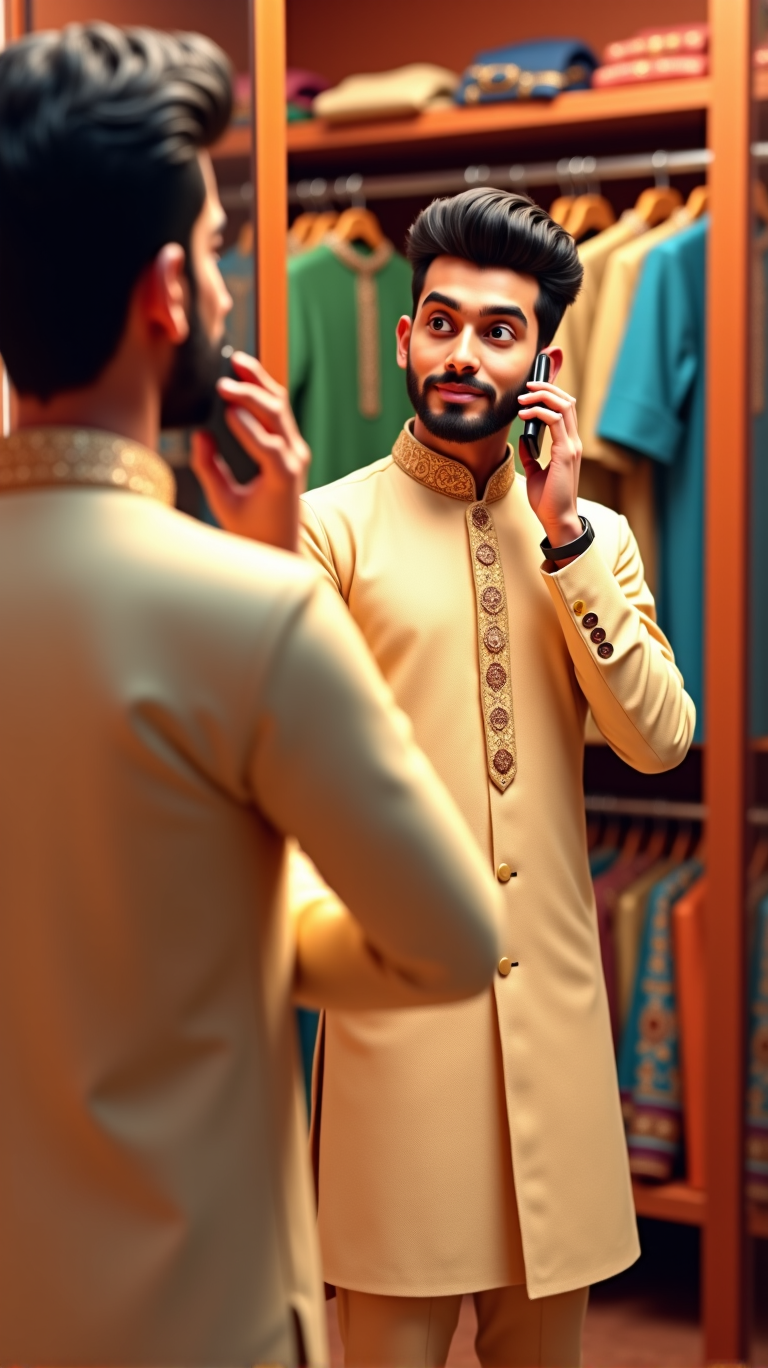
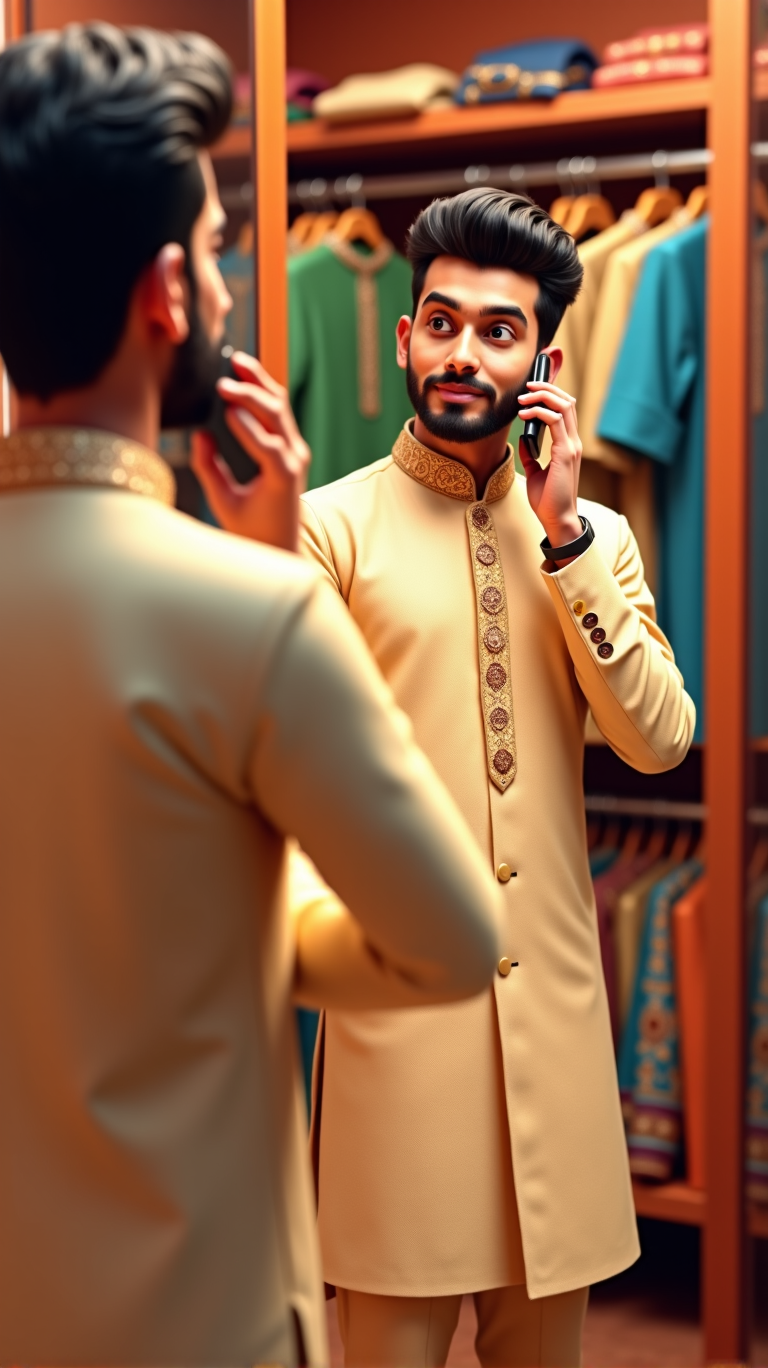
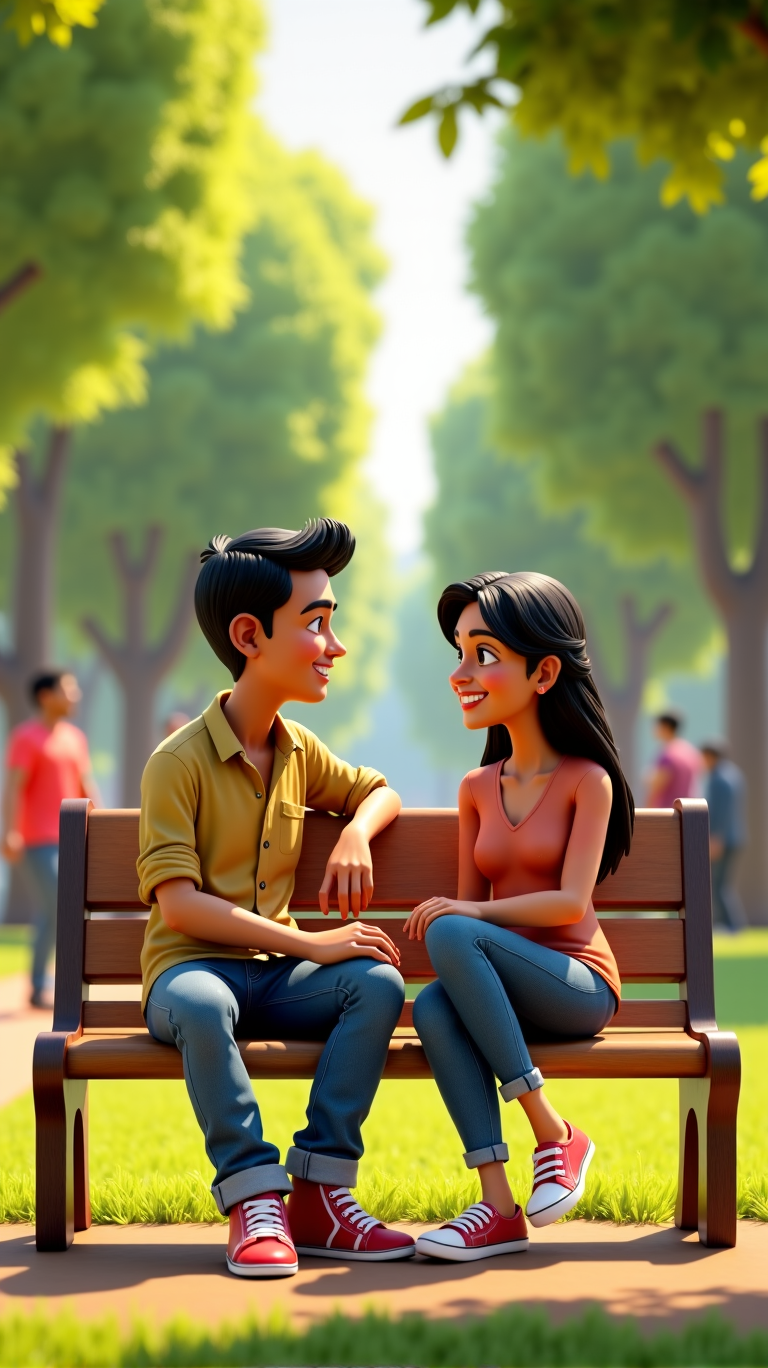
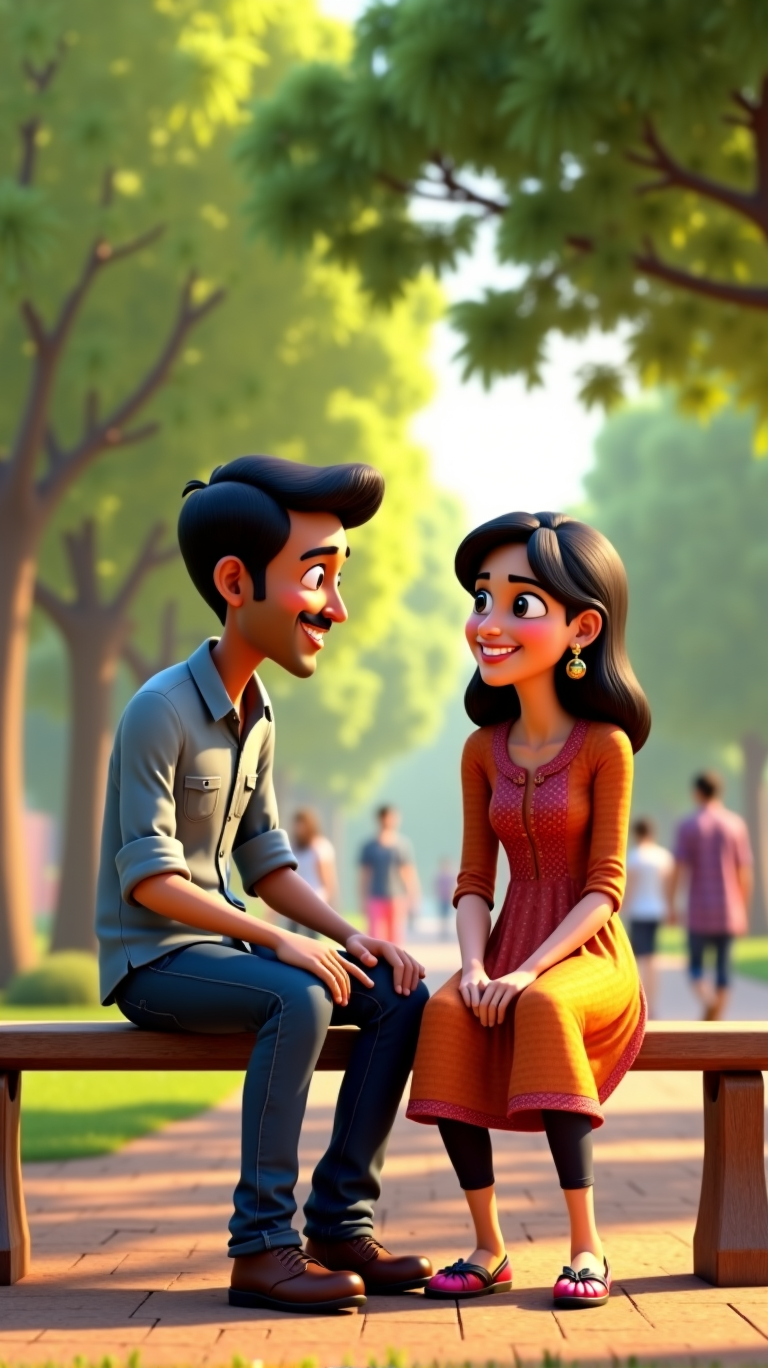

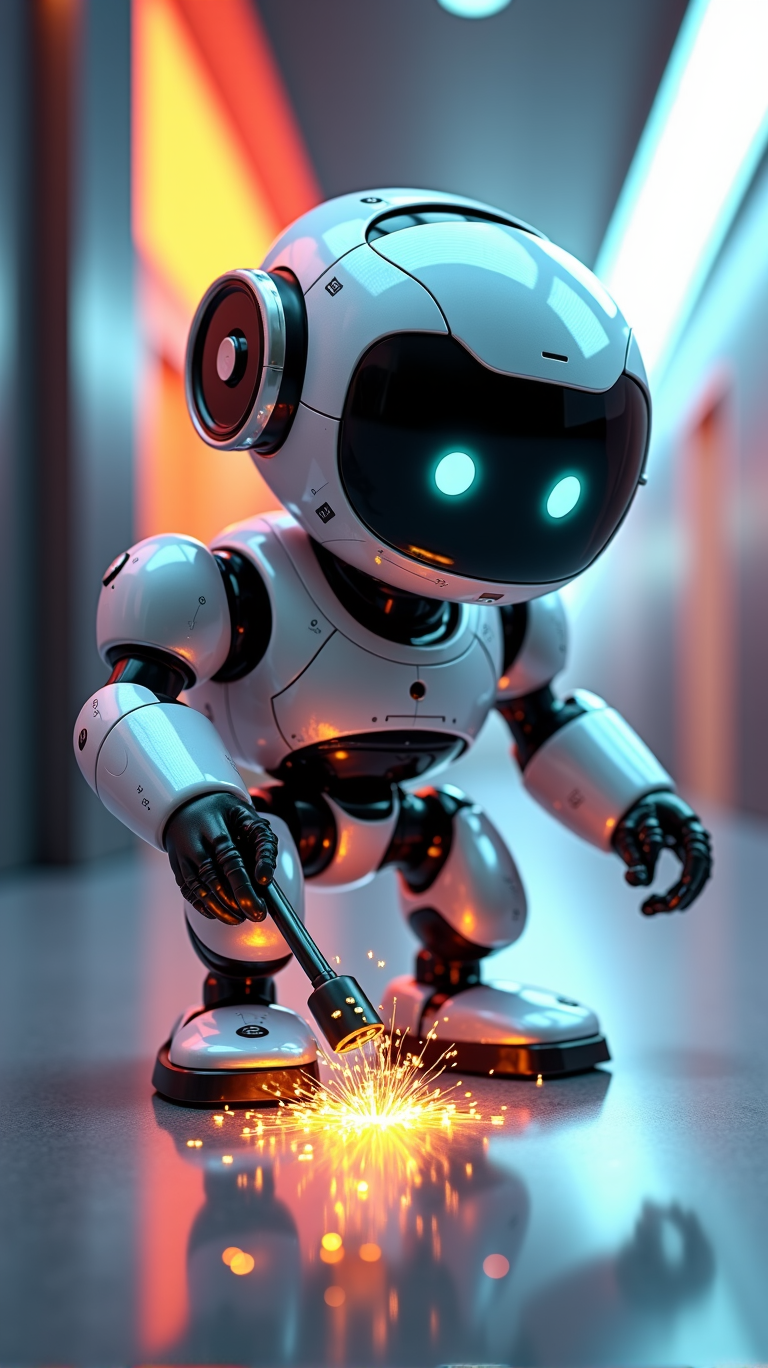




A 25-year-old Indian man inside a traditional clothing shop, trying on a cream-colored wedding pajama with a sherwani-style kurta. He is standing in front of a mirror, holding a smartphone to his ear, talking on the phone with a slightly excited and thoughtful expression. The shop has racks of colorful wedding outfits, sherwanis, and kurtas in the background. Soft warm lighting reflects on the mirror, showing both his front and reflection. The atmosphere feels festive and vibrant, with a hint of wedding preparations. 3D Pixar-style rendering, cinematic look, vibrant colors, detailed clothing textures, realistic yet slightly cartoonish expressions. Employs three-dimensional modeling, texturing, and rendering methods to create forms with genuine spatial depth. Sculptural details, careful surface mapping, and realistic lighting algorithms (like ray tracing or global illumination) are often used to enhance believability and immersion. The focus is on building objects or characters in a virtual space so they look tangible from any angle. Frequently leverages a wide range of color palettes, from hyperrealistic to stylized. Lighting in 3D art can be meticulously set using multiple light sources—key, fill, and rim lights—to achieve cinematic highlights, convincing shadows, and dramatic contrasts. Reflective surfaces and accurate color bounce are key to making scenes feel truly three-dimensional. Can vary from sleek and futuristic (if using metallic materials and vibrant neons) to warm and inviting (through soft lights and neutral color schemes). Overall, 3D art offers a highly versatile platform for storytelling, allowing for photorealistic or fantastical atmospheres that capture the viewer’s imagination.
Free to start · Generate videos and images with AI in seconds