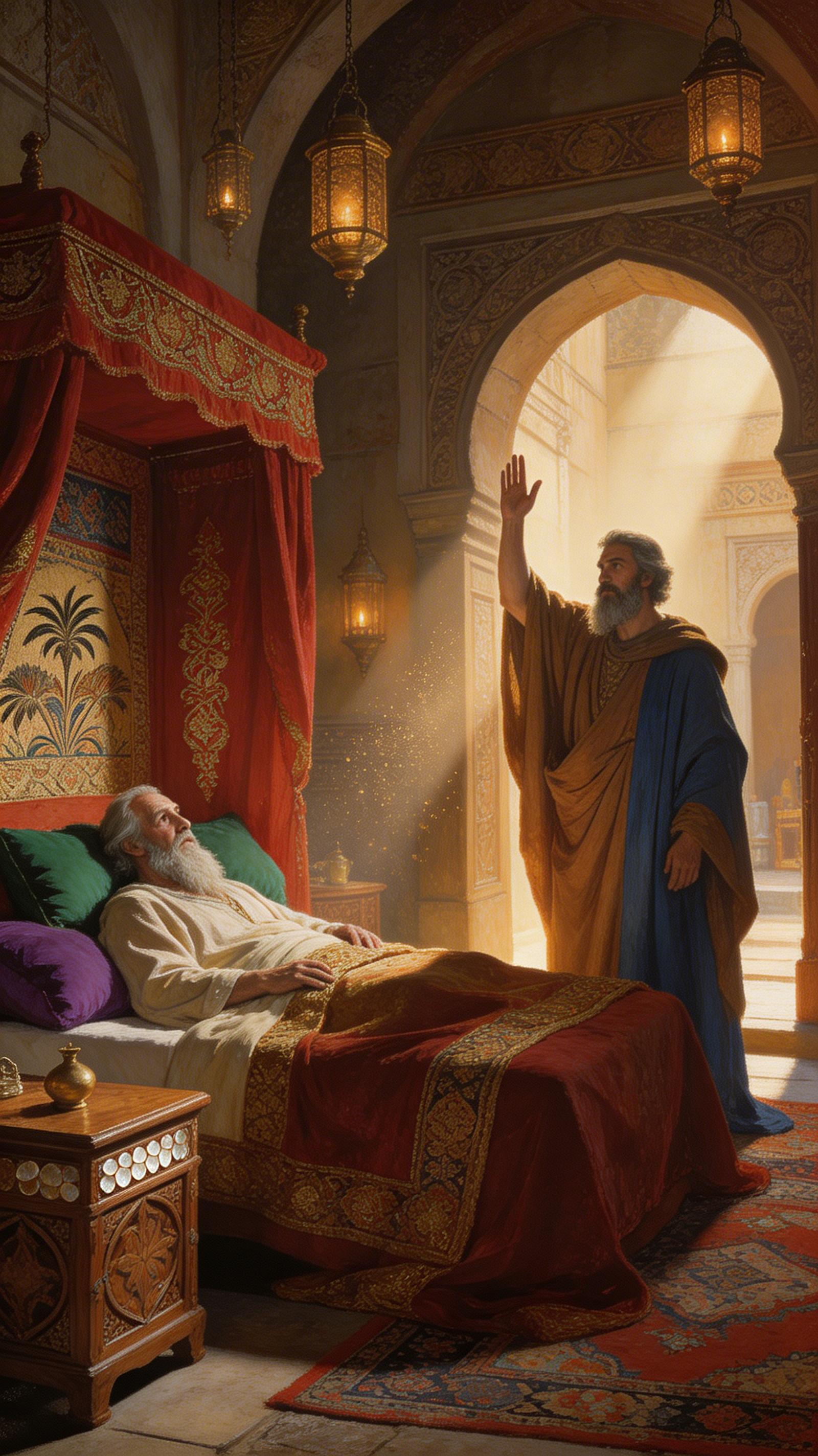
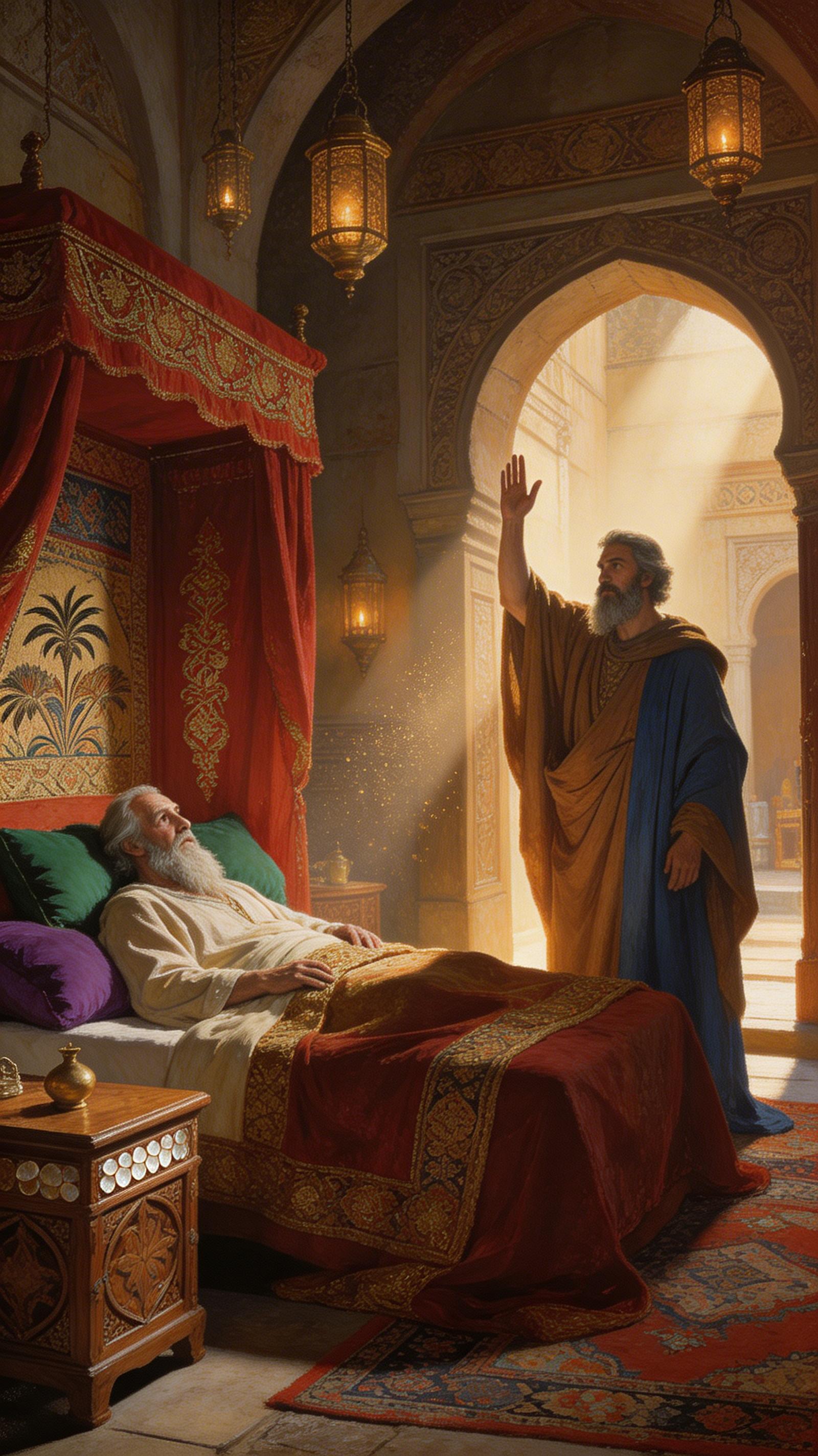




A highly detailed, romanticized Orientalist style painting of an ancient Middle Eastern palace bedroom capturing a moment of profound biblical drama. King Hezekiah, an elderly but majestic man with a long, flowing grey beard and a weathered face, pale and visibly weak from severe illness, lies resting in a massive, opulent canopy bed. The bed is lavishly draped in rich crimson silks, heavily embroidered gold tapestries featuring ancient motifs, and plush velvet cushions in deep jewel tones. The expansive, dimly lit royal chamber is filled with ornate brass lanterns hanging from a vaulted ceiling, intricately carved cedar wood furniture adorned with mother-of-pearl inlays, and vibrant, meticulously detailed Persian rugs covering the cool stone floor. In the massive, sweeping arched stone doorway stands the prophet Isaiah, a tall, commanding, and imposing figure with a rugged grey beard, wearing flowing earthy brown and deep blue robes that drape elegantly over his broad frame. Isaiah is brightly backlit by a warm, golden afternoon sunlight streaming from the adjacent palace corridor, casting a dramatic, elongated silhouette into the darkened bedroom. Sparkling dust motes dance visibly in the heavy, sunlit air, adding a layer of atmospheric depth and cinematic realism. The scene's atmosphere is incredibly tense and dramatic, characterized by deep chiaroscuro lighting, rich, saturated colors, and a stereotypical 19th-century Western artistic depiction of ancient Near Eastern royalty and biblical grandeur. Hezekiah looks up with labored breath, his deep-set eyes wide with desperate hope and vulnerability, while Isaiah raises one hand in a solemn, powerful gesture of divine authority and prophecy, signaling the arrival of a miraculous sign from the heavens.. Western artistic imitation or depiction of Middle Eastern, South Asian, and East Asian cultures, often romanticized or stereotypical.
Free to start · Generate videos and images with AI in seconds