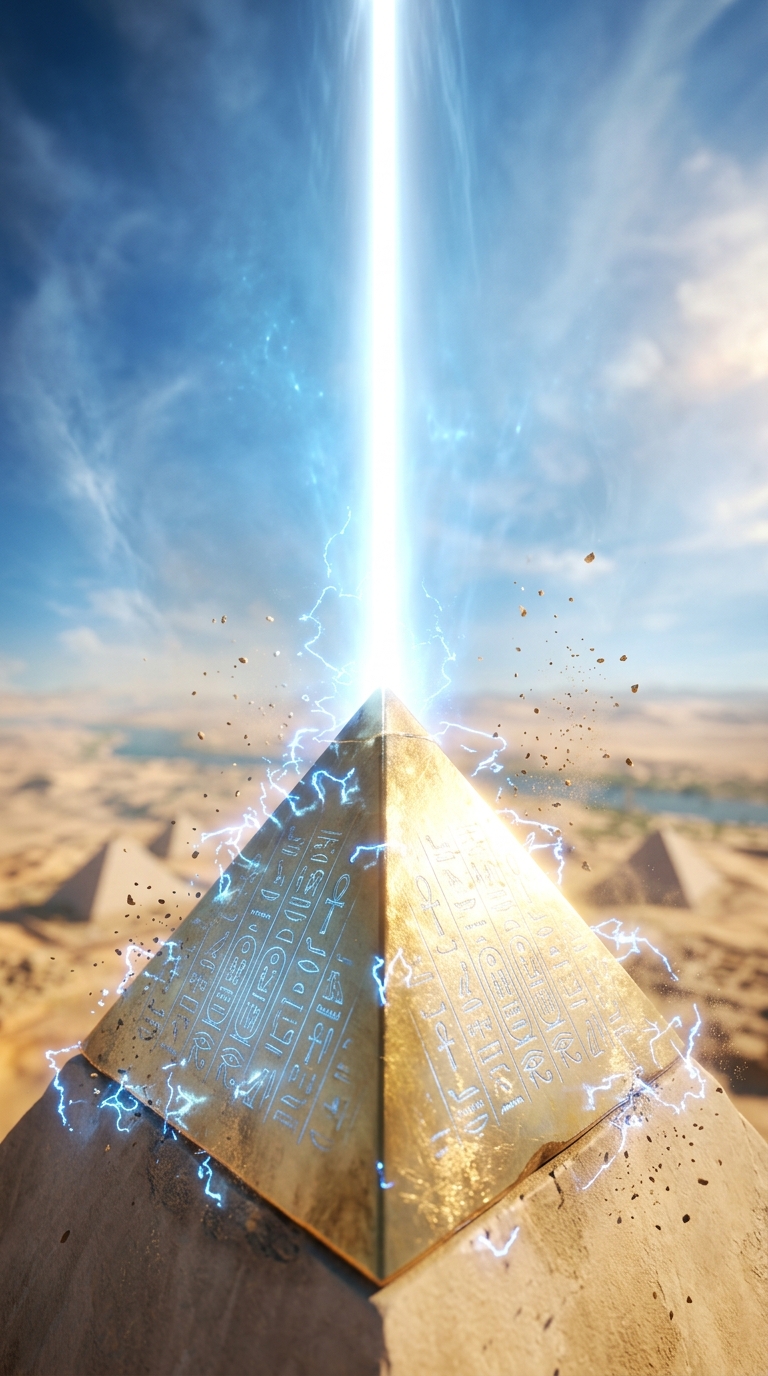
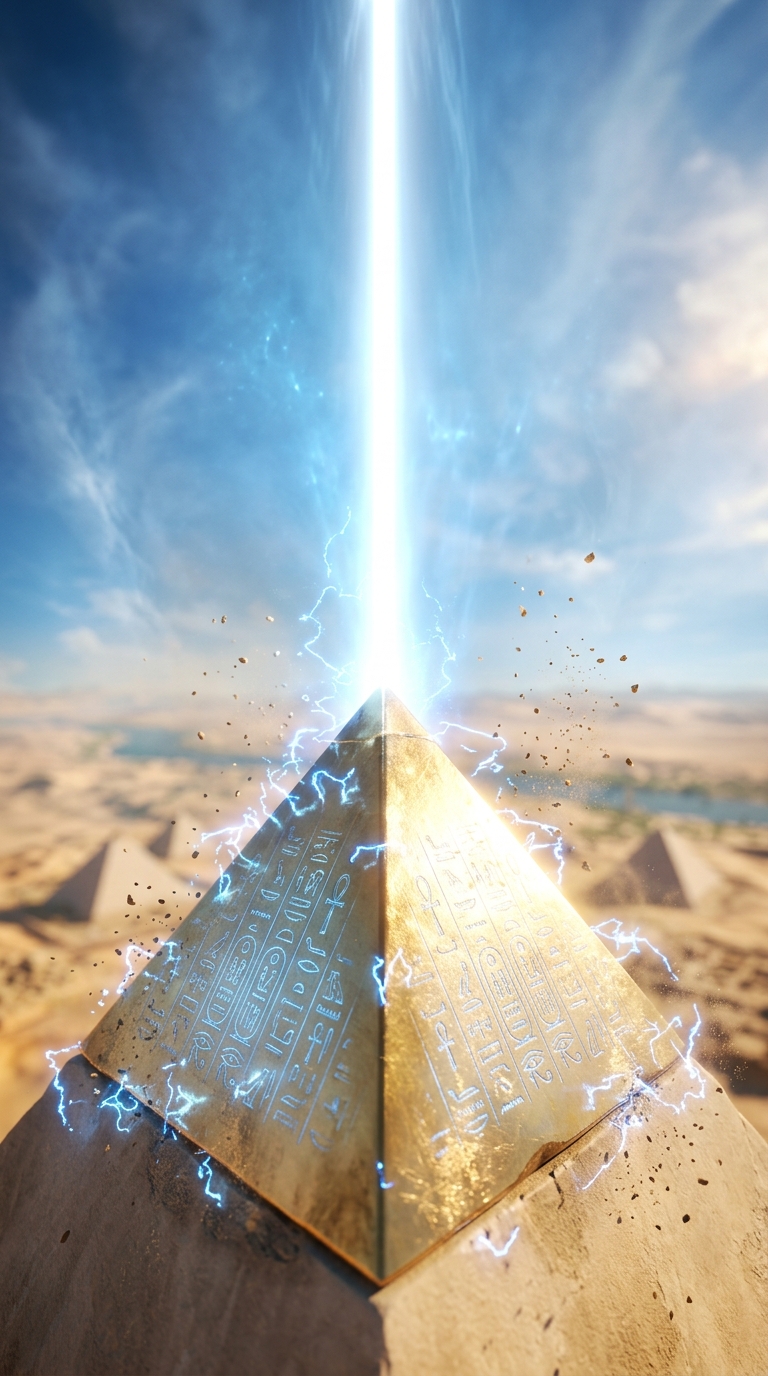
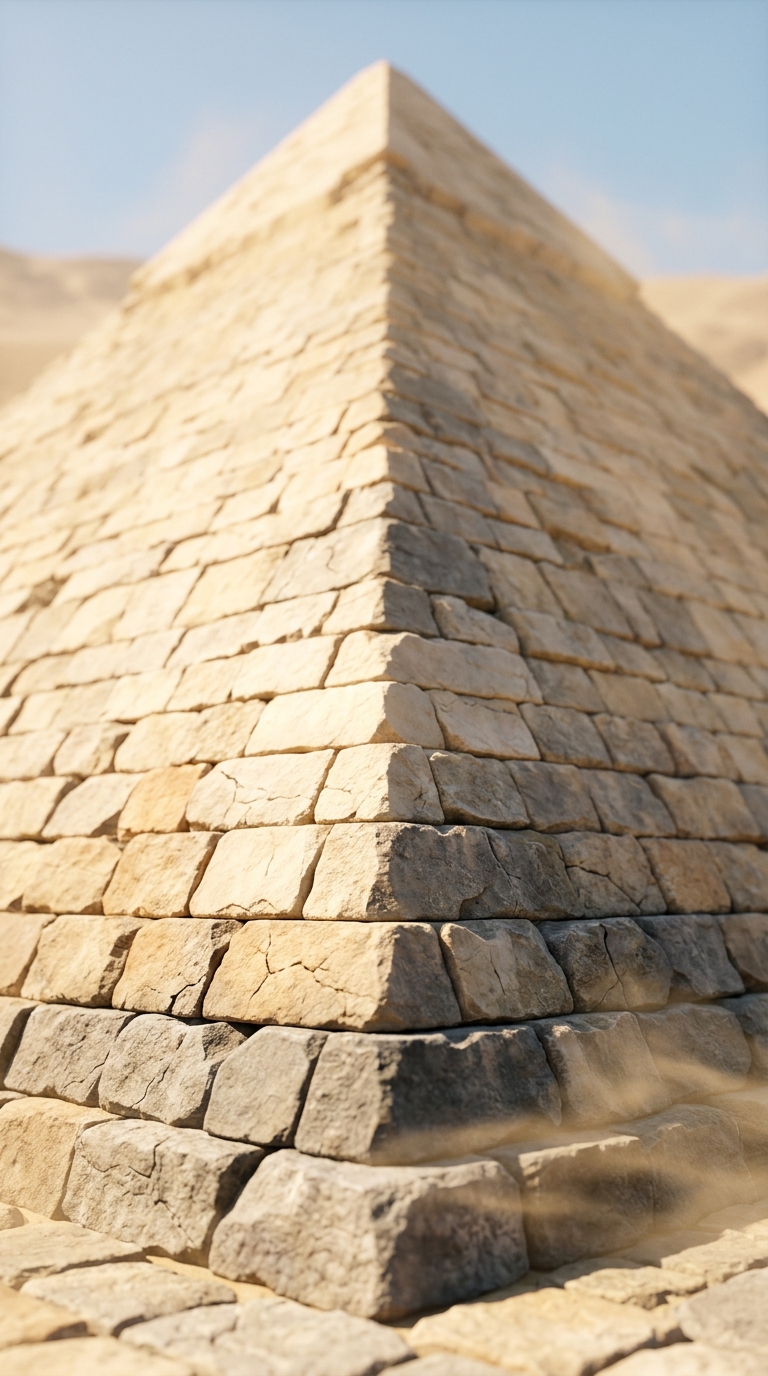
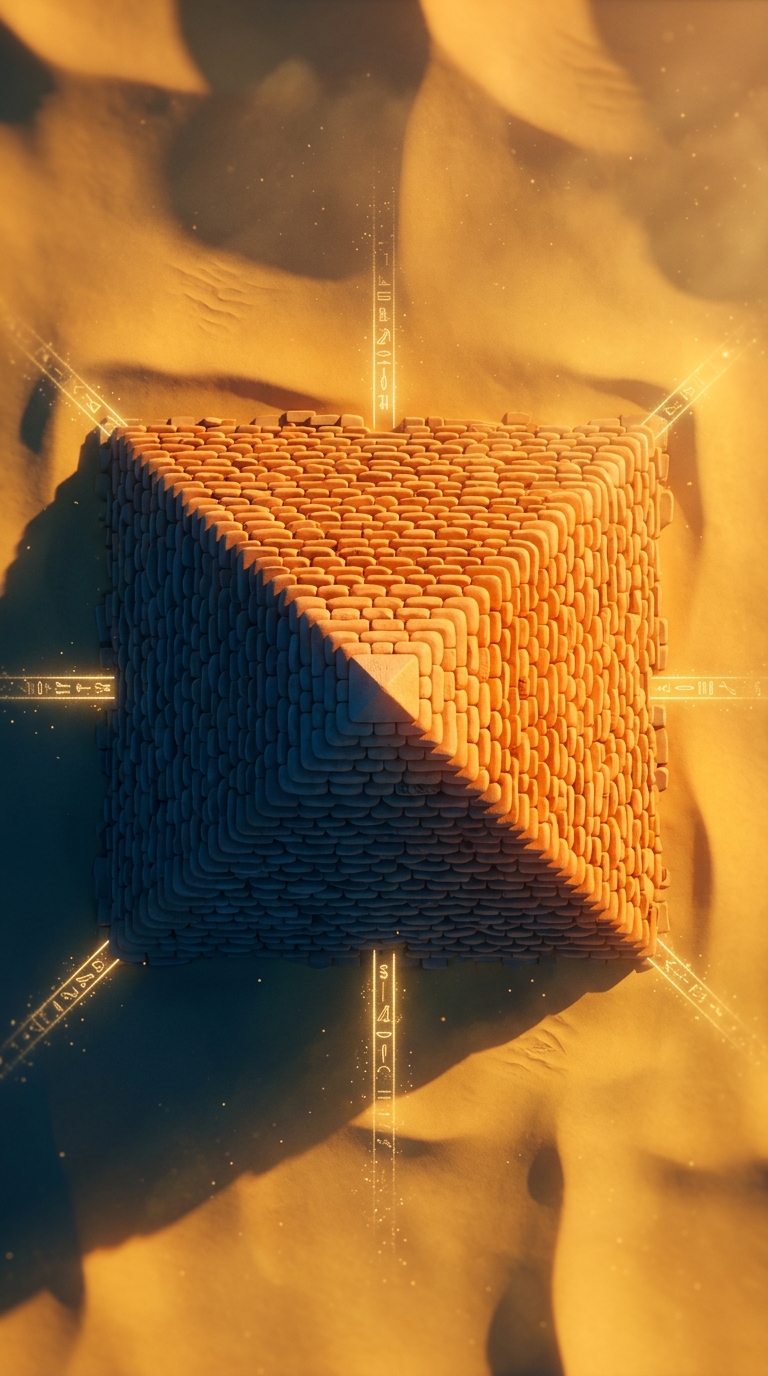
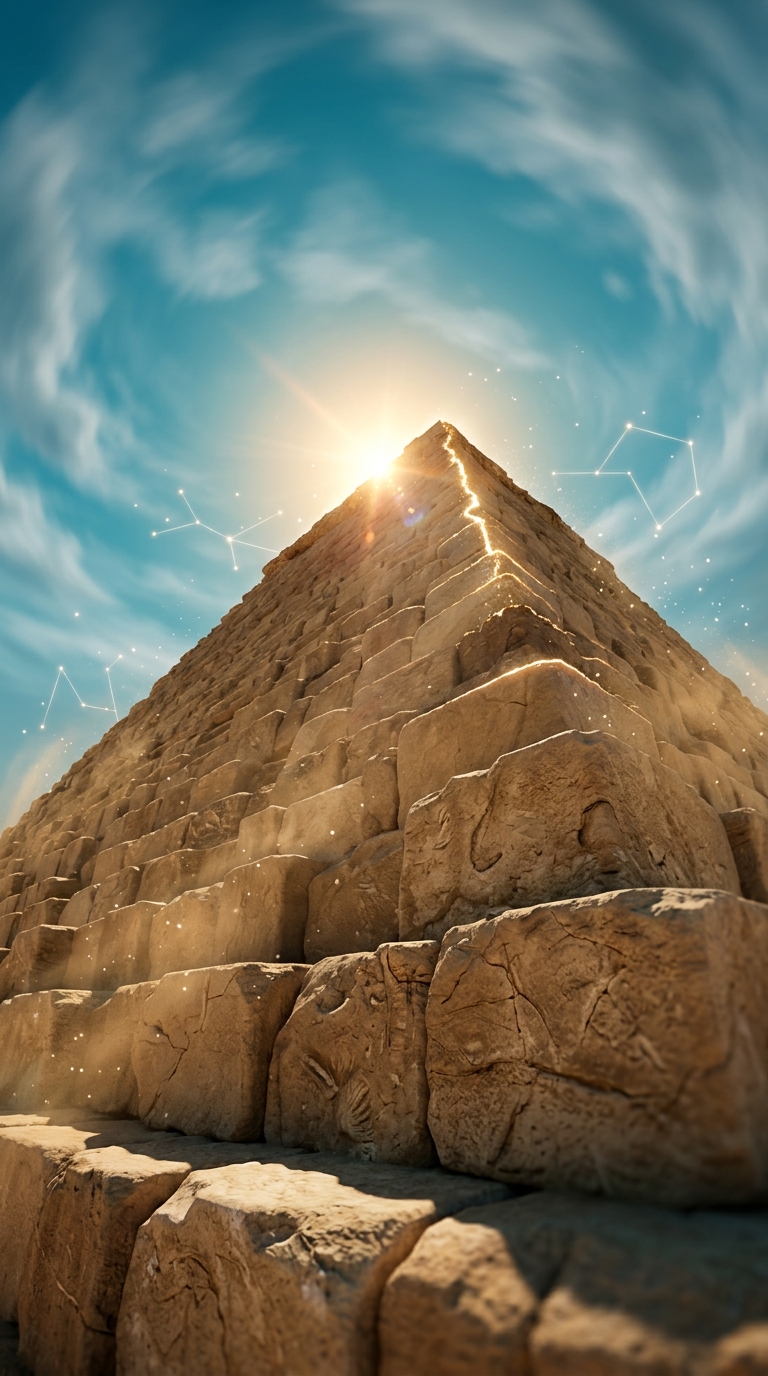
Art style: 3D Pixar. An extreme close-up of the very tip of the pyramid, the pyramidion. The stone here is smoother, perhaps once covered in electrum, catching the sun's rays with a blinding intensity. A single, thin beam of pure white light shoots vertically from the point of the capstone into the heavens. The surrounding air is ionized, with small sparks of blue static electricity dancing around the peak. The background is a dizzying view of the desert far below, blurred by distance and heat haze. The lighting is dominated by the brilliant white vertical beam and the golden rim light of the sun. The textures of the capstone are refined, showing faint, etched hieroglyphs that glow with a soft blue light. The color palette is almost monochromatic gold and white, with sharp accents of electric blue. The atmosphere is tense and energetic, as if a great machine has just been switched on. Tiny fragments of stone and dust are lifted off the surface by the energy, hovering in mid-air. The composition is tight and vertical, focusing entirely on the apex and the beam of light. ━━━━━━━━━━━━━━━━━━━━━━━━━━━━━━━━━━━━━━ FINAL STYLE ENFORCEMENT (this is the authoritative rendering directive — it overrides any style wording elsewhere in the prompt): Render this image in the following art style: Pixar-style 3D computer animation (Pixar / Disney feature-film look) — fully volumetric 3D rendering with rounded dimensional forms, soft subsurface-scattering skin, physically based materials, soft global illumination, warm cinematic key light, gentle depth of field, vibrant family-friendly colours. CRITICAL: EVERY element — characters, foliage, trees, animals, water, sky, props and the entire environment — must be rendered as polished 3D CGI with real depth and form. This is NOT flat 2D illustration, NOT a watercolour or storybook painting, NOT cel-shaded anime. Every surface, skin, fabric, material, and environmental element must be rendered in this idiom.
Free to start · Generate videos and images with AI in seconds