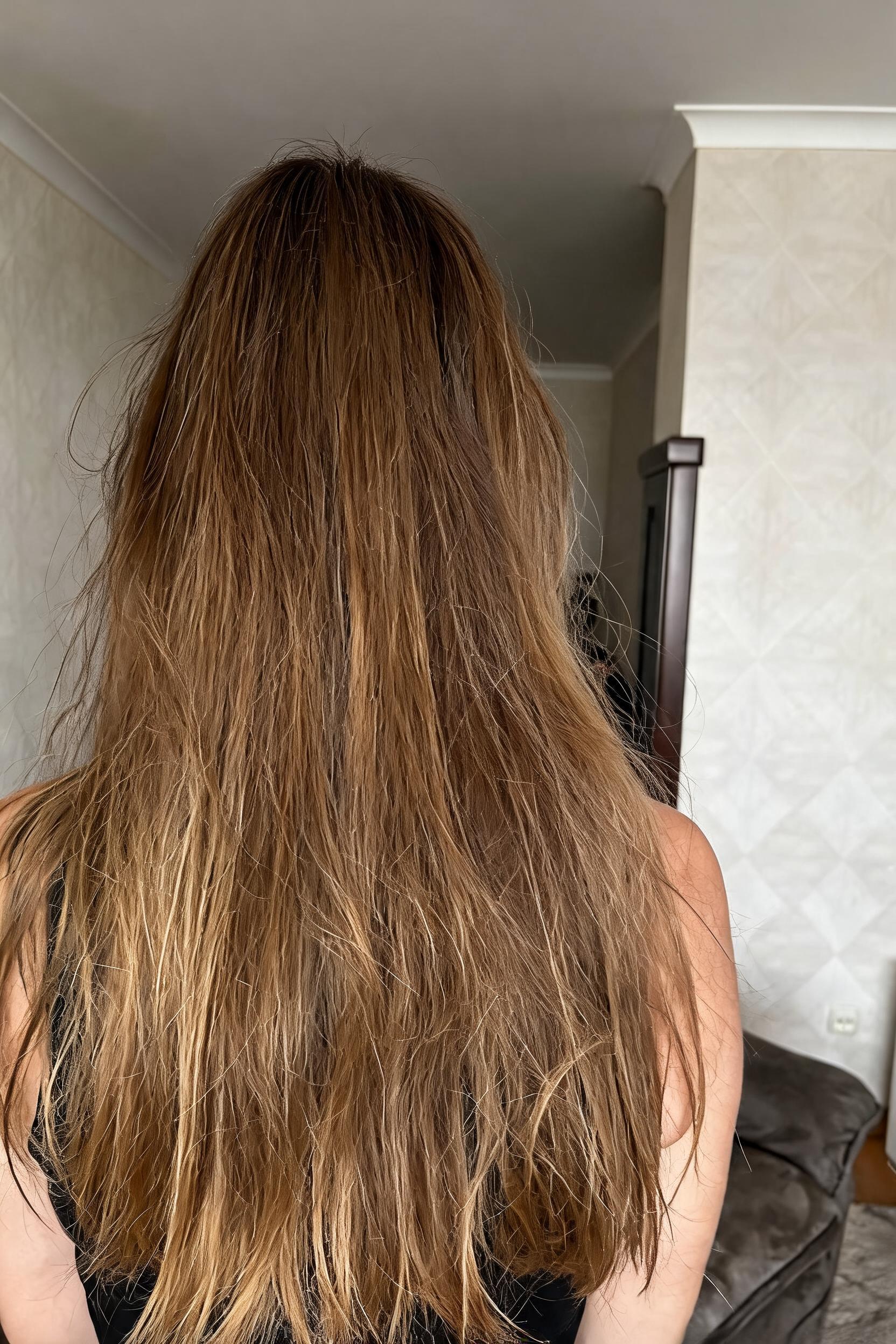
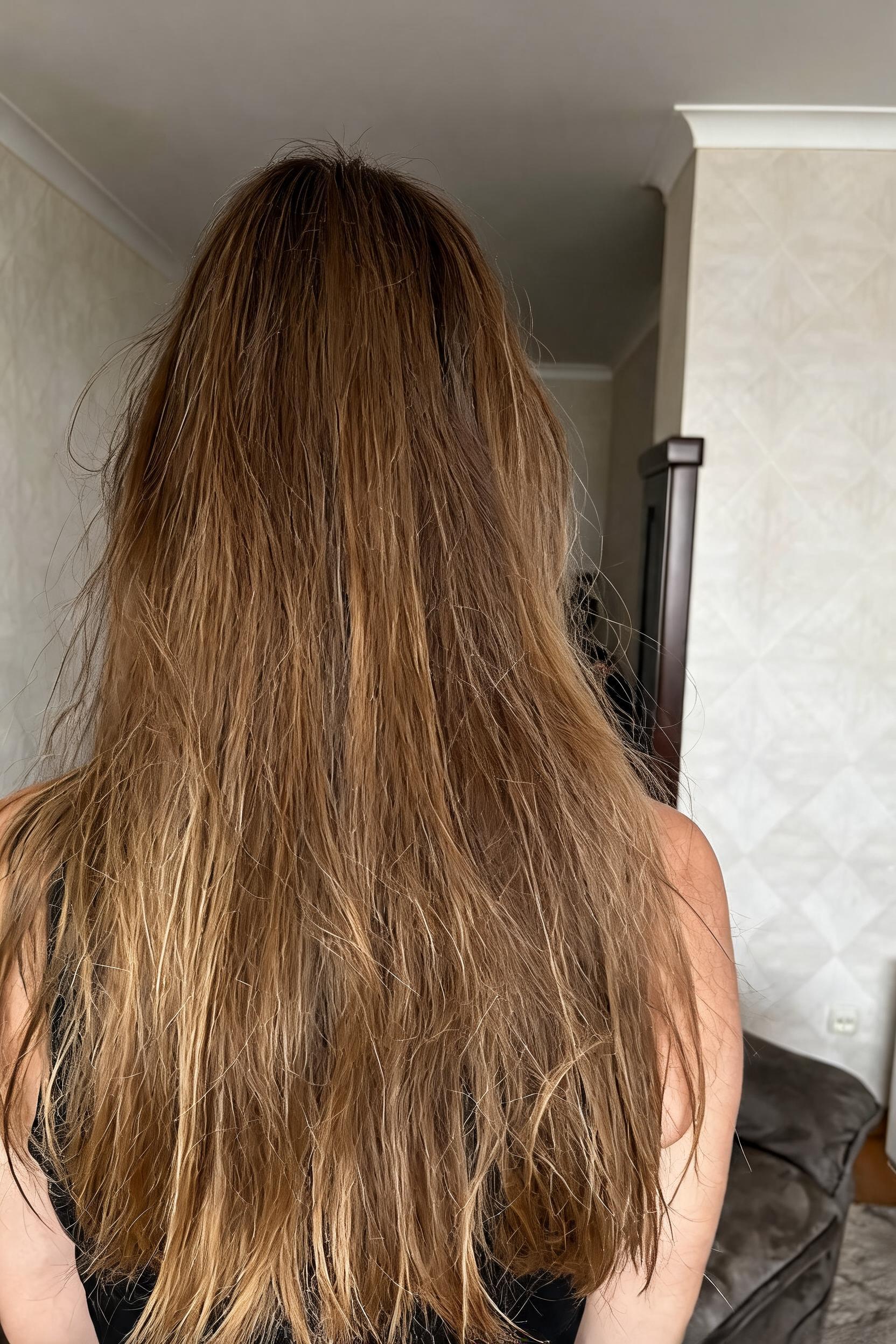
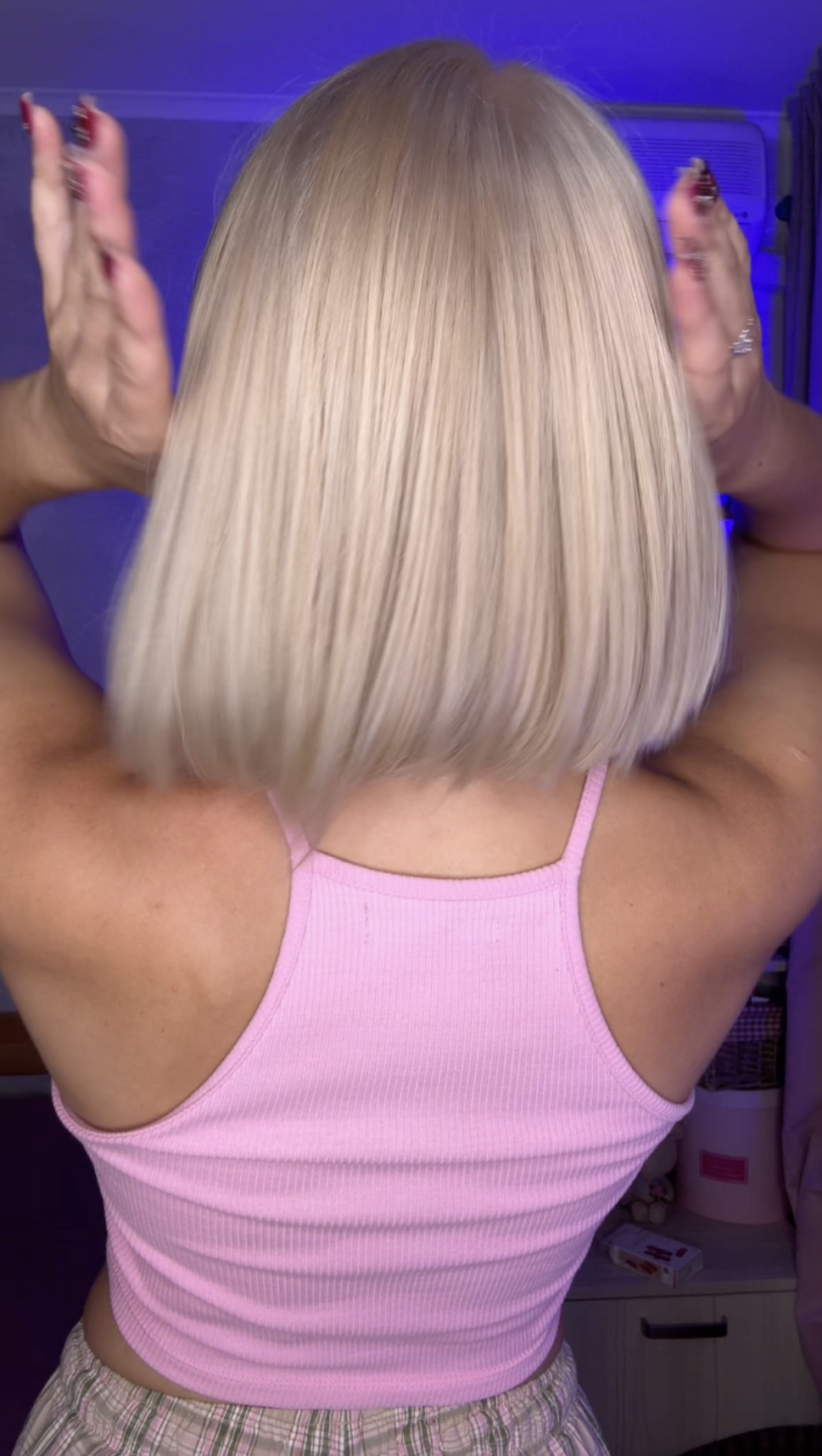
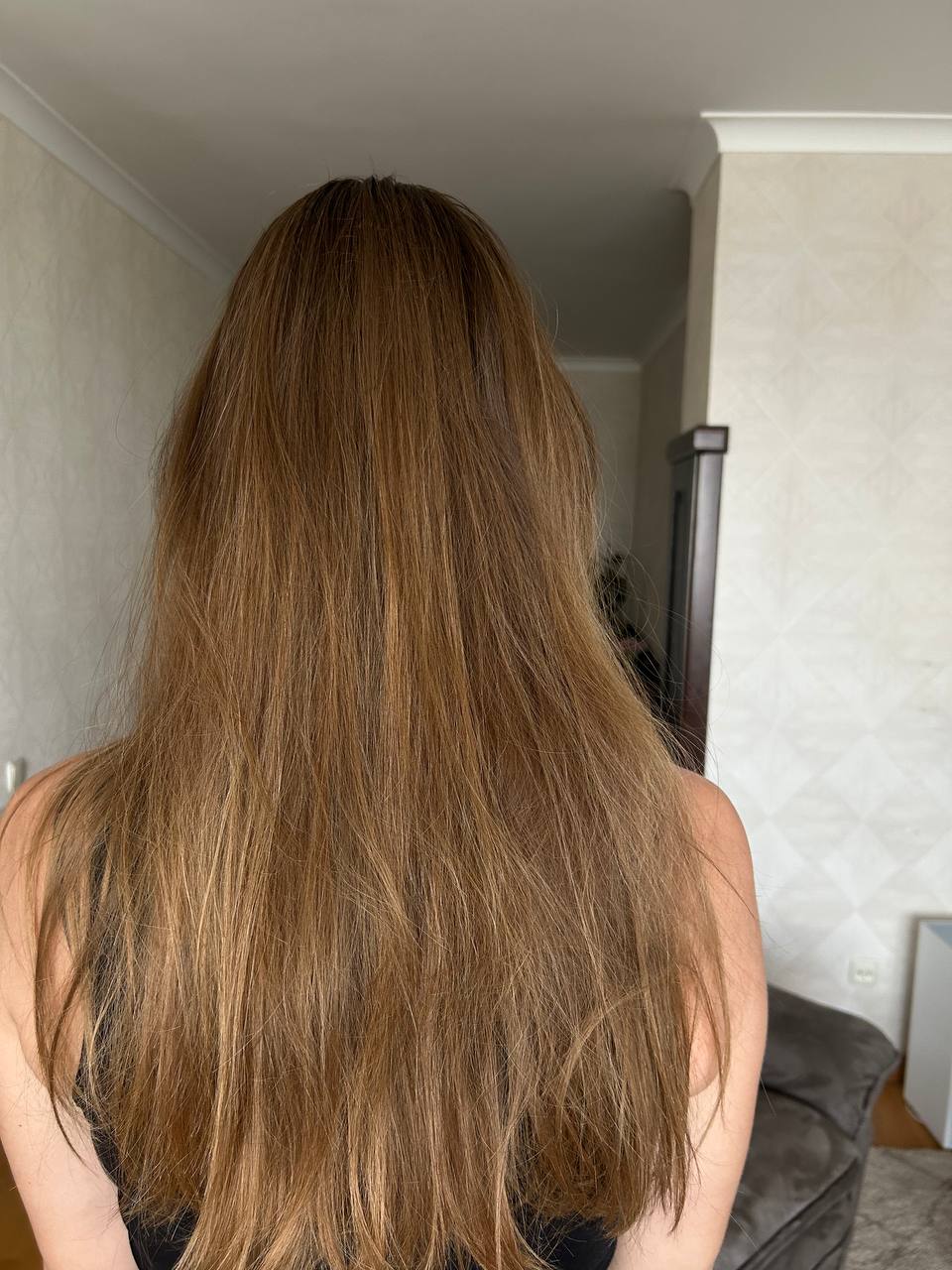
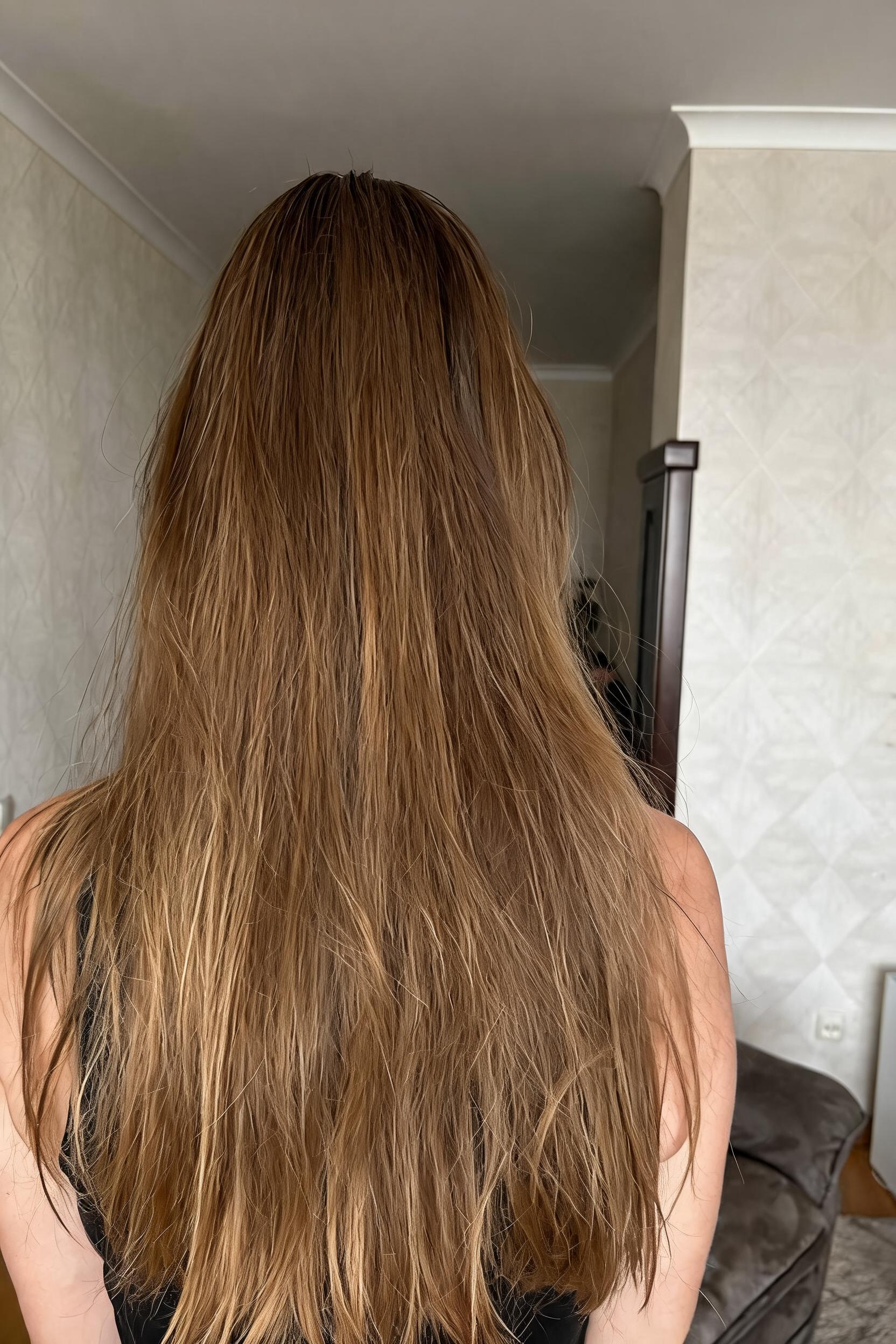
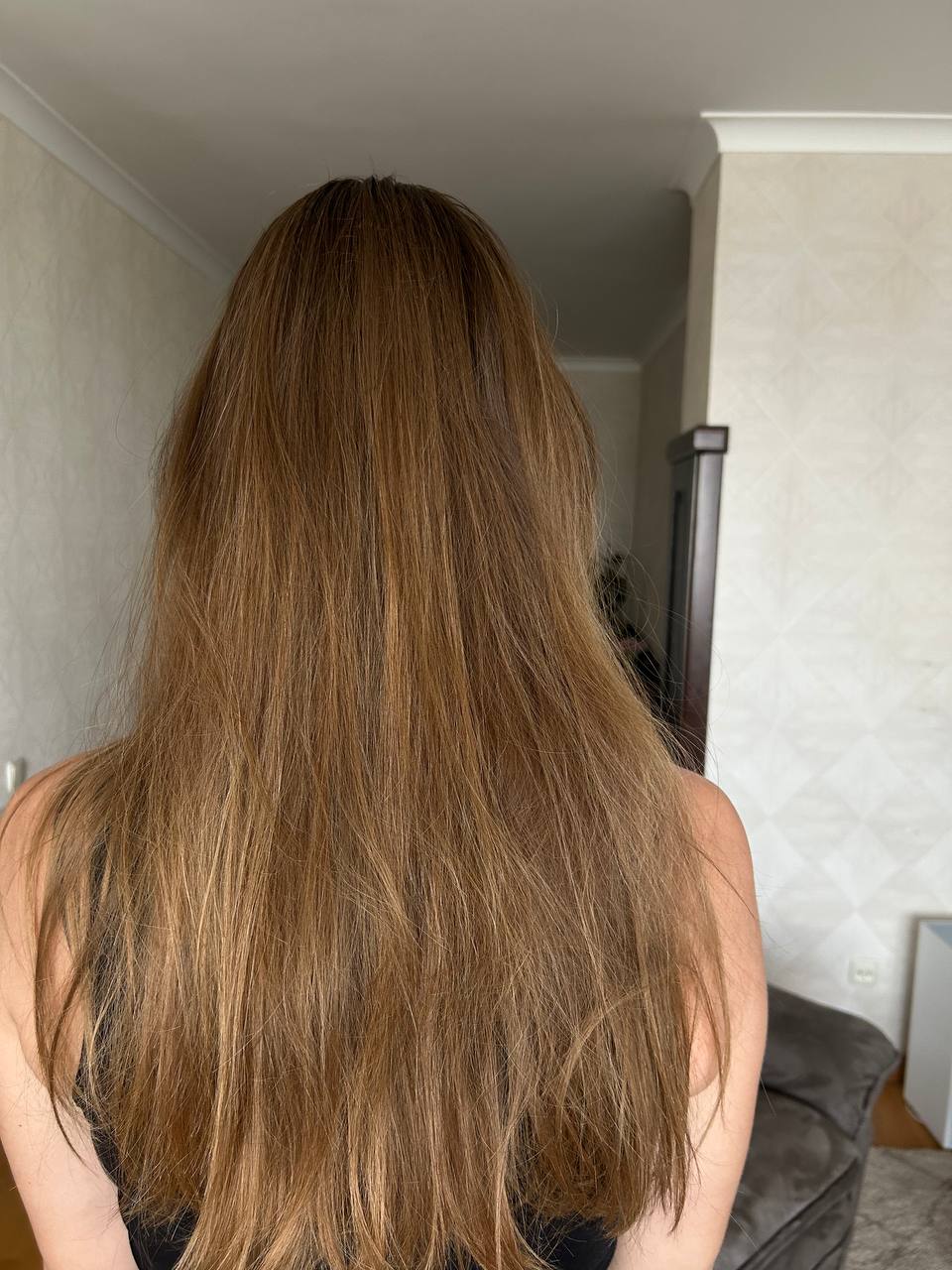
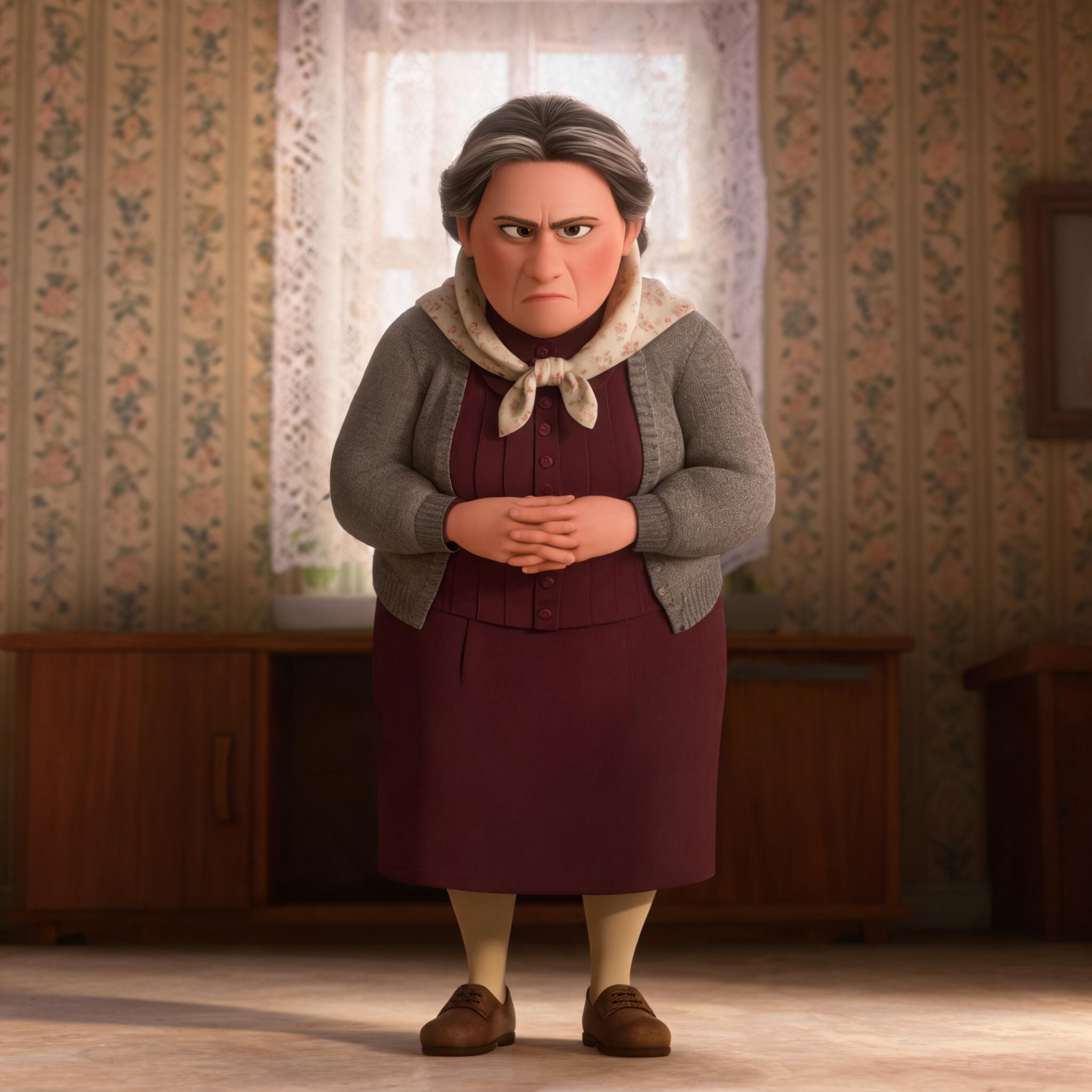
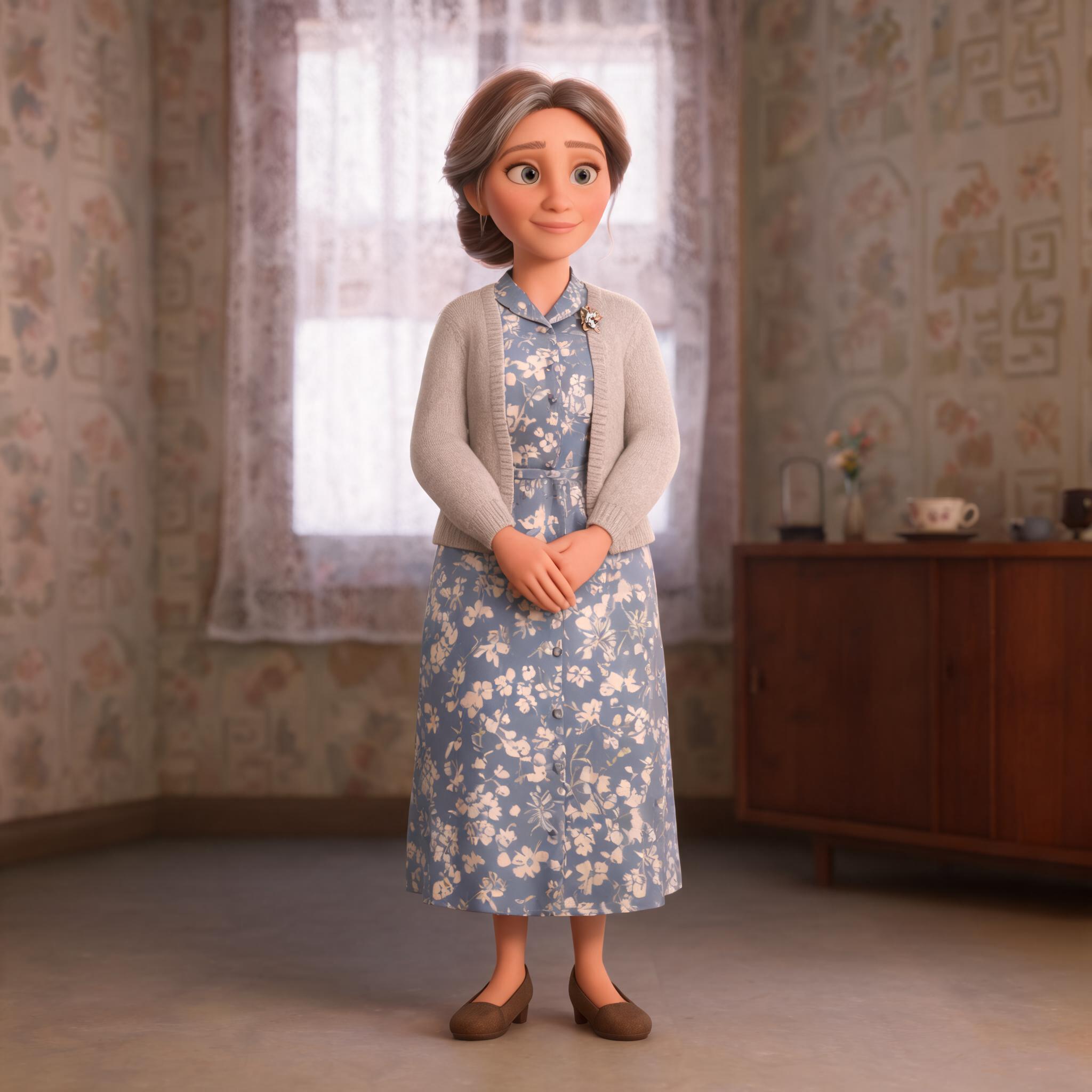
Keep the exact same woman, face, identity, pose, hairstyle, clothing, background, camera angle and lighting. Do not change anything except the condition and texture of her hair.
Make this a clearly more damaged “before” version of her hair.
Increase the visible difference:
make the hair noticeably drier and rougher throughout the lengths
make the lengths look less smooth, less silky and more porous
add natural frizz and flyaways
make some strands look slightly tangled and uneven, as if the hair has been difficult to brush
make the ends thinner, more uneven and visibly split/frayed
slightly reduce the fullness and density toward the ends
create subtle clumping and small areas where individual strands naturally catch and overlap
The damage should be clearly visible in the photograph, especially along the mid-lengths and ends, but still look like real untreated human hair.
Do NOT make it extremely damaged, burnt, straw-like or chemically destroyed. Do not add bald spots or excessive hair loss. Do not change the woman’s face, skin, body, clothes, background or overall hairstyle.
The final image should look like a real unedited photograph taken before she started using a nourishing hair oil, with noticeably dry, tangled, frizzy and split hair.