Use the source image as a strict visual reference. Preserve the original design, composition, col...
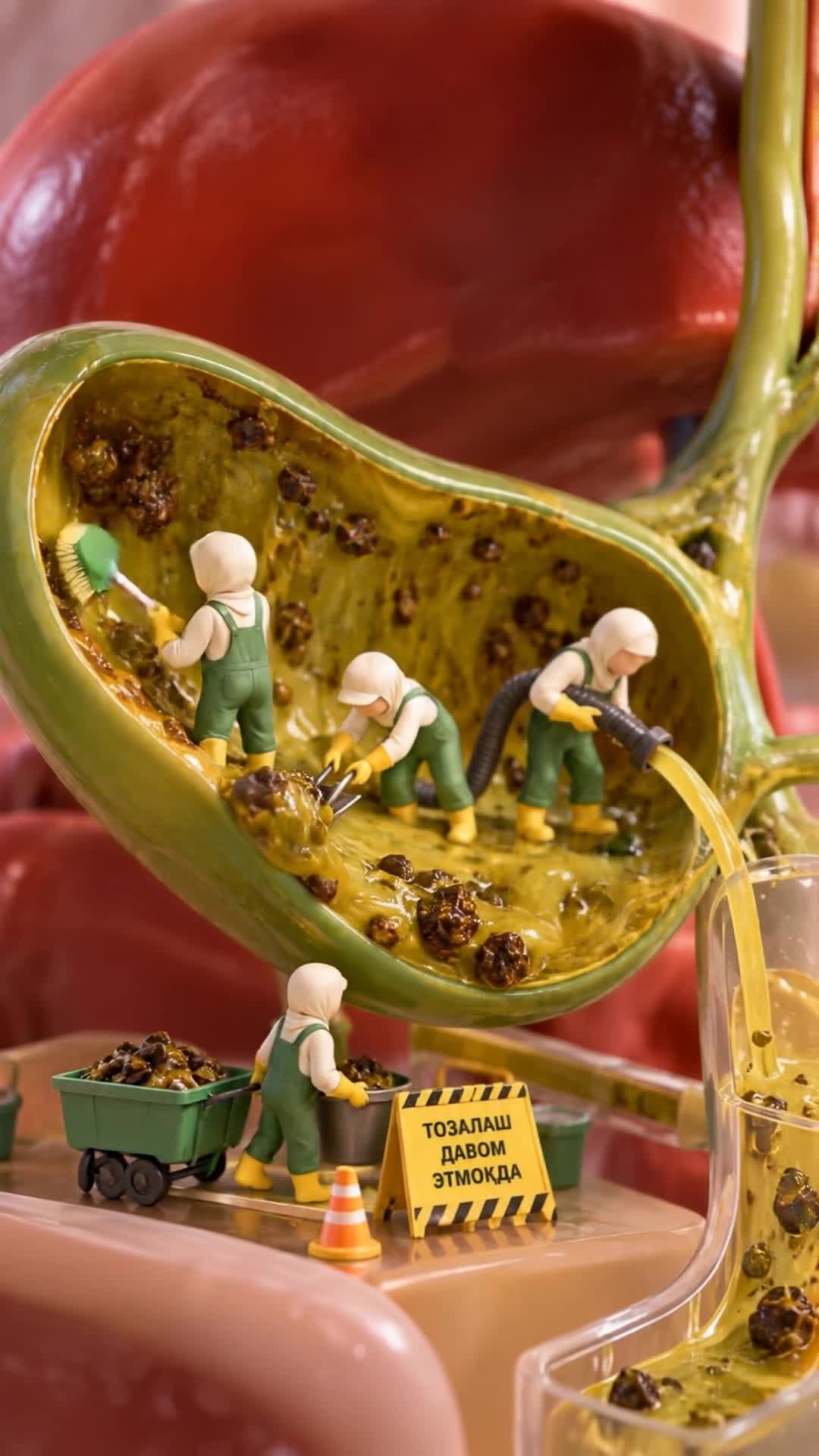
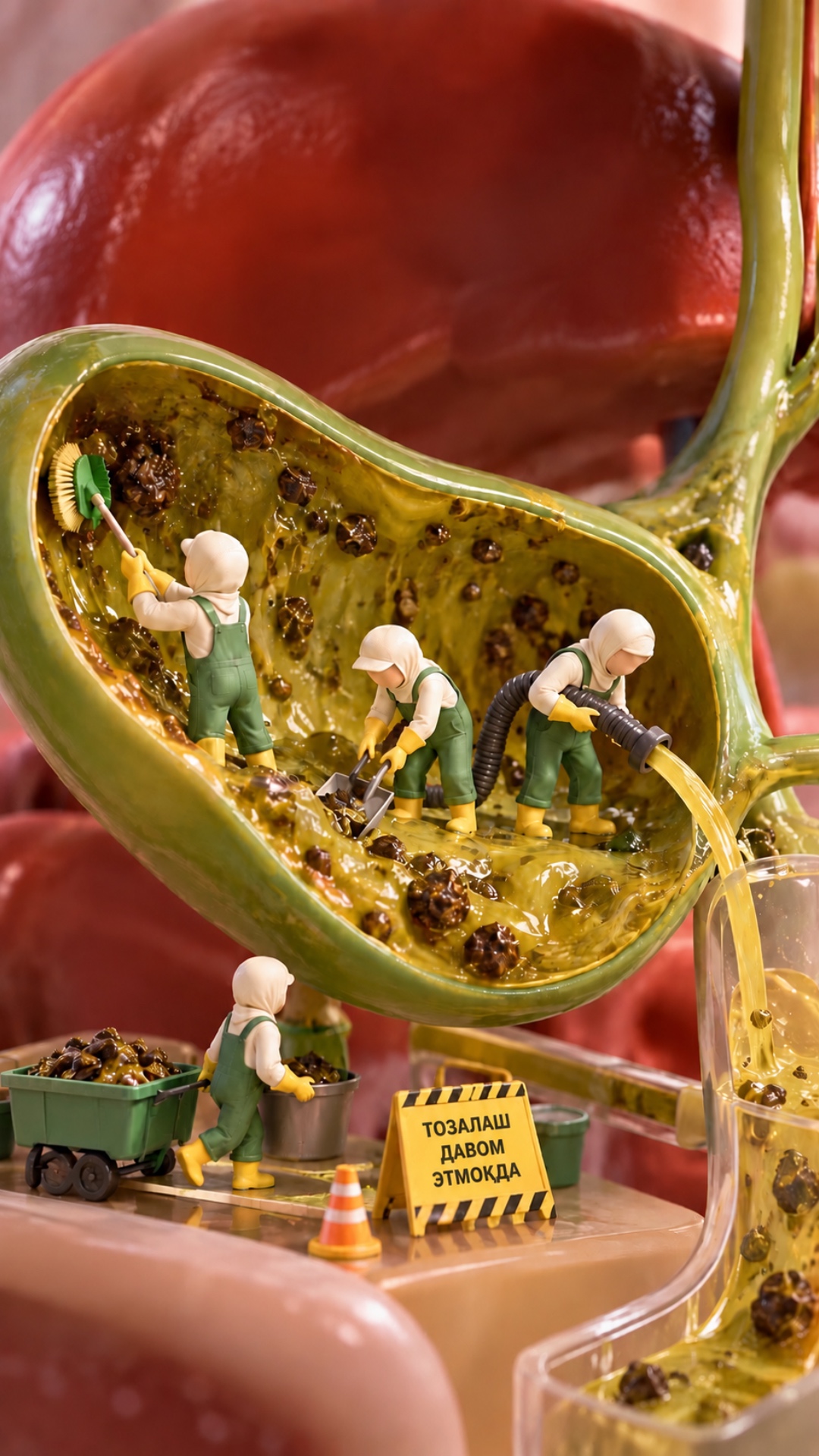
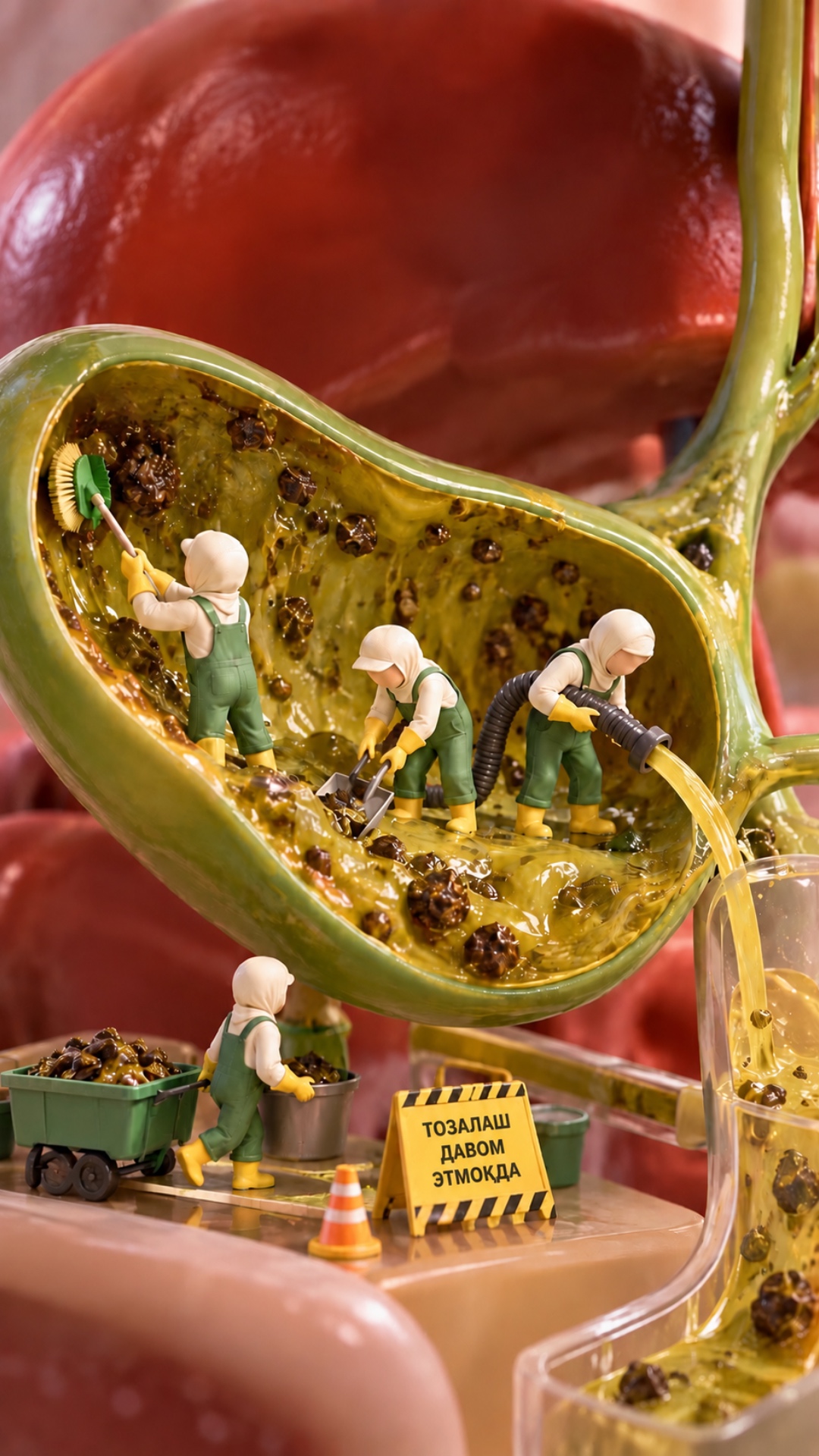
Use the source image as a strict visual reference. Preserve the original design, composition, colors, color tones, lighting, positions of all objects, miniature workers, tools, and details as accurately as possible. The camera must remain completely static. No zooming in or out, no camera movement, no angle changes, no panning, and no shaking. The frame must remain exactly as in the source image. Animate only the action happening inside the scene. The miniature workers are actively cleaning the inner surface of the gallbladder from thick yellow-green stagnant buildup and dense deposits. The worker with the brush carefully scrubs the dirty surface. The brush moves with slight pressure, and the thick sticky buildup gradually loosens and peels away in small pieces. Another worker collects the loosened dense pieces with a shovel and places them into a container. The workers’ movements are small, natural, and realistic. The worker with the large black suction hose gradually sucks up the thick liquid, small particles, and loosened deposits. Clearly show the liquid slowly moving toward the hose and being pulled inside. The liquid flows naturally, gently ripples, forms small waves and droplets. Areas that have been cleaned gradually look visibly cleaner. The entire cleaning process should feel highly detailed, satisfying, and mesmerizing to watch. The gallbladder and surrounding tissues should feel like they are inside a living human body. Add extremely subtle, slow, natural micro-movements of the soft tissues: barely noticeable expansion and relaxation of the walls and a gentle organic pulsation of the surrounding tissue. These movements must be minimal and smooth. The viewer should feel that the scene is happening inside a living organism rather than clearly seeing strong pulsation. The gallbladder must not beat like a heart or noticeably deform. Preserve its original shape and position. The liquid may react very slightly to the natural micro-movements of the surrounding tissues. ASMR sound design is extremely important. No music, no speech, no voices. Use close, crisp, highly detailed sounds: wet scrubbing with a stiff brush, soft scraping of sticky buildup, subtle sounds of deposits peeling away, suction of thick liquid through the hose, gentle liquid gurgling, flowing liquid, individual droplets, and soft metallic tapping when small solid pieces fall into the container. The audio should make the cleaning process feel exceptionally satisfying and imme
Free to start · Generate videos and images with AI in seconds