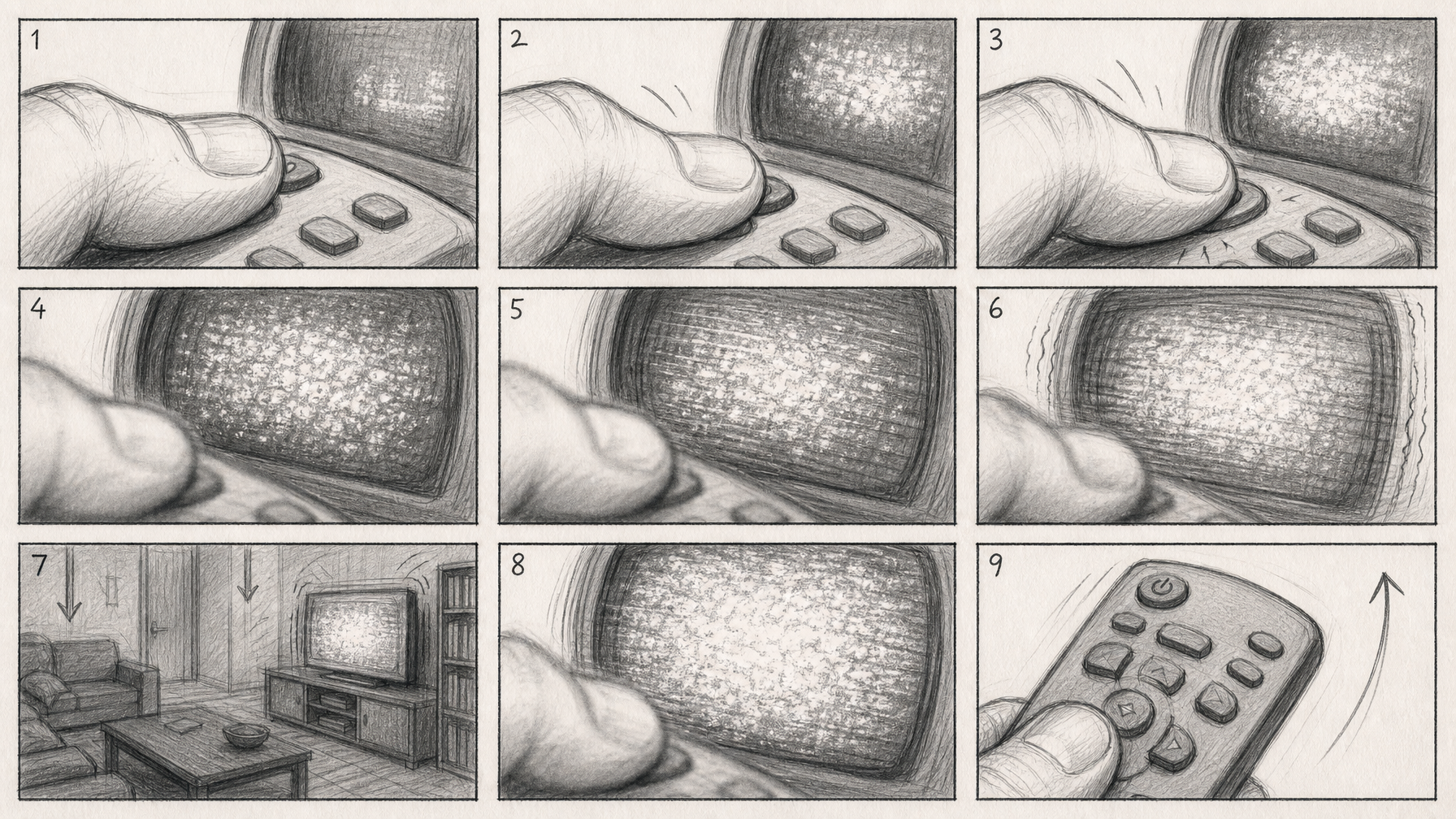
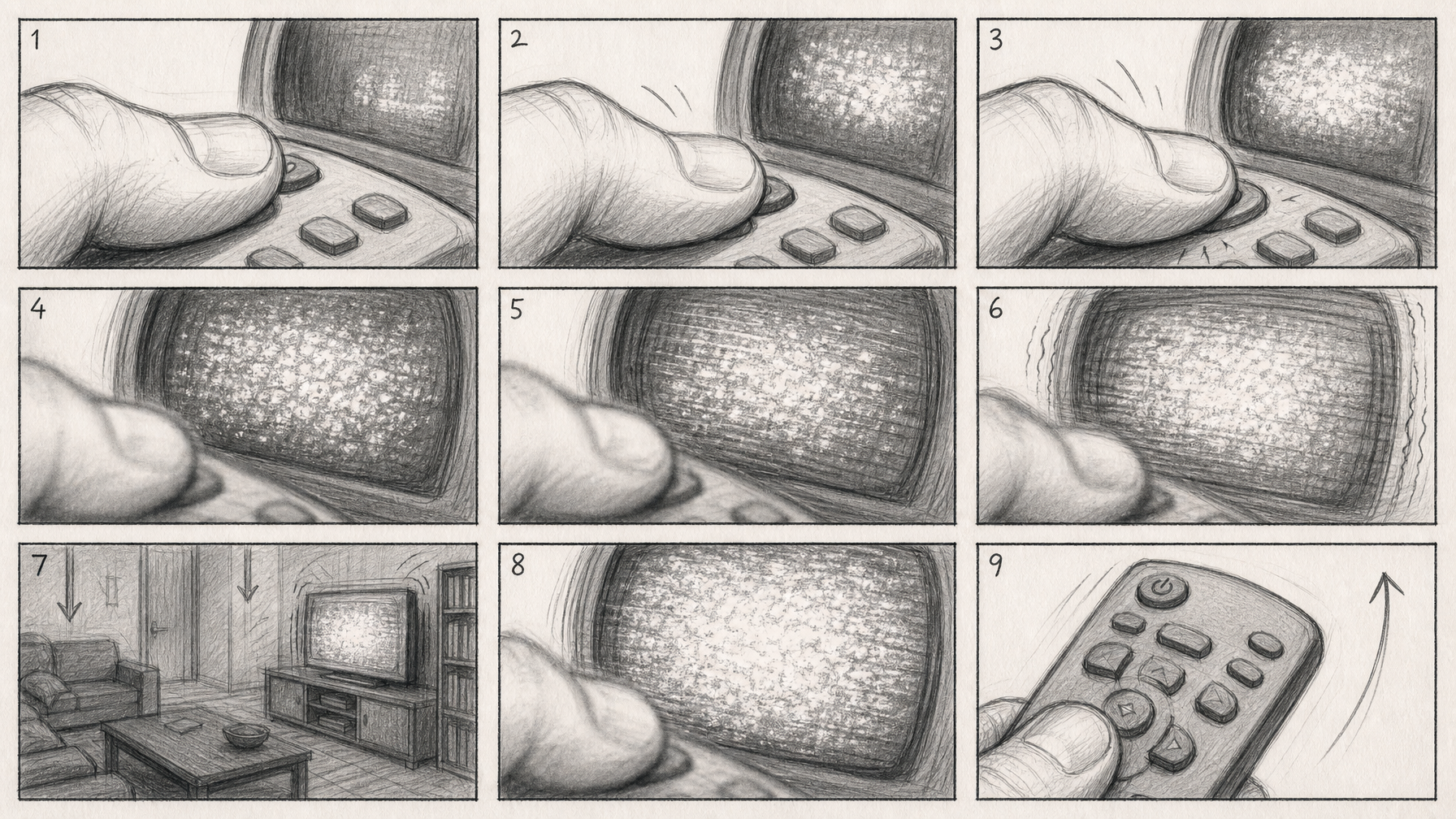
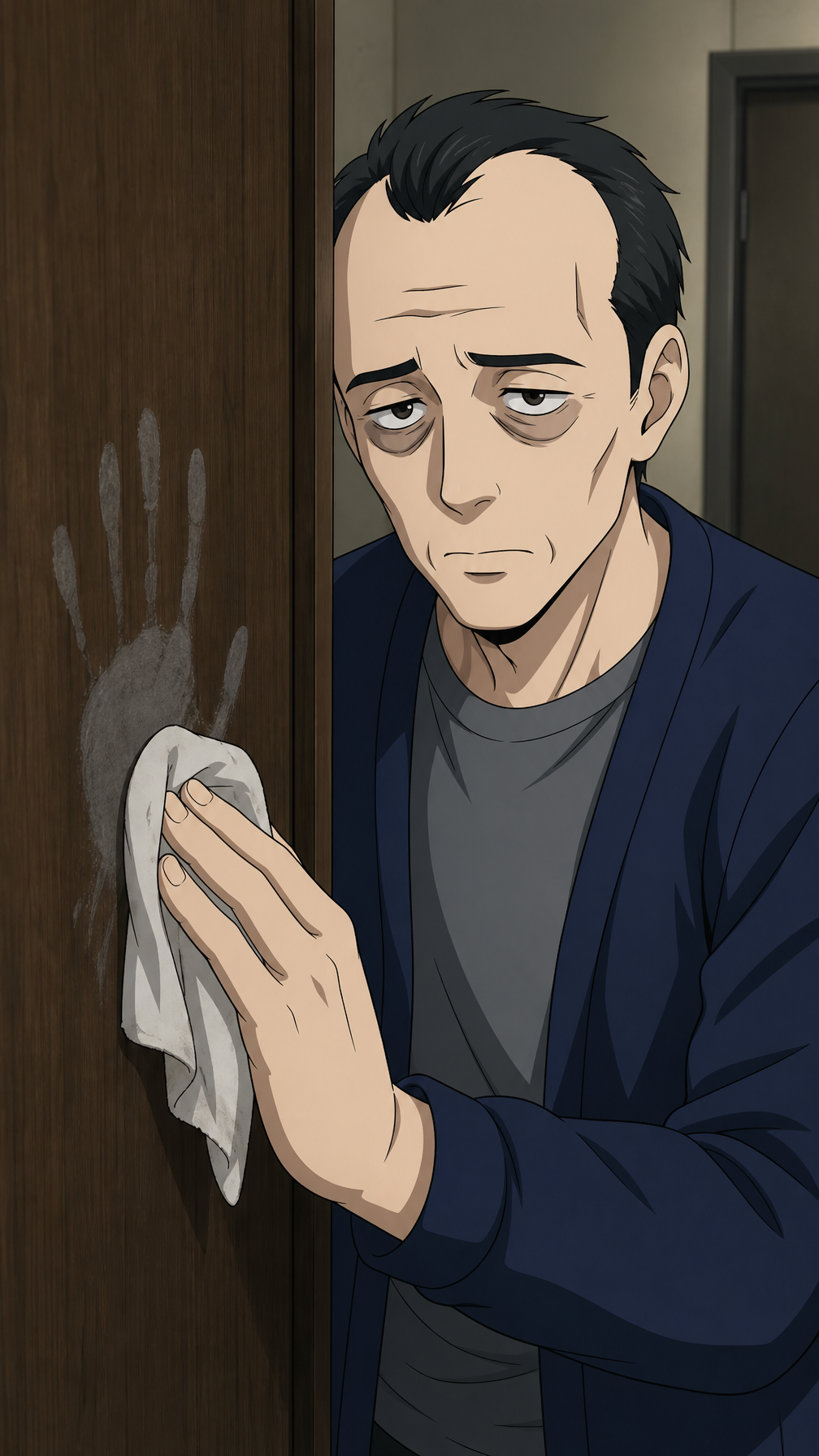
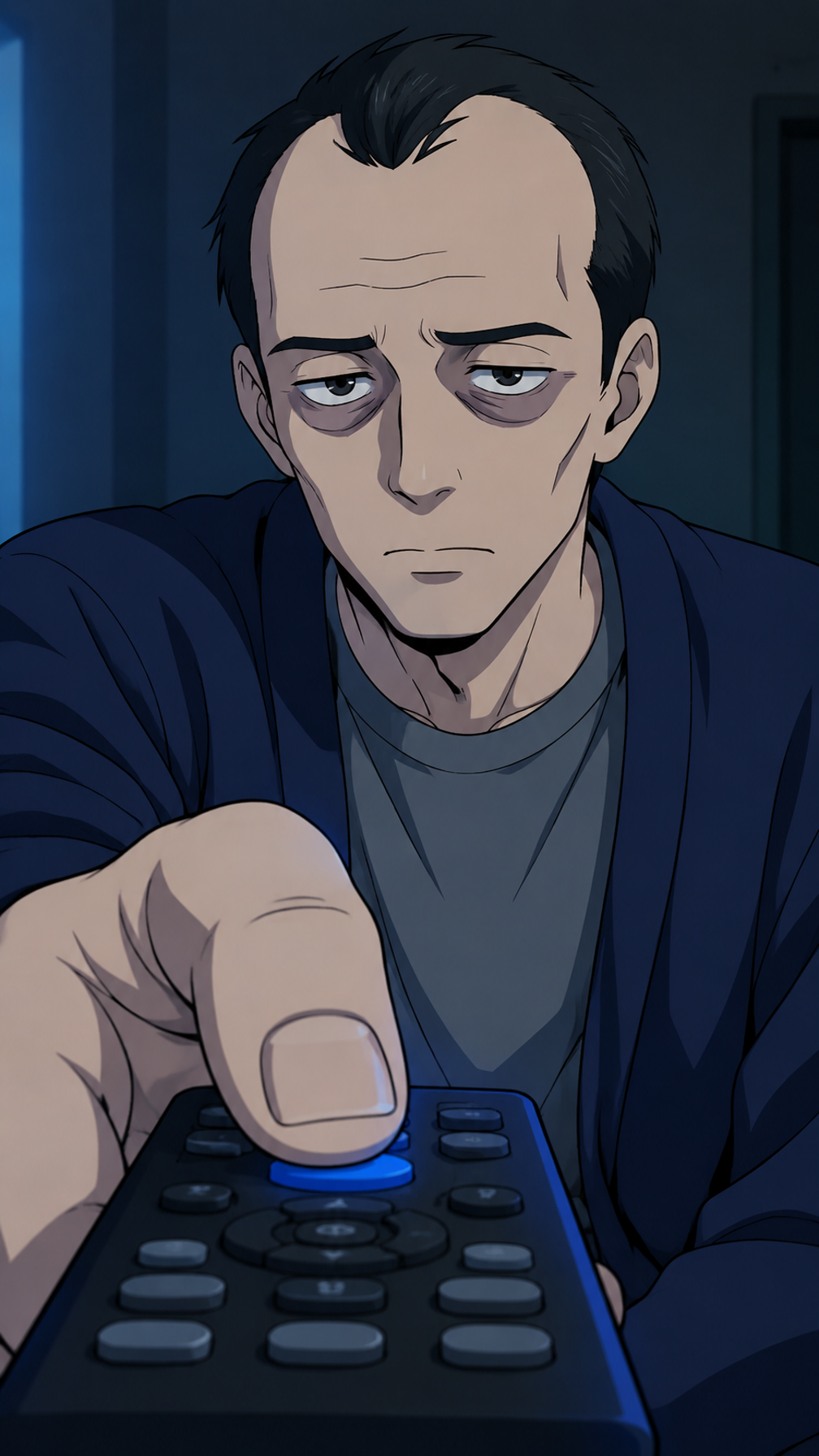
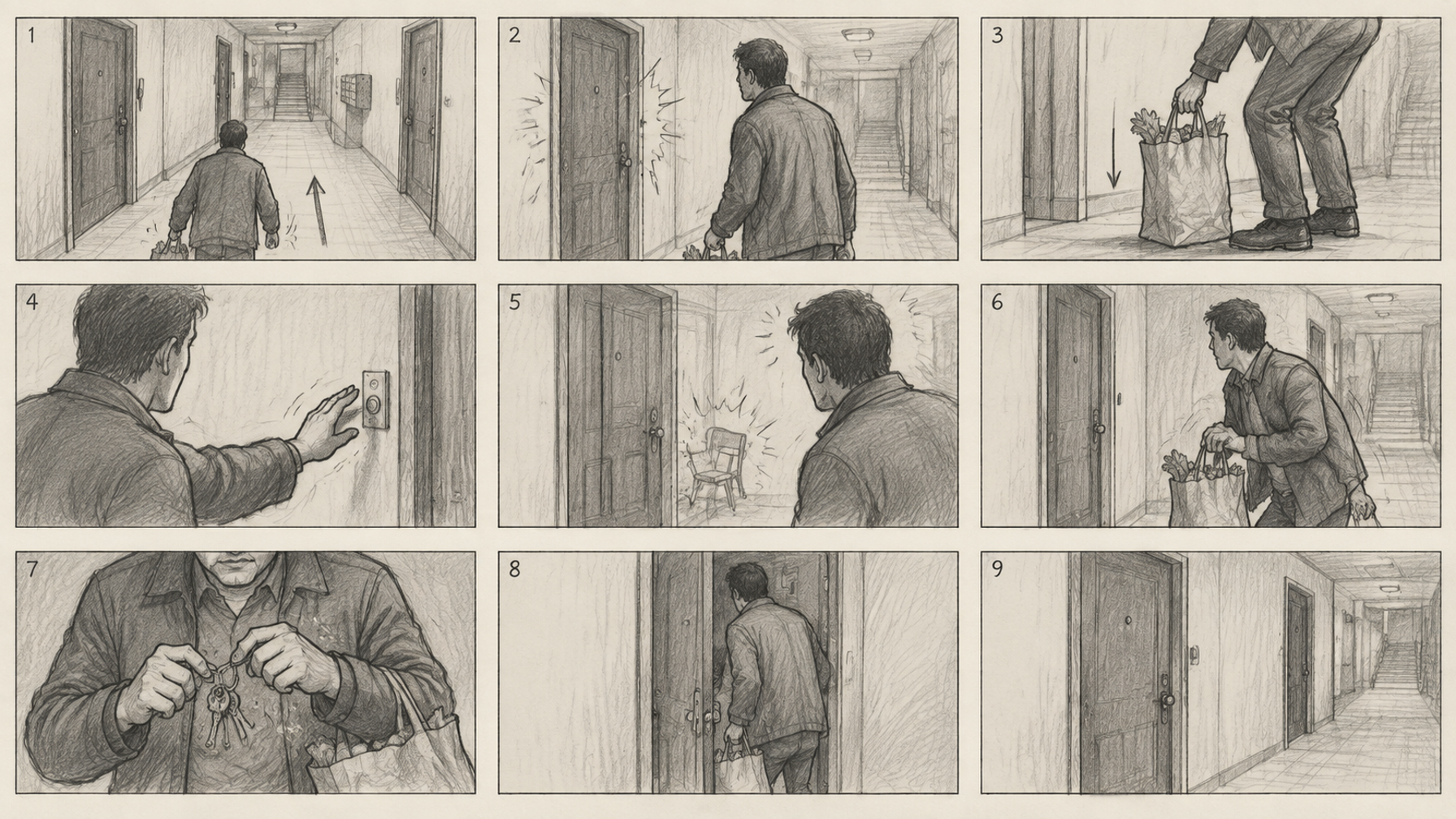





A traditional hand-drawn FILM STORYBOARD SHEET for scene 1: one page divided into a clean 3x3 grid of NINE separate rectangular panels, three rows of three, each panel a 16:9 rectangle with a thin ruled black border and a small hand-written panel number in its top-left corner from 1 to 9. Thin white gutters between panels. Off-white paper background with faint tooth. MEDIUM, STRICT: rough graphite pencil drawing only. Loose confident director's sketch, visible pencil strokes, hatching and smudged shading for shadow, some construction lines left in. Monochrome grey graphite, NO colour anywhere, NO paint, NO digital rendering, NO photorealism. It must look drawn by hand on paper in a few minutes per panel. No named characters — stage the action with anonymous figures. Divide the following 6-second scene into NINE consecutive story beats yourself, in strict chronological order, and draw one panel per beat. Vary the shot size between panels — do not draw nine versions of the same framing. THE SCENE: The camera is locked off in an extreme close-up. The Man's thumb pushes harder against the button, the plastic casing creaking slightly. On the screen in the background, visible only as a reflection, white static noise intensifies. The frame vibrates slightly as a heavy, muffled thud resonates through the apartment walls, immediately drowned out by the rising television hiss. The shot ends with a slow tilt up to a high-angle close-up of the remote. Draw camera arrows and simple motion lines in pencil where movement matters, and keep every panel's staging consistent with the one before it — this sheet is a shooting plan, so a person standing screen-left in one panel stays screen-left in the next unless the action moves them. NO text or captions anywhere except the small panel numbers 1 to 9. No title block, no handwriting in the margins, no speech bubbles, no subtitles, no watermark, no logo.
Free to start · Generate videos and images with AI in seconds