Image - 2026-09-24 04:42
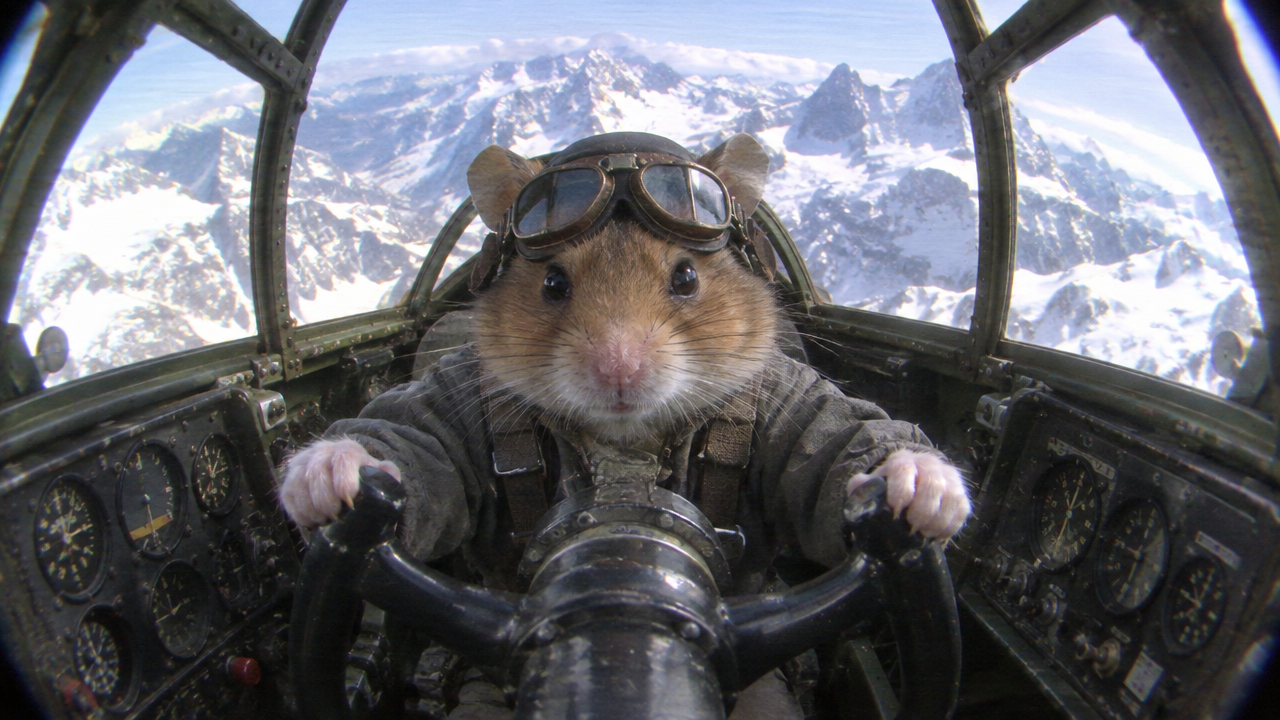
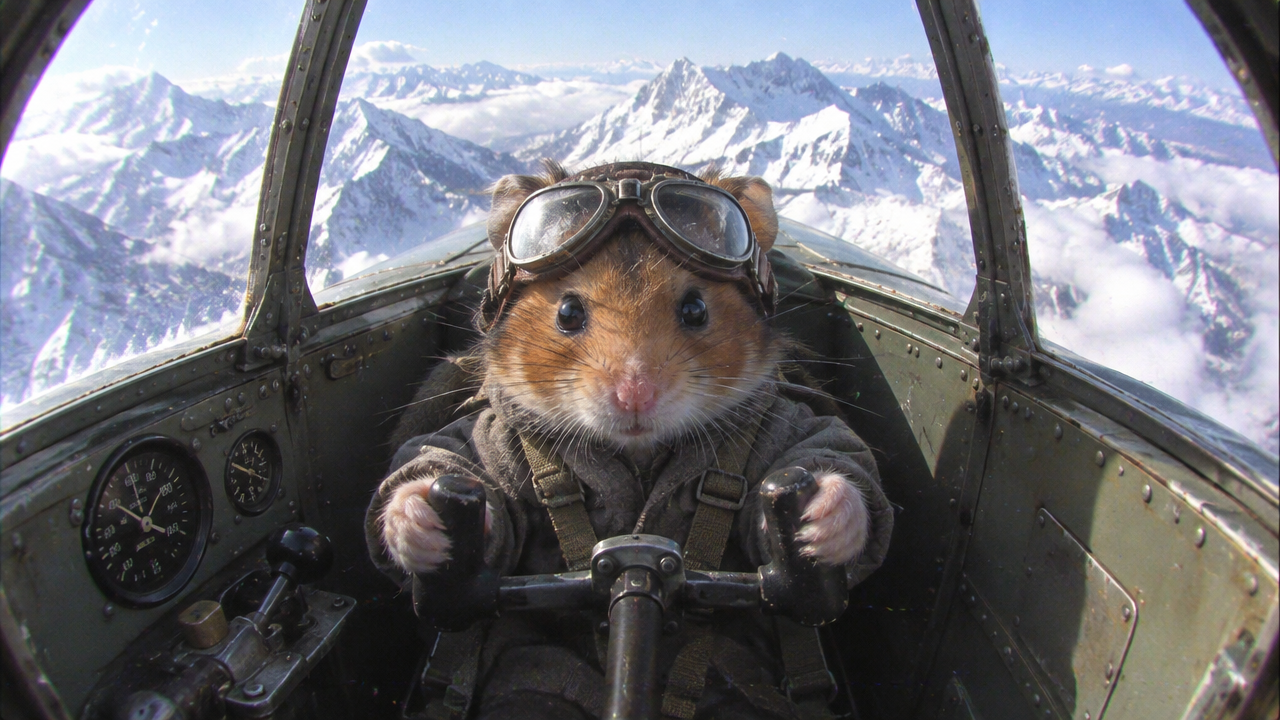
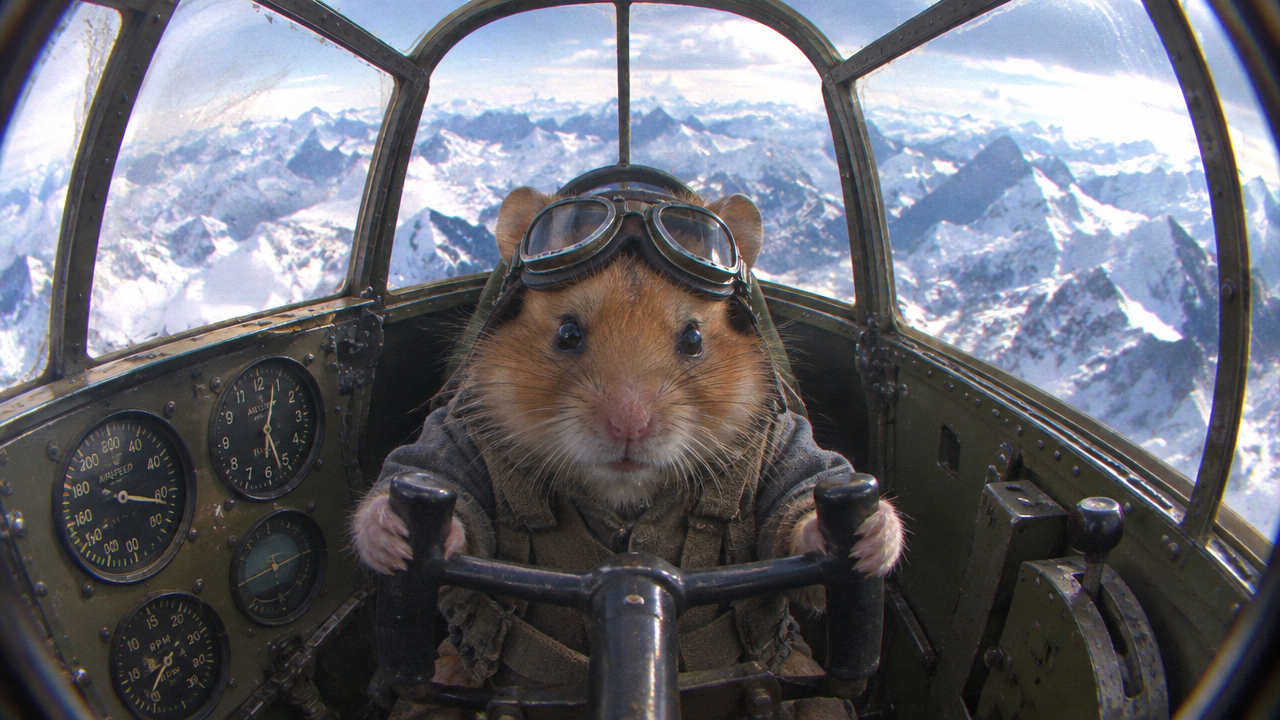
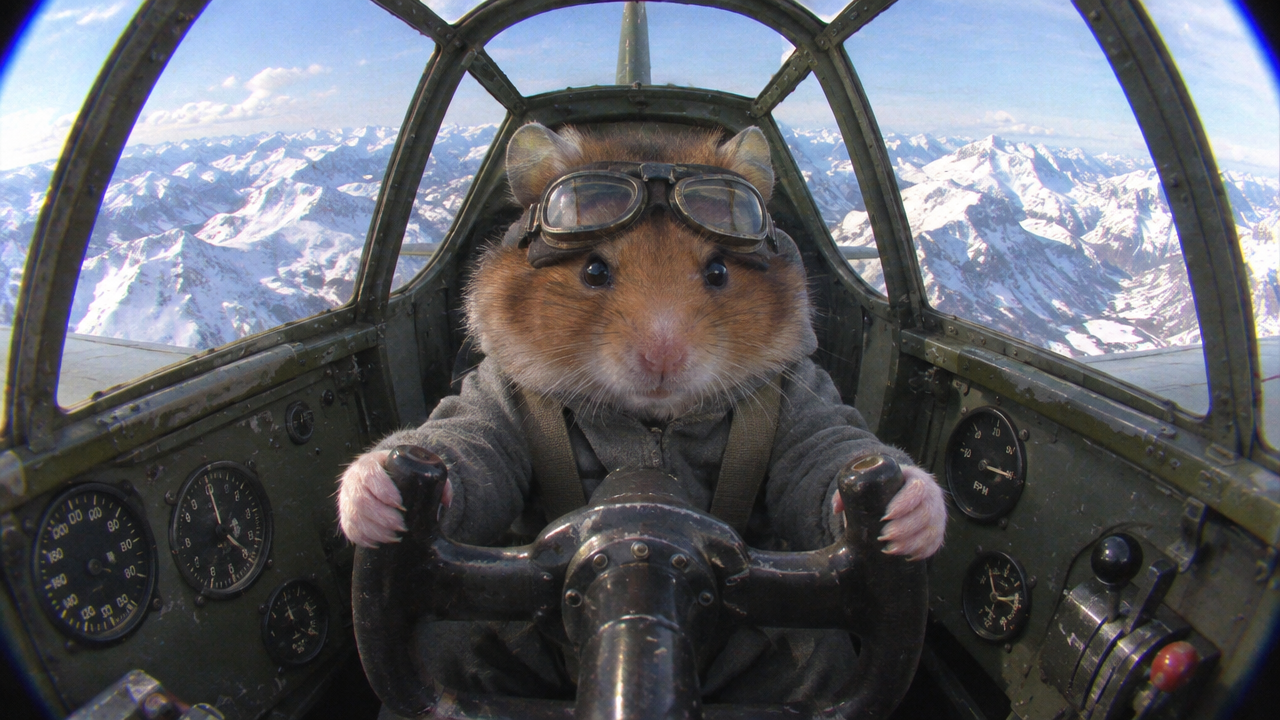
Use the attached reference image as the exact character reference for the hamster. Create a photorealistic 16:9 frame showing the SAME hamster from the reference image piloting an old WWII-era military propeller aircraft. The image must look like a real frame captured by a 1990s Hi8 / Video8 consumer camcorder with a vintage fisheye wide-angle lens physically mounted INSIDE the aircraft cockpit. ================================================== CAMERA POSITION — CRITICAL ================================================== The camera is physically installed inside the cockpit at the FRONT CENTER of the aircraft. The camera is mounted directly on the aircraft's central longitudinal axis, approximately 60–80 cm in front of the hamster. The camera points directly toward the pilot. The optical axis is aimed approximately at the hamster's chest and face. This is a FIXED CAMERA POSITION. There is NO camera operator. There is NO handheld camerawork. There is NO over-the-shoulder perspective. There is NO side angle. There is NO three-quarter view. There is NO diagonal composition. There is NO camera looking down from above. There is NO camera looking upward from below. The viewpoint is a centered, frontal cockpit recording. The hamster is positioned almost exactly in the optical center of the frame. The composition is strongly symmetrical around the aircraft's central axis. The left and right sides of the cockpit are both visible. The central flight controls are positioned between the camera and the hamster. The control yoke / control column occupies the lower-center foreground. The hamster's two paws are clearly visible gripping the control yoke. His shoulders, upper body and arms are visible behind the controls. The hamster leans slightly forward toward the controls. His body language communicates that he is physically fighting to keep the aircraft under control. He is stubbornly holding the control yoke with both paws and refusing to let go. He looks straight ahead through the windshield toward the mountains. He is NOT looking at the camera. ================================================== FISHEYE LENS ================================================== Use a vintage moderate fisheye / ultra-wide-angle lens. Approximately 16–20mm full-frame equivalent. Strong but controlled barrel distortion. The fisheye effect must be clearly visible but physically believable. The cockpit should feel unusually wide and immersive. The windshield frame, side cockpit structures and instrument panels curve noticeably toward the outer edges of the frame. The left and right cockpit edges should bend outward due to the optical distortion. The center of the image remains comparatively natural. The hamster's face and body stay close to the optical center and therefore remain recognizable and only minimally distorted. The control yoke in the foreground can appear slightly enlarged because of the wide-angle perspective. The fisheye must look like REAL optical distortion from an old physical lens. It must NOT look like a modern digital fisheye filter. No extreme spherical distortion. No warped hamster face. No stretched hamster anatomy. No circular black fisheye border. ================================================== COMPOSITION ================================================== 16:9 horizontal frame. Centered frontal cockpit composition. The hamster is the dominant central subject. His head sits close to the horizontal and vertical center of the image. The control yoke occupies the lower center foreground. The instrument panel spreads symmetrically toward both sides. The cockpit canopy and windshield frame create a strong curved frame around the hamster. The snowy mountains are visible directly behind him through the front windshield. The composition should create a visual tunnel: camera → control yoke → hamster → windshield → enormous snowy mountains. The cockpit fills most of the frame. Enough of the exterior must remain visible to clearly establish the mountainous environment. The framing should feel like the camera was permanently installed inside the aircraft rather than intentionally composed by a cinematographer. Slight imperfections in alignment are acceptable, but the viewpoint remains fundamentally centered. ================================================== THE HAMSTER ================================================== Use the exact hamster from the reference image. Preserve his recognizable appearance. Same brown-golden fur. Same facial proportions. Same round ears. Same pink nose. Same whiskers. Same large dark eyes. Same body proportions. Realistic hamster anatomy. Realistic fur with individual hairs. Natural whiskers. The hamster is wearing vintage aviator goggles. The goggles have realistic leather straps and slightly reflective glass lenses. The goggles fit naturally around his eyes and forehead. The goggles should look like authentic small-scale vintage pilot goggles rather than a costume accessory. He wears the same general gray oversized clothing silhouette from the reference. The clothing is lightly dusty and naturally worn. Only subtle dirt and minor grease marks. The hamster is NOT filthy. His fur remains mostly clean. He looks tired and slightly disheveled from prolonged flying, but healthy and uninjured. No blood. No wounds. No burned fur. No severe damage. ================================================== PILOTING ACTION ================================================== The hamster is actively flying the aircraft. Both paws are firmly wrapped around the control yoke. His paws must visibly make physical contact with the controls. His arms are extended forward. His shoulders are slightly tense. His body leans subtly forward. His grip is strong and deliberate. His expression is exhausted, focused and stubborn. He looks like he has been flying for a very long time and is using the last of his strength to keep the aircraft on course. Do not make the expression exaggerated or comedic. The emotion should come primarily from his posture and eyes. ================================================== AIRCRAFT ================================================== Authentic WWII-era military propeller aircraft cockpit. Old but functional. Not destroyed. Not crashed. Not heavily damaged. Aged riveted aluminum panels. Faded military paint. Old analog gauges. Mechanical switches. Worn leather. Old cables. Mechanical control systems. Subtle scratches. Small areas of oxidation. Light dust. Minor grease marks. Natural signs of decades of use. The cockpit should feel cramped and physically believable. The aircraft is old and tired, but completely capable of flying. No modern instruments. No digital displays. No modern materials. No jet aircraft. No futuristic technology. ================================================== OUTSIDE THE WINDSHIELD ================================================== Large dramatic snow-covered alpine mountains. The mountains are a major visual element. Huge snowy peaks rise behind the hamster and fill the distant background. Sharp rocky mountain ridges covered with snow. Deep valleys between the peaks. Distant mountain layers fading into atmospheric haze. Small clouds drifting between the mountains. Cold high-altitude atmosphere. Natural aerial perspective. The aircraft is flying through a remote mountainous region. The snowy mountains must remain clearly recognizable. Do not replace the mountains with a flat landscape. Do not make the background completely cloudy. Do not obscure the mountains with smoke. No explosions. No battlefield destruction. No fire. The visual tension comes from the difficult flight and the exhausted pilot. ================================================== LIGHTING ================================================== Cold natural daylight coming through the windshield. Bright snowy mountains outside. Dark but readable cockpit interior. Natural exposure difference between the bright snow and the shadowed cockpit. Slightly blown highlights around the brightest snow-covered peaks, consistent with an old consumer CCD sensor. Soft diffuse mountain daylight. Subtle windshield reflections. Natural reflections on the aviator goggles. Soft shadows inside the cockpit. No artificial studio lighting. No dramatic Hollywood lighting. ================================================== 1990s HI8 / VIDEO8 IMAGE ================================================== Authentic 1990s Hi8 / Video8 consumer camcorder footage. Small CCD sensor. Vintage consumer video optics. Physical optical zoom lens with wide-angle fisheye attachment. Soft but relatively detailed image. Deep depth of field. Organic analog video noise. Subtle chroma noise. Mild color bleeding. Imperfect color separation. Gentle edge softness. Modest electronic sharpening. Soft highlight blooming. Slight exposure instability. Subtle white-balance imperfections. Slightly faded consumer colors. Moderate contrast. Subtle focus imperfections. Natural analog recording texture. Slight image softness. Very subtle tape-era imperfections. The image must look like footage that was ACTUALLY RECORDED by a physical 1990s consumer camcorder. It must NOT look like a modern digital photograph with a VHS filter added afterward. No modern digital sharpness. No modern HDR. No contemporary cinematic color grading. No perfect stabilization. No artificial VHS overlay. ================================================== REALISM ================================================== Photorealistic. Real hamster fur. Real individual hairs. Real whiskers. Natural eyes. Physically believable goggles. Realistic fabric. Real scratched metal. Real cockpit glass. Real mechanical instruments. Realistic mountain atmosphere. Natural atmospheric perspective. Physically believable reflections. Natural exposure. Real-world materials. No CGI appearance. No 3D-rendered appearance. No illustration. No cartoon aesthetic. No anime. No Pixar / Disney aesthetic. No mascot appearance. The impossible premise should be presented with complete photographic realism. The viewer should feel as if they discovered an authentic 1990s home-video recording of a real hamster piloting a WWII aircraft. ================================================== OVERALL MOOD ================================================== Exhausted. Focused. Determined. Isolated. Quietly tense. Cold mountain atmosphere. The hamster is not panicking. He is simply stubbornly holding the aircraft's control yoke and continuing to fly. The scene should feel strangely mundane despite the impossible subject. It should look like a genuine accidental recording rather than a staged movie scene. ================================================== ABSOLUTELY NO ================================================== No text. No logos. No labels. No watermark. No timestamp. No subtitles. No UI. No technical overlays. No visible camera. No camera operator. No modern aircraft. No jet. No futuristic cockpit. No modern equipment. No extreme fisheye distortion. No warped hamster face. No stretched hamster. No distorted paws. No extra paws. No extra limbs. No duplicate hamster. No human face. No human hands. No human body. No generic mouse. No rat. No squirrel. No cartoon hamster. No plastic-looking fur. No excessive dirt. No filthy hamster. No destroyed cockpit. No crash. No explosion. No fire. No blood. No gore. No severe damage. No heavy smoke. No Hollywood war-movie look. No cinematic blockbuster composition. No modern digital photography. No HDR. No ultra-sharp image. No oversharpening. No excessive bokeh. No shallow depth of field. No teal-and-orange color grading. No artificial film grain overlay. No digital fisheye filter. No circular fisheye frame. No black borders.
Free to start · Generate videos and images with AI in seconds
More from this creator


More Gpt Image 2.5 images
См. все →