Image - 2026-09-28 00:46
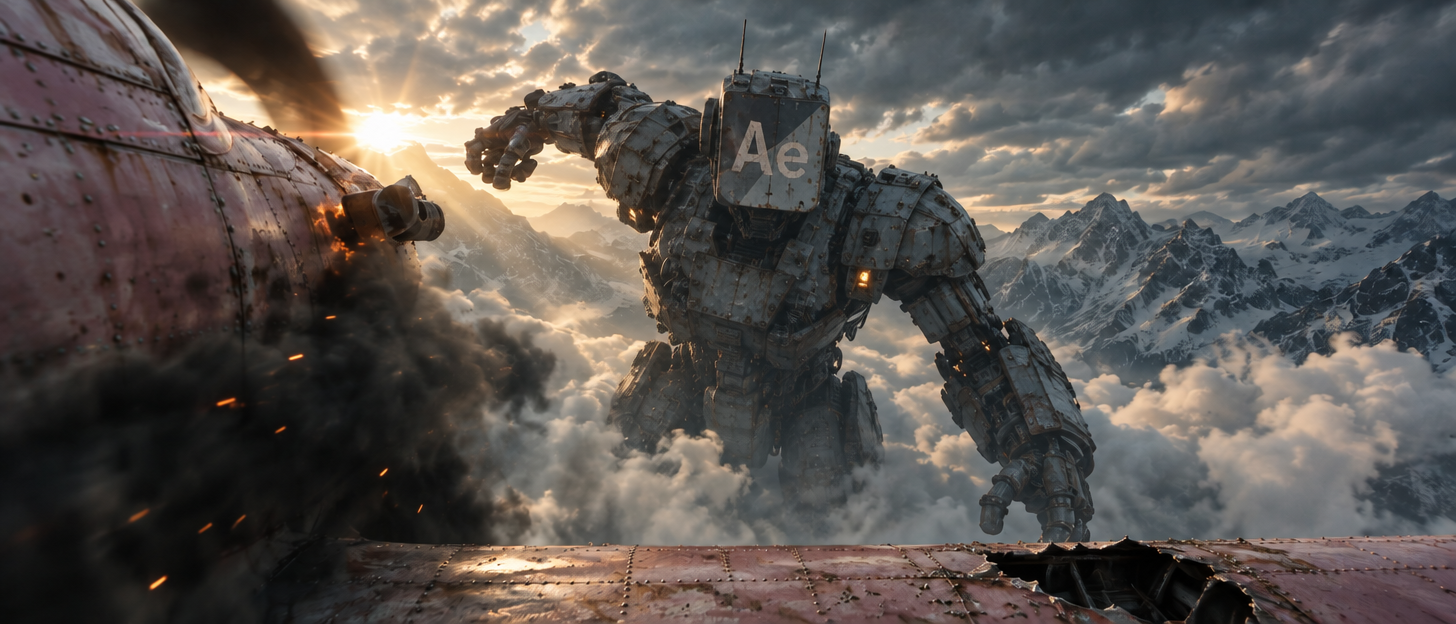
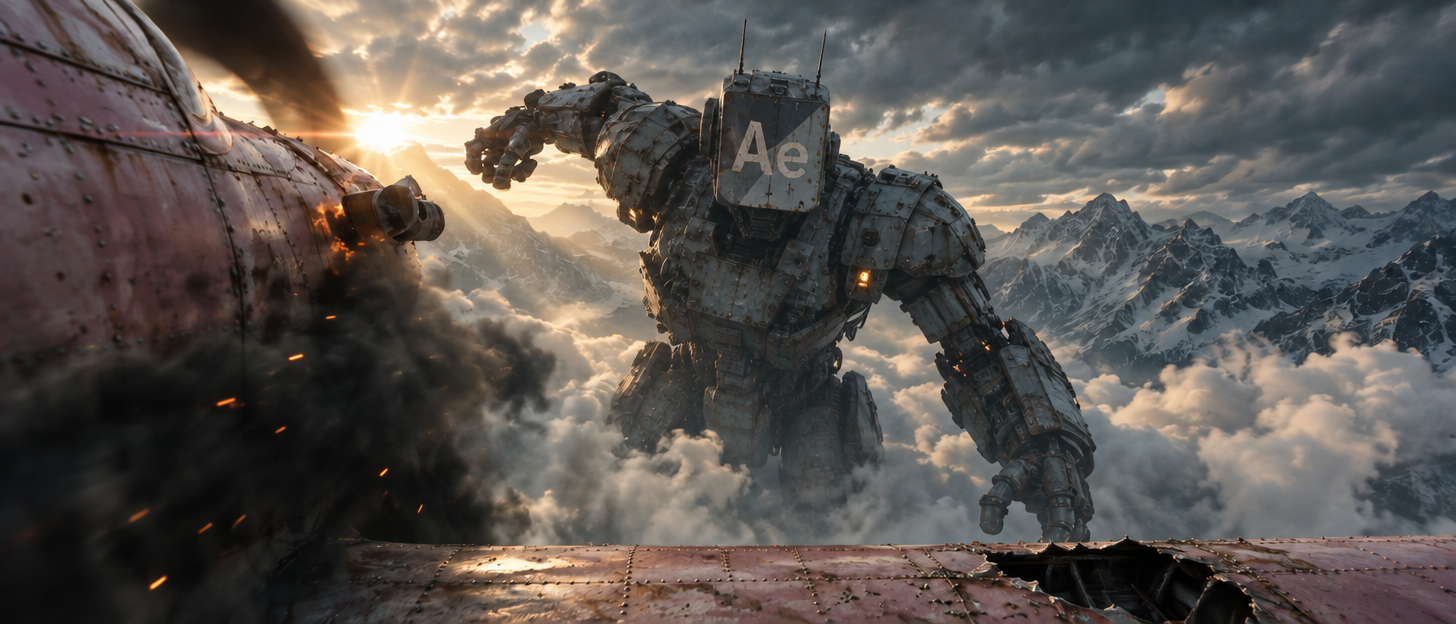
**IMAGE-TO-IMAGE / LOCAL CHARACTER REPLACEMENT** ### CORE INSTRUCTION **DO NOT CHANGE THE EXISTING COMPOSITION OR THE EXISTING MONSTER'S POSE.** Replace **ONLY the visual identity and physical design of the monster** with the monster from **REFERENCE 2**. Think of this as: > **Keep the exact monster silhouette, position, pose, camera perspective, scale and interaction with the environment from the CURRENT IMAGE — but replace the monster's entire physical design with the exact mechanical character from REFERENCE 2.** The result must look like the **REFERENCE 2 robot was physically present in the exact same position and pose in the current scene**. --- # 1. WHAT MUST REMAIN 100% LOCKED The current image is the master for **composition and spatial placement**. Do NOT change: * camera position * camera angle * camera perspective * focal length / perspective characteristics * framing * 21:9 composition * monster's exact position in the frame * monster's exact apparent scale in the scene * monster's exact body orientation * monster's exact pose * shoulder orientation * arm positions * hand positions * head orientation * leg stance * relationship between monster and camera * relationship between monster and mountains * relationship between monster and clouds ### MOST IMPORTANT: **DO NOT COPY THE POSE FROM REFERENCE 2.** Reference 2 controls **APPEARANCE ONLY**. The monster must retain the **existing pose from the CURRENT IMAGE**. Reference 2 must NOT reposition the arms, hands, head, torso, legs or feet. Do not rotate the monster. Do not make it lean differently. Do not change its stance. Do not change its gesture. Do not change its silhouette placement in the composition. --- # 2. WHAT REFERENCE 2 CONTROLS REFERENCE 2 controls the monster's **physical appearance, proportions and construction**. Transfer the Reference 2 character onto the existing monster while preserving the current image's pose and perspective. The replacement must match Reference 2 as closely as physically possible: ### BODY PROPORTIONS Use the exact proportions of Reference 2: * extremely broad squared shoulders * large massive torso * elongated brutish mechanical body * very long heavy arms * thick pillar-like legs * enormous mechanical hands * large flat clawed feet * massive head * exact head-to-body relationship * exact shoulder-to-head relationship * exact arm length relative to torso * exact overall mechanical proportions **Do NOT shrink the head to fit the current generated body.** **The head must remain as large and as tall as it is relative to the shoulders and torso in REFERENCE 2.** **Do NOT narrow the shoulders.** **Do NOT make the torso more humanoid.** **Do NOT make the proportions anatomically human.** The final monster should immediately read as the **same machine from Reference 2**, merely photographed from the existing scene's camera position. --- # 3. HEAD — CRITICAL PRIORITY The head is the most important correction. Reproduce the Reference 2 head **1:1 in shape and proportion**. The head must be: * very large * massive * tall and vertically elongated * clearly **taller than it is wide** * strongly squared and industrial * thick armored construction * visually dominant relative to the torso * positioned exactly where the current monster's head is positioned ### DO NOT MAKE THE HEAD SMALL. The head must occupy the **same proportion of the monster's total height and shoulder width as in REFERENCE 2**. Preserve the exact relationship: **head size → neck size → shoulder width → torso width** from Reference 2. The head should feel **massive and heavy**, not like a small robot head attached to a giant body. --- # 4. HEAD SURFACE AND MARKING Match Reference 2 exactly: * same square front geometry * same angular side planes * same armor segmentation * same surface construction * same diagonal division across the front * one side darker charcoal * one side lighter warm grey * exact white embossed **“Ae”** marking * same position of the marking * same scale of the marking * same orientation * same embossed physical depth The **“Ae”** marking must be clean, white and physically embossed into the front armor. It must NOT become: * painted text * glowing text * floating text * different typography * different letters * additional symbols --- # 5. ANTENNAS Copy the Reference 2 antenna design exactly: * same number * same thin vertical rods * same thickness * same height * same spacing * same mounting points Do not invent additional antennas. Do not remove them. --- # 6. ARMS / HANDS Use Reference 2's exact mechanical anatomy: * extremely long heavy arms * same upper-arm proportions * same forearm proportions * same mechanical joints * same oversized hands * same claw structure * same finger/claw proportions However: **THE CURRENT IMAGE'S ARM AND HAND POSITIONS ARE LOCKED.** Only the physical design of those arms/hands changes. Do not reposition them according to Reference 2. --- # 7. LEGS / FEET Use Reference 2's exact: * thick square pillar legs * heavy armored construction * joint design * proportions * enormous flat feet * claw-like toes But preserve the **current image's exact leg position and stance**. The existing cloud layer must continue to hide the lower body exactly as it currently does. **Do not reveal additional legs or feet.** --- # 8. ARMOR — EXACT REFERENCE 2 DESIGN The monster must have the same industrial armor language as Reference 2: * weathered steel * thick armor plates * exact panel construction * visible rivets * rust streaks * chipped paint * scratches * exposed hydraulics * exposed mechanical components * warm amber indicator lights * heavy aged industrial construction Do NOT reinterpret the armor. Do NOT make it futuristic. Do NOT make it sleek. Do NOT make it cleaner. Do NOT make it more polished. Do NOT turn it into a generic giant robot. It must unmistakably be the **Reference 2 machine**. --- # 9. EXISTING SCENE — COMPLETELY LOCKED Everything surrounding the monster remains unchanged. Preserve exactly: * pale faded pink aircraft cowling on LEFT * rivets and weathering on aircraft * damaged aircraft wing along BOTTOM * torn hole in wing * spinning propeller in TOP-LEFT * black engine smoke * orange sparks * localized engine fire * snow-covered Alpine mountains * storm clouds * golden sunlight from LEFT * golden god rays * warm lens flare * cold blue-grey atmospheric shadows * existing atmospheric haze * existing cloud placement * existing exposure * existing color grade * existing cinematic framing **Do not regenerate the background.** **Do not modify the aircraft.** **Do not modify the clouds.** **Do not modify the mountains.** **Do not modify the lighting.** **Do not modify the lens flare.** --- # 10. PERSPECTIVE The monster must be rendered from the **EXISTING CAMERA'S perspective**, not from the camera angle of Reference 2. This is critical. Reference 2 supplies the monster's **3D design and proportions**. The CURRENT IMAGE supplies: * viewing angle * perspective * foreshortening * apparent position * apparent scale * pose * environmental relationship Therefore: **Reference 2 appearance + Current Image camera = final monster.** Do NOT recreate the camera angle from Reference 2. Do NOT rotate the monster to reproduce the reference photograph. Do NOT reproduce the reference's background or composition. Only reproduce the robot itself. --- # 11. REALISTIC PHOTOGRAPHIC INTEGRATION The replacement must look like a real physical machine photographed in the existing scene. Match the original image's: * optical characteristics * depth * atmospheric perspective * exposure * sharpness * grain * contrast * color response * natural reflections * environmental light The robot must receive the **existing scene lighting**, including the warm golden backlight from the LEFT and cool ambient storm light. No artificial CGI lighting. No plastic appearance. No 3D-render appearance. No game-engine appearance. No concept-art appearance. --- # 12. ABSOLUTE NEGATIVE INSTRUCTIONS **DO NOT CHANGE THE POSE.** **DO NOT CHANGE THE SILHOUETTE PLACEMENT.** **DO NOT CHANGE THE SCALE IN THE FRAME.** **DO NOT CHANGE THE CAMERA ANGLE.** **DO NOT CHANGE THE HEAD ORIENTATION.** **DO NOT SHRINK THE HEAD.** **DO NOT ALTER THE HEAD-TO-BODY PROPORTION FROM REFERENCE 2.** **DO NOT NARROW THE SHOULDERS.** **DO NOT SHORTEN THE ARMS.** **DO NOT HUMANIZE THE BODY.** **DO NOT COPY THE POSE FROM REFERENCE 2.** **DO NOT MOVE THE MONSTER.** **DO NOT ROTATE THE MONSTER.** **DO NOT REDESIGN THE MONSTER.** **DO NOT CREATE A SIMILAR ROBOT.** **DO NOT SUBSTITUTE ANOTHER ROBOT.** The only intended transformation is: ### CURRENT MONSTER **existing pose + existing position + existing perspective** ↓ ### REFERENCE 2 **exact appearance + exact proportions + exact mechanical design** ↓ ### FINAL **Reference 2 robot photographed from the current image's exact camera, in the current image's exact pose and position.** --- # FINAL QUALITY TARGET The viewer should immediately recognize the monster as **the exact same mechanical character shown in REFERENCE 2**. The most important visual characteristics are: **huge Reference-2 head + extremely wide shoulders + elongated body + very long arms + thick pillar legs + exact armor construction + exact “Ae” head marking + exact weathering.** At the same time, the monster must remain **exactly where it currently is and exactly how it is currently posed in the existing image**. Nothing else in the image changes. **ONE CHARACTER. ONE EXISTING POSE. ONE EXISTING CAMERA. REFERENCE 2 APPEARANCE ONLY. NO BACKGROUND CHANGES. NO COMPOSITION CHANGES. 21:9. PHOTOREALISTIC LIVE-ACTION CINEMA.**
Free to start · Generate videos and images with AI in seconds
More from this creator

More Gpt Image 2.5 images
См. все →