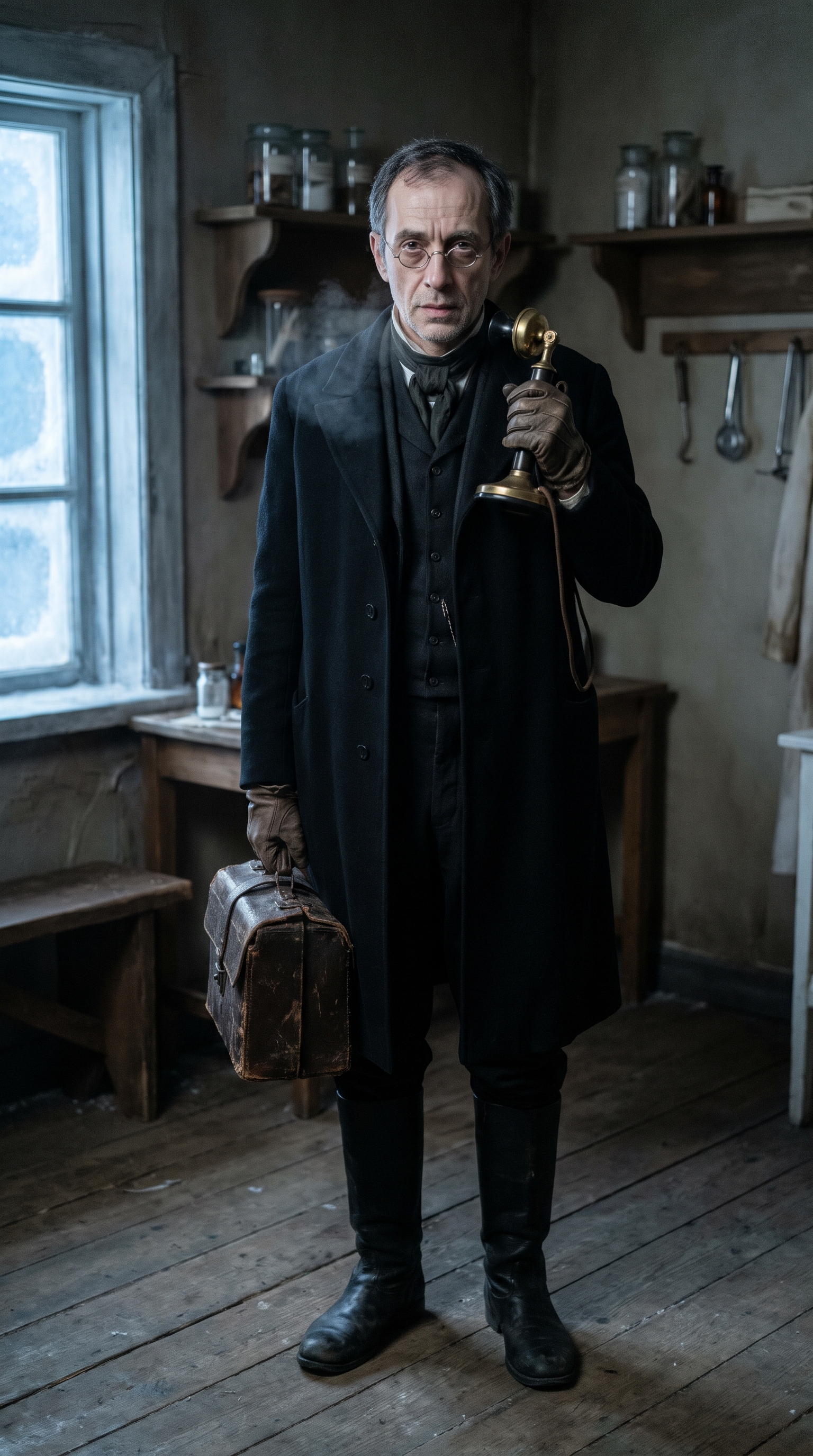

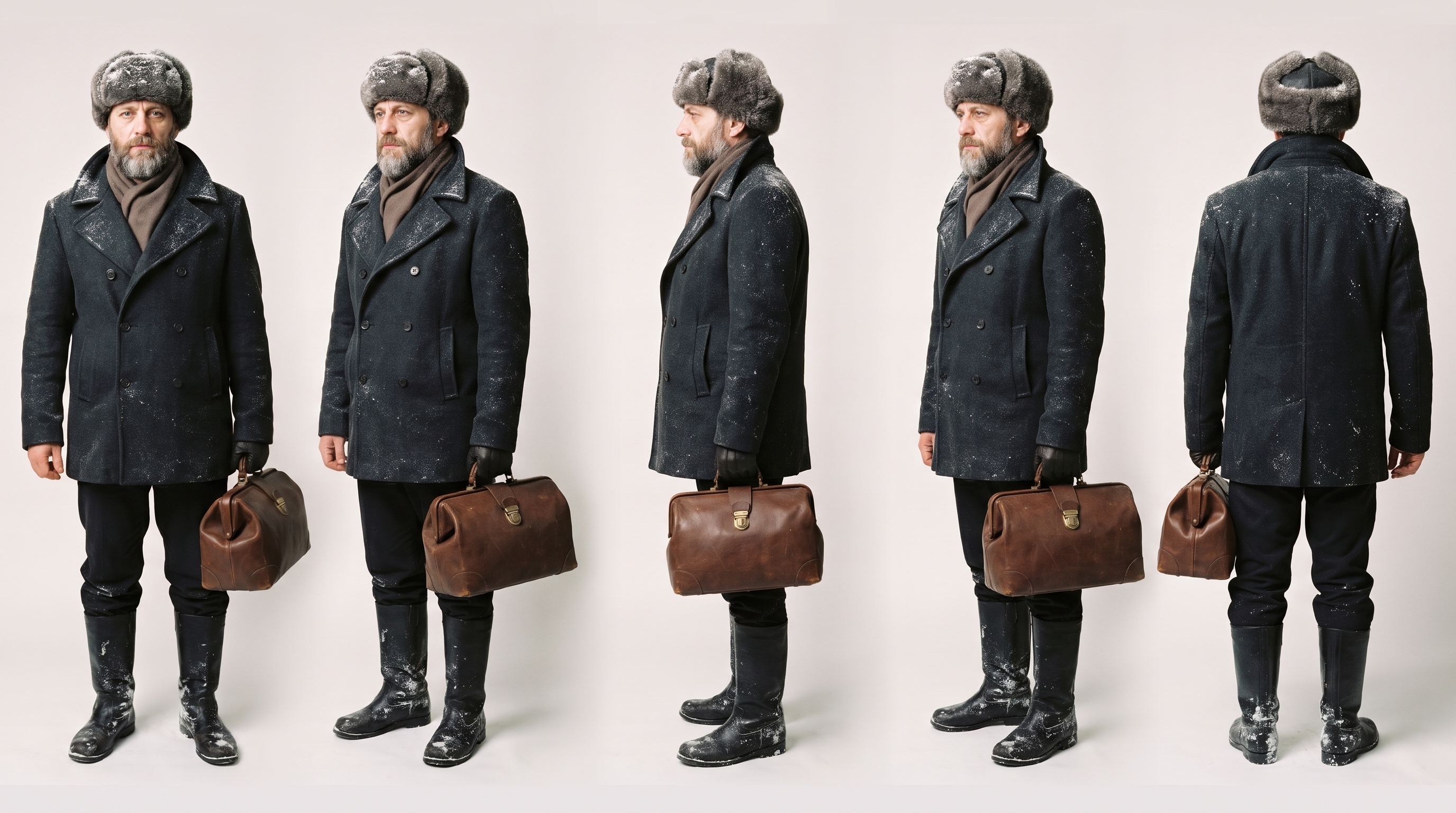
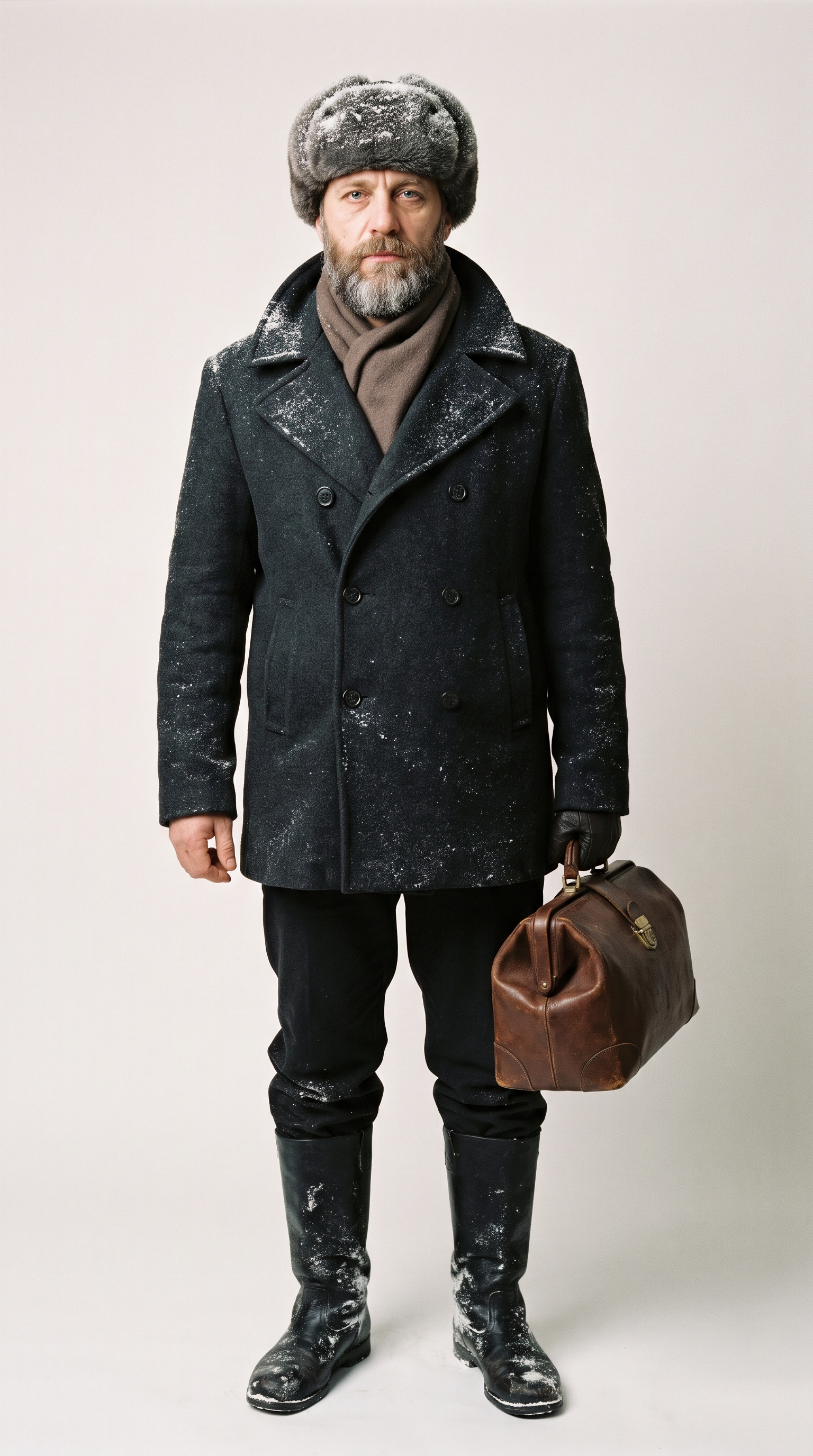



Art style: Cinematic Realistic, photorealistic film look, natural lighting, high dynamic range. Full-length view, the entire figure visible from head to feet, standing upright, figure centered — Doctor Zilberstein, a provincial physician in an alternate 19th-century Russia, a man in his early fifties of medium height and lean, slightly stooped build. Pale, weathered face with deep-set tired grey eyes behind small round steel-rimmed spectacles, a high lined forehead, thinning grey-and-black hair combed back, and a short neatly trimmed greying beard. He wears a dark heavy wool overcoat over a buttoned waistcoat, a stiff white collar and loosened dark cravat, worn leather gloves held in one hand, and scuffed black laced leather boots. He stands in a cold dim village infirmary, holding a battered medical case and an old brass telephone-apparatus earpiece near his shoulder. Calm, weary, worried expression; cold snow-blue daylight from a frosted window, visible breath, no glow. ━━━━━━━━━━━━━━━━━━━━━━━━━━━━━━━━━━━━━━ FINAL STYLE ENFORCEMENT (this is the authoritative rendering directive — it overrides any style wording elsewhere in the prompt): Render this image entirely in "Cinematic Realistic, photorealistic film look, natural lighting, high dynamic range" style. Match the lighting grammar, material response, colour science, level of realism / stylisation, line weight, and shading model typical of "Cinematic Realistic, photorealistic film look, natural lighting, high dynamic range". Keep the subject, composition, camera angle, lighting direction, and colour palette from the description above — but EVERY surface, skin, fabric, material, and environmental element must be rendered in the "Cinematic Realistic, photorealistic film look, natural lighting, high dynamic range" idiom, not in any other medium.
Free to start · Generate videos and images with AI in seconds