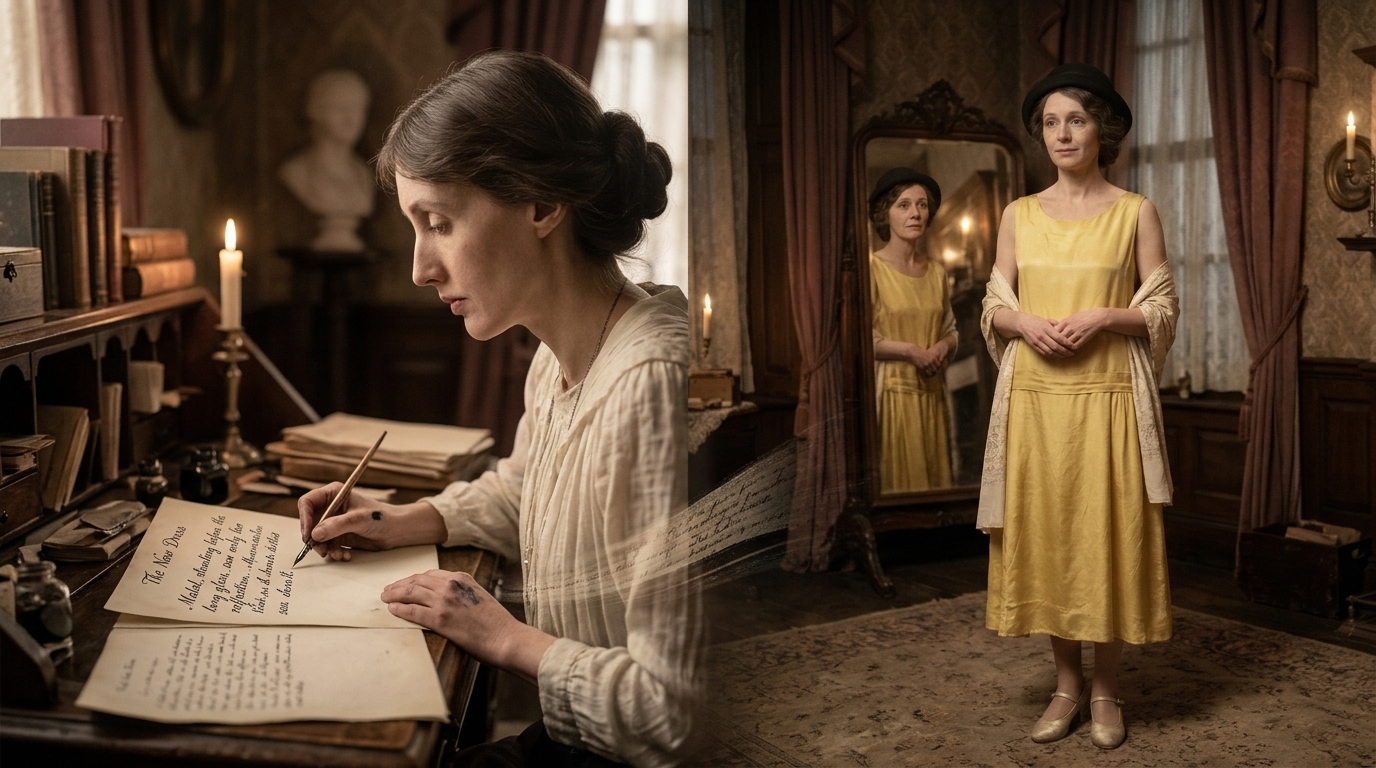
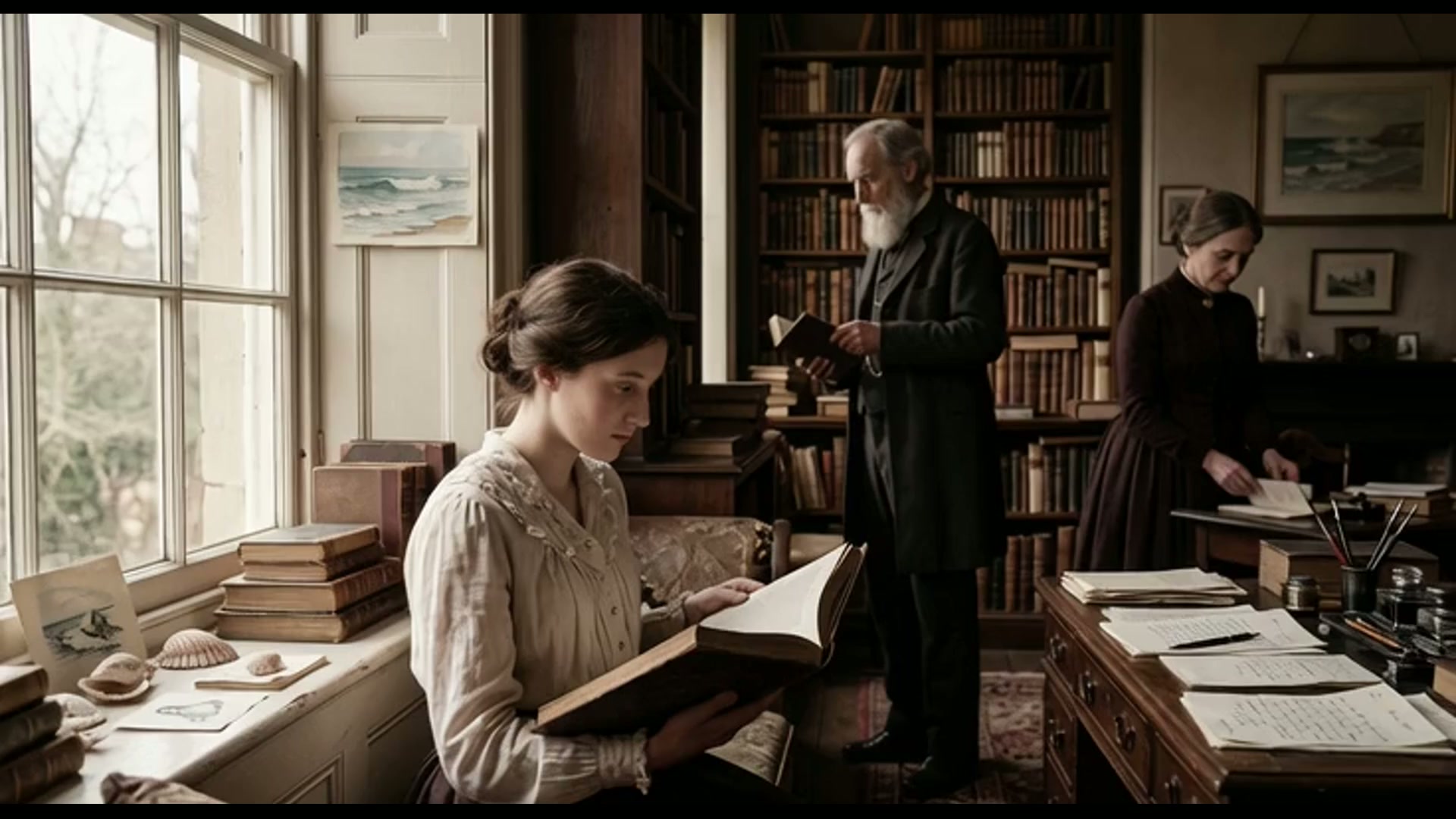

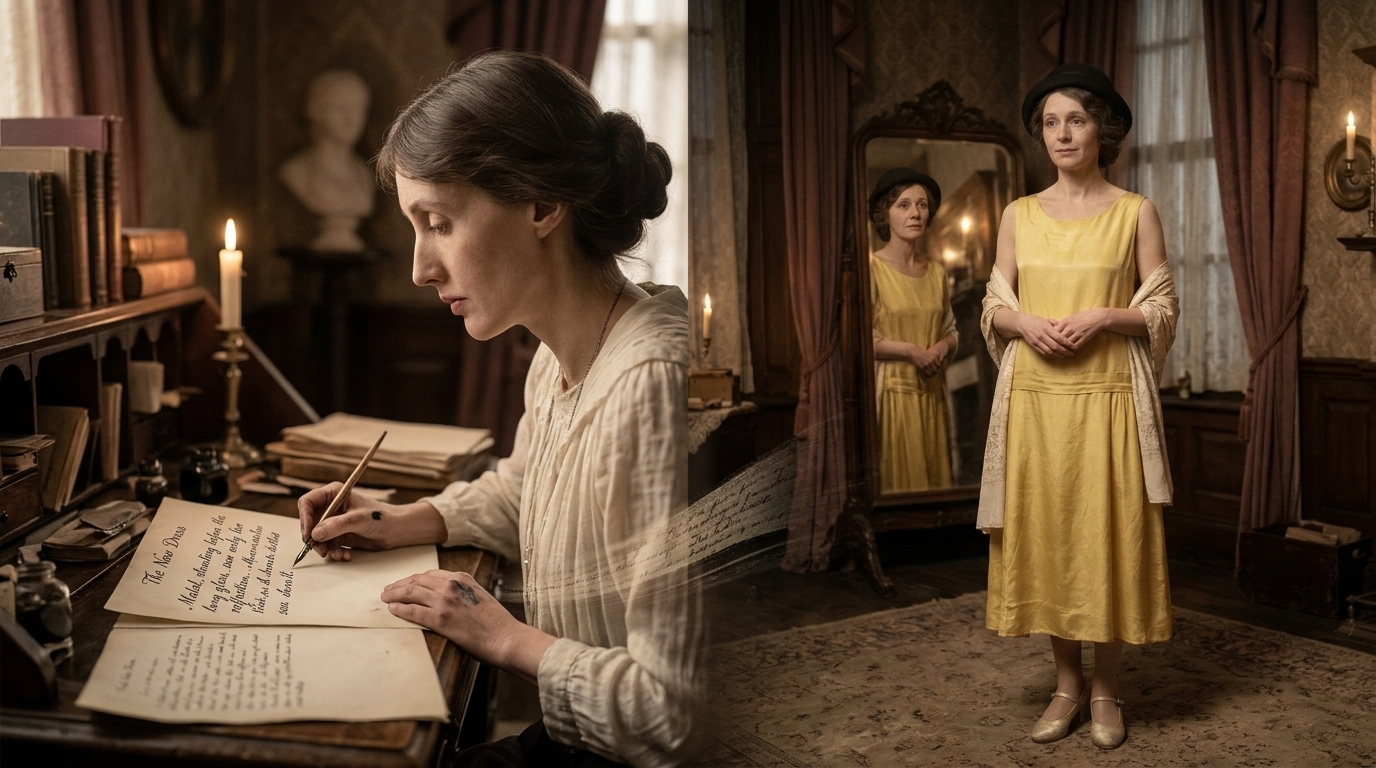






Art style: Ultra-realistic cinematic historical documentary reconstruction; historically grounded Victorian, Edwardian and 1920s British settings, warm sepia, cream, brown and muted burgundy palette, elegant orchestral documentary cinematography. Clearly distinguish the real historical author Virginia Woolf from the fictional character Mabel Waring. Virginia sits alone at her writing desk in a historically grounded 1920s British room, composing the manuscript of “The New Dress.” Show a close-up of Virginia's hand writing on paper. The manuscript and written lines become a visual bridge into the separate fictional world of Mabel Waring, who stands before an antique mirror and sees only her own reflection—her reflection is unmistakably Mabel, never Virginia. Mabel studies herself with visible uncertainty, anxiety and inward distress, fearing social judgment. Maintain period-accurate British 1920s atmosphere, cinematic photorealism, warm sepia, cream, brown and muted burgundy palette, consistent with the rest of the film. Do not merge, morph, crossfade their faces, or imply that they are one person. ━━━━━━━━━━━━━━━━━━━━━━━━━━━━━━━━━━━━━━ FINAL STYLE ENFORCEMENT (this is the authoritative rendering directive — it overrides any style wording elsewhere in the prompt): Render this image entirely in "Ultra-realistic cinematic historical documentary reconstruction; historically grounded Victorian, Edwardian and 1920s British settings, warm sepia, cream, brown and muted burgundy palette, elegant orchestral documentary cinematography" style. Match the lighting grammar, material response, colour science, level of realism / stylisation, line weight, and shading model typical of "Ultra-realistic cinematic historical documentary reconstruction; historically grounded Victorian, Edwardian and 1920s British settings, warm sepia, cream, brown and muted burgundy palette, elegant orchestral documentary cinematography". Keep the subject, composition, camera angle, lighting direction, and colour palette from the description above — but EVERY surface, skin, fabric, material, and environmental element must be rendered in the "Ultra-realistic cinematic historical documentary reconstruction; historically grounded Victorian, Edwardian and 1920s British settings, warm sepia, cream, brown and muted burgundy palette, elegant orchestral documentary cinematography" idiom, not in any other medium.
Free to start · Generate videos and images with AI in seconds