Image - 2026-11-12 09:10
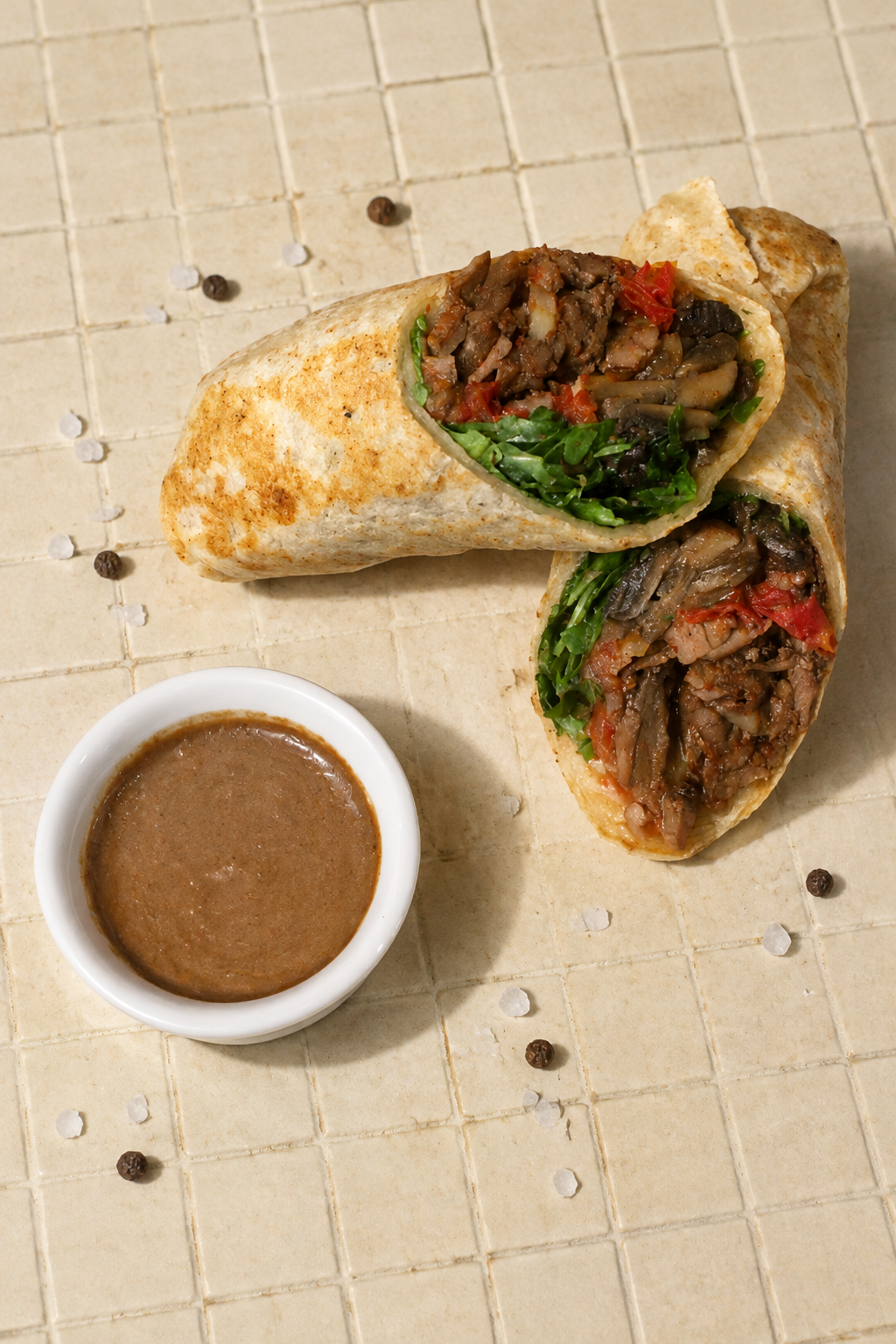
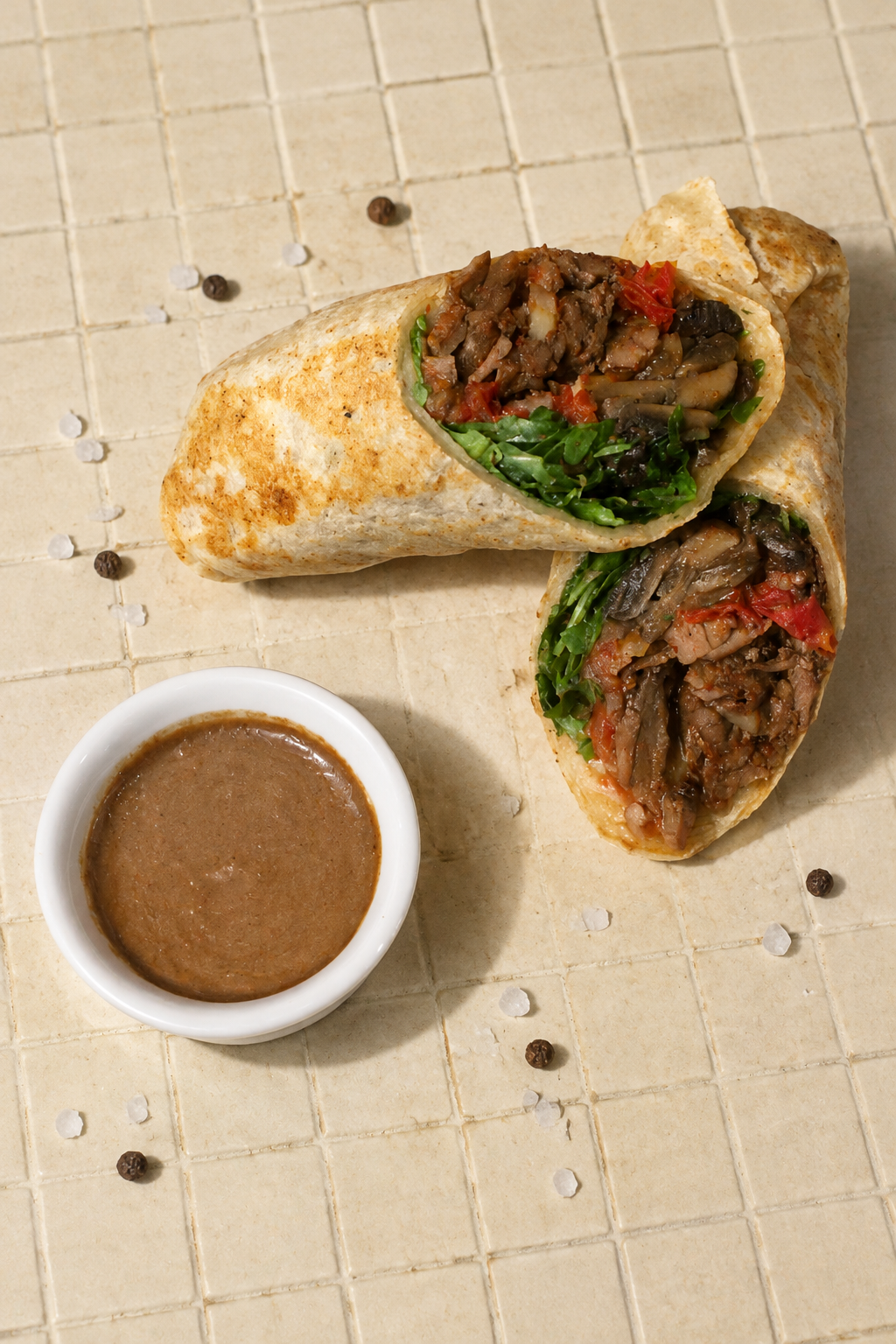
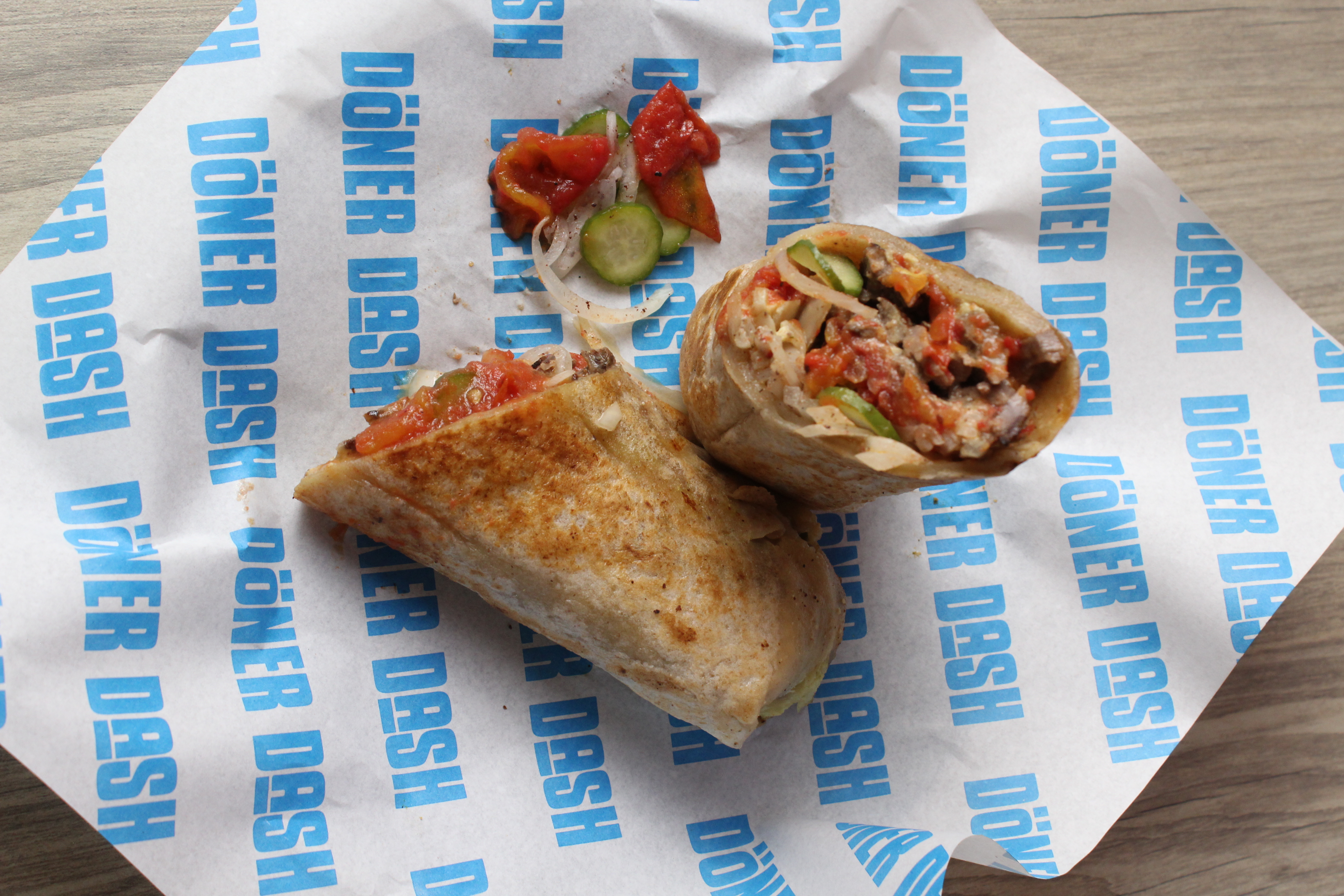
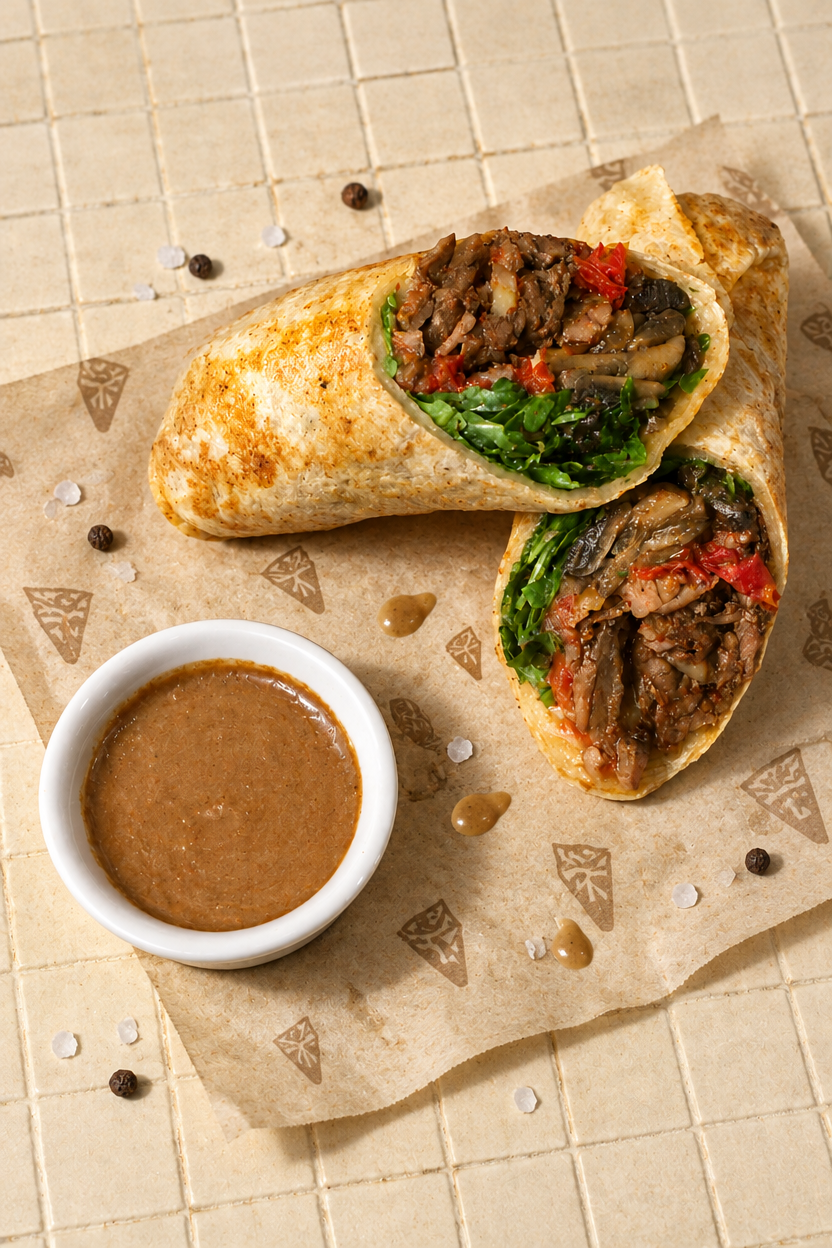
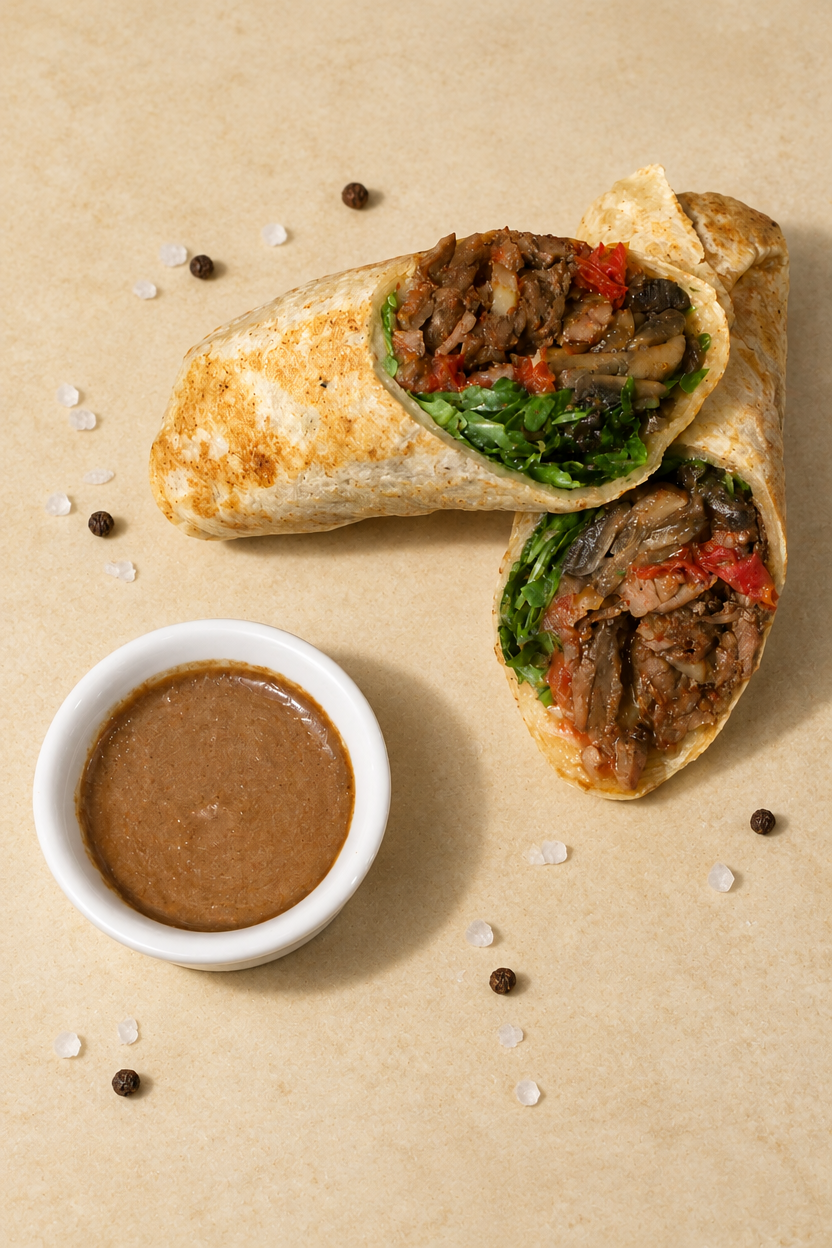
Use Image 1 as the original source image and Image 2 as a reference for the desired surface and composition. **Main task:** Take the two wrap pieces and the sauce from Image 1 and place them naturally on a flat surface, matching the surface style and overall presentation of Image 2. **Surface:** Replace the original surface with a light beige / warm yellowish-beige surface. The new surface should have the same brightness, exposure, contrast, and overall tonal intensity as the original image. Only change the surface color to a warm, light beige tone. Avoid making the image washed out, overly bright, or desaturated. **Product preservation:** - Keep both wrap pieces and the sauce exactly as they appear in Image 1. - Do not change their shape, size, proportions, texture, ingredients, colors, or arrangement. - Do not recreate, redesign, or add any food elements. - Preserve the original photographic details and realistic food textures. **Positioning and shadows:** Place both wrap pieces and the sauce directly on the surface, making them look naturally positioned and physically grounded. Preserve the original lighting direction and shadow orientation from Image 1. The shadows must remain consistent with the original light source, including their direction, softness, intensity, and natural falloff. Make sure the objects do not look like they are floating or artificially pasted onto the new background. **Lighting and color grading:** Maintain the original image's brightness, contrast, saturation, exposure, and color balance. Do not apply additional color grading or filters. **Final result:** A photorealistic food photograph with the original two wrap pieces and sauce naturally placed on a clean, light warm beige surface. The result should look like a professionally shot commercial food photograph, not an AI-generated image. Image 1 is the source of truth for the food, lighting, and shadows. Image 2 is only a reference for the surface and presentation. **Additional styling elements:** Add a small, subtle amount of whole black peppercorns and coarse white sea salt crystals scattered naturally across the beige surface. - Use only a few black peppercorns, placed randomly but aesthetically. - Add a small amount of coarse white salt crystals, with visible individual grains and irregular natural shapes. - Distribute them delicately around the wraps and sauce, leaving enough negative space. - Make the placement look effortless, refined, and professionally styled, like a premium food photography shoot. - Ensure the peppercorns and salt are physically resting on the surface, with realistic tiny contact shadows. - Do not place any peppercorns or salt on top of the food. - Keep these details subtle and secondary. The wraps and sauce must remain the main focus. Do not add any other ingredients, herbs, spices, props, or decorative objects.
Free to start · Generate videos and images with AI in seconds
More from this creator
More Gpt Image 2.5 images
См. все →