Image - 2026-11-21 14:54
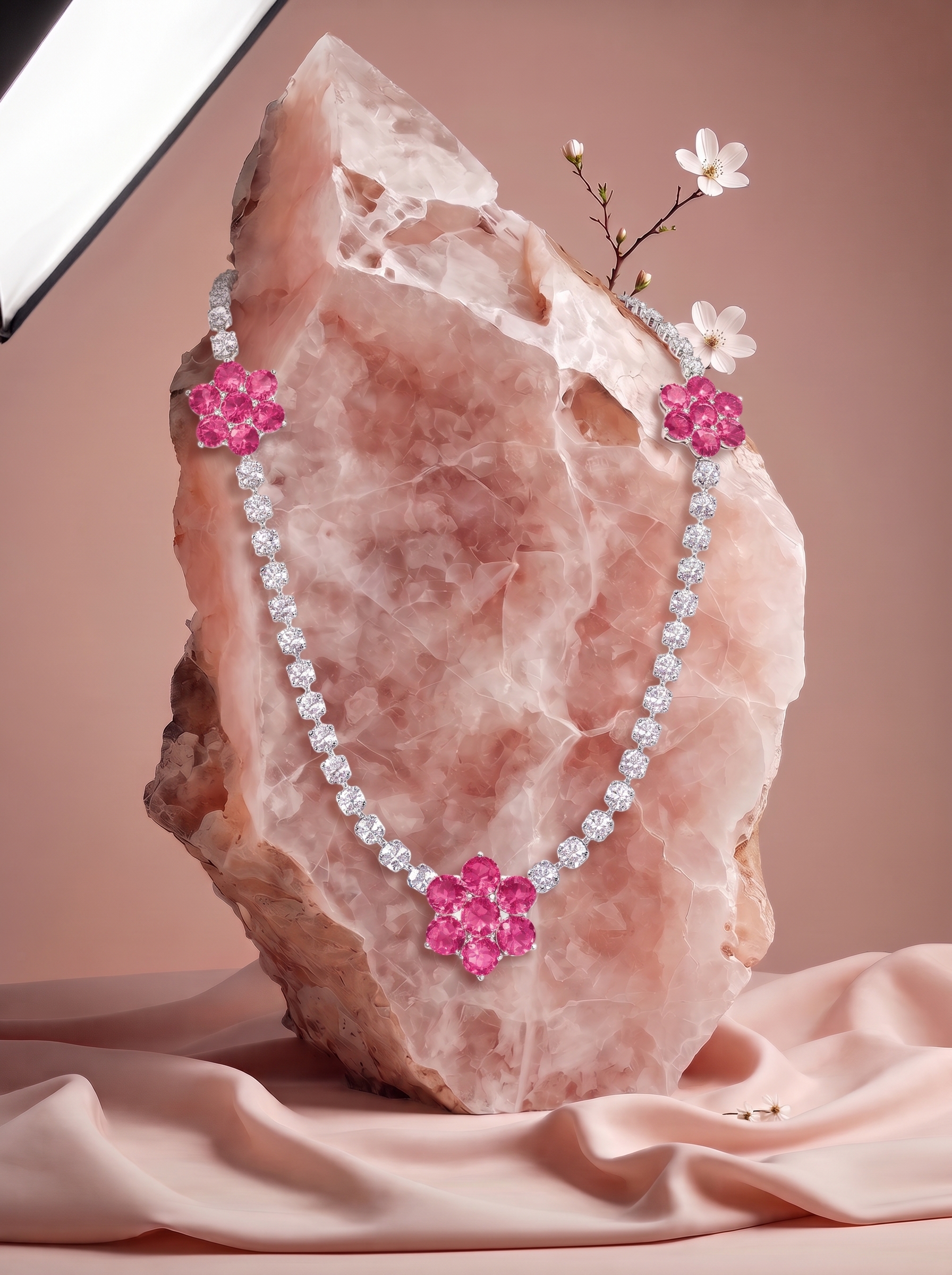
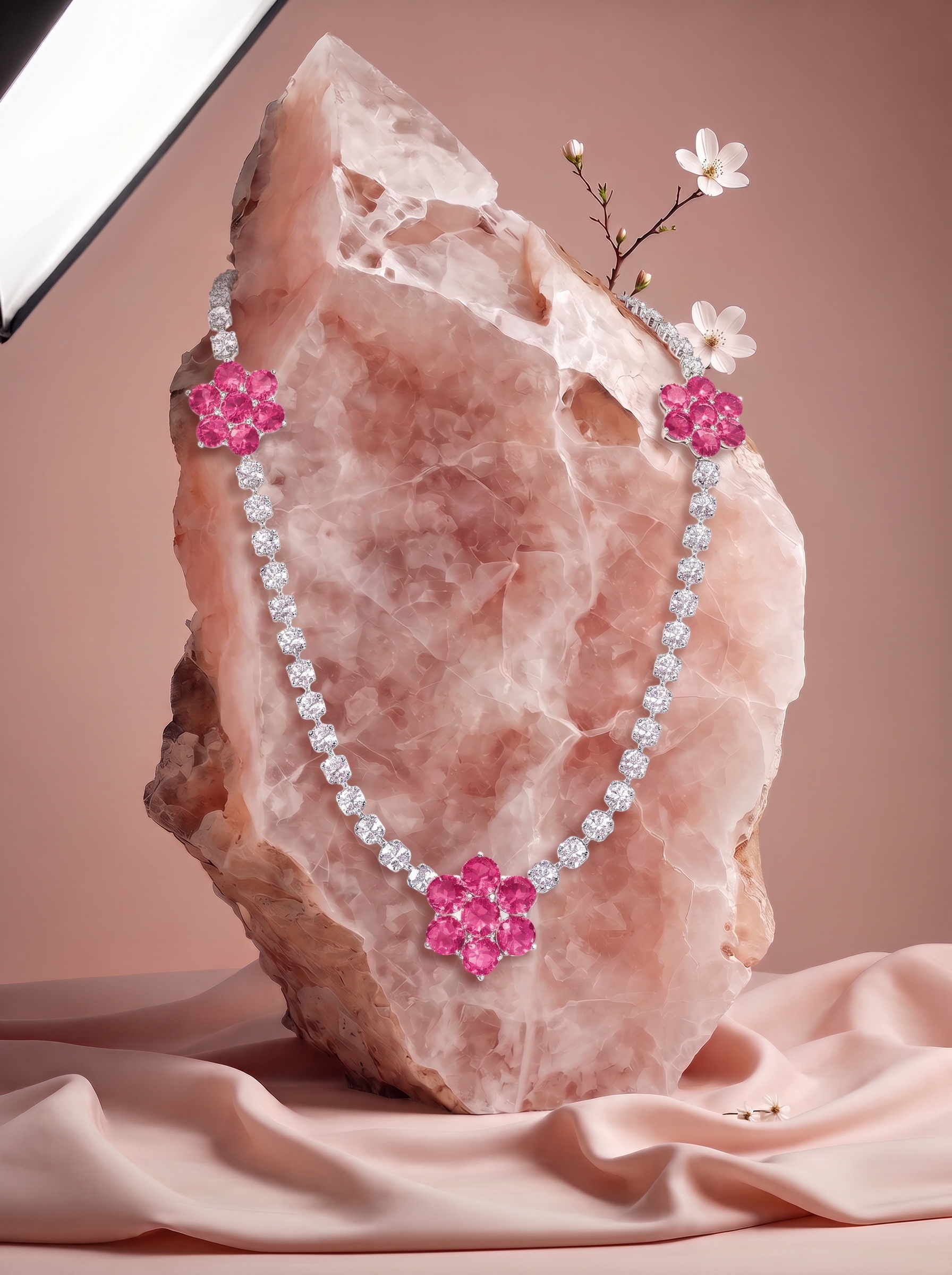
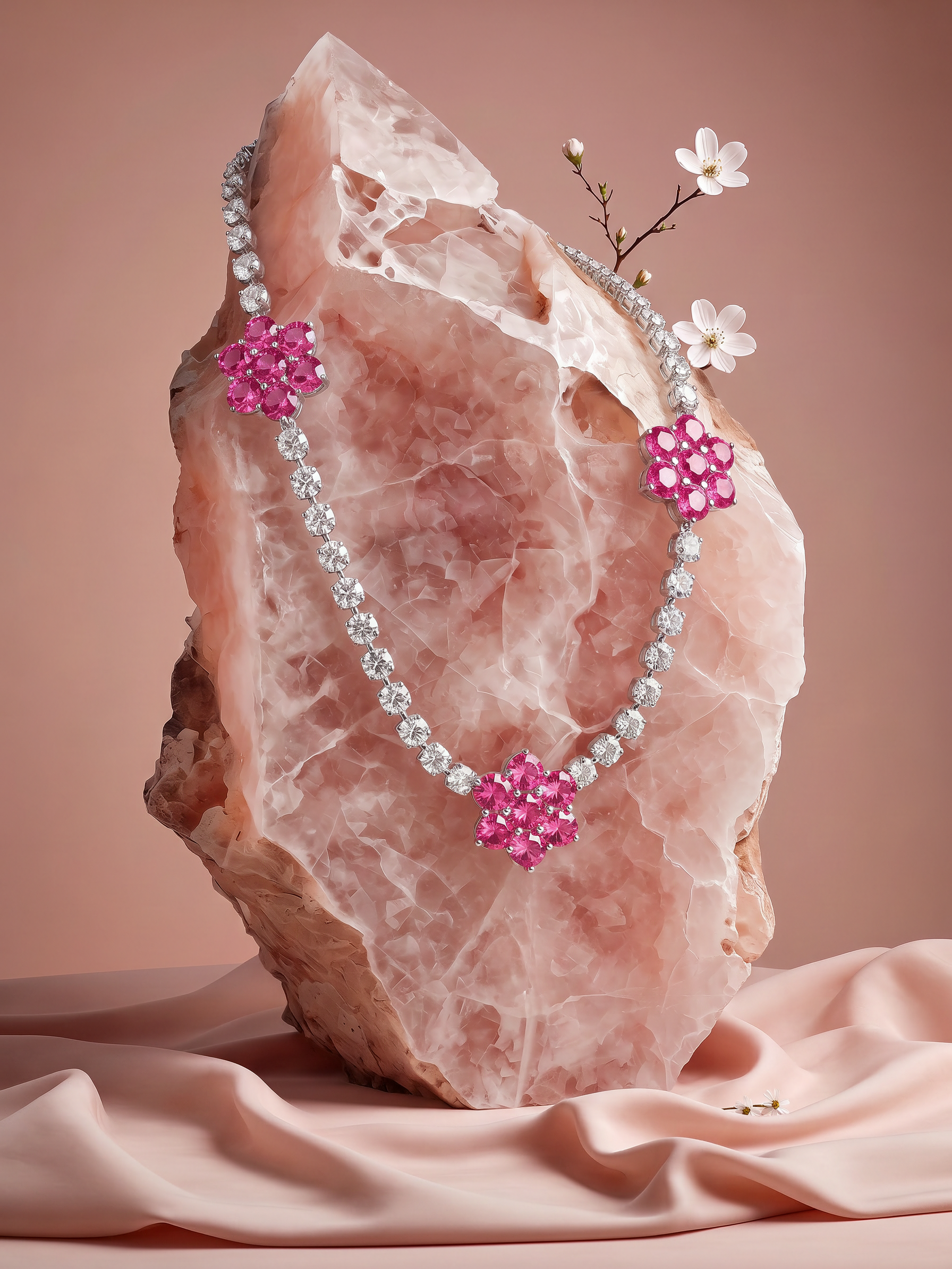
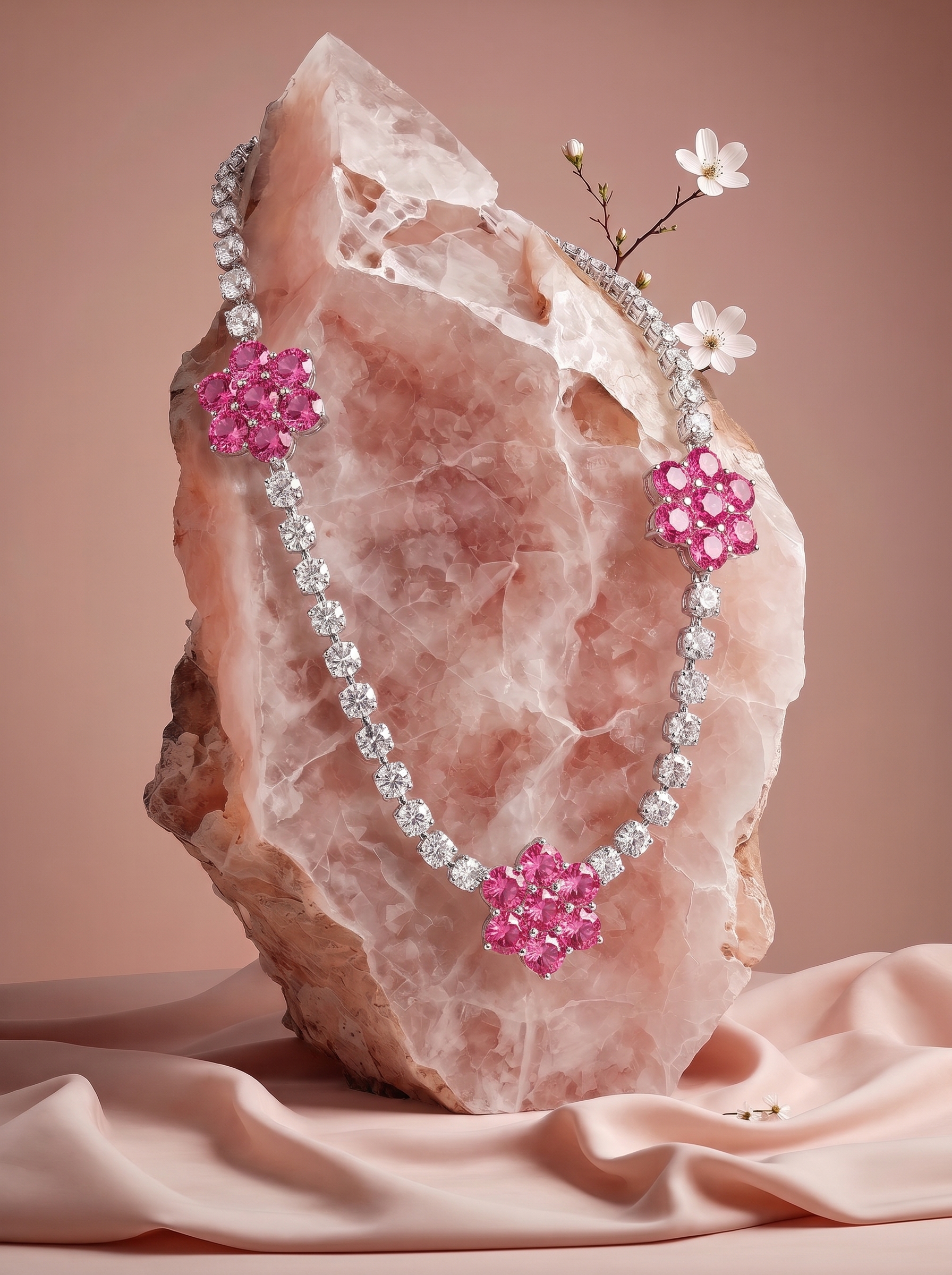
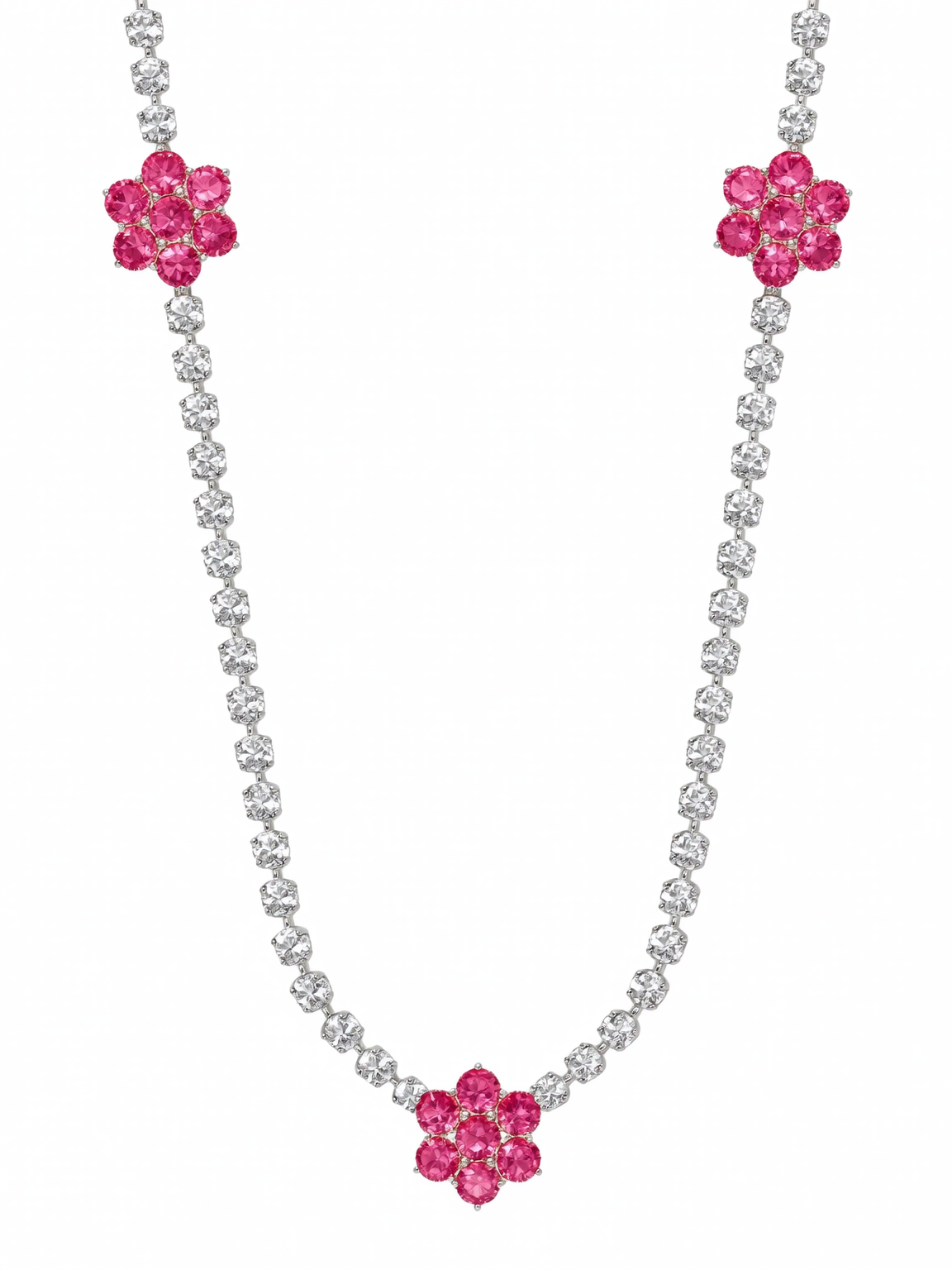
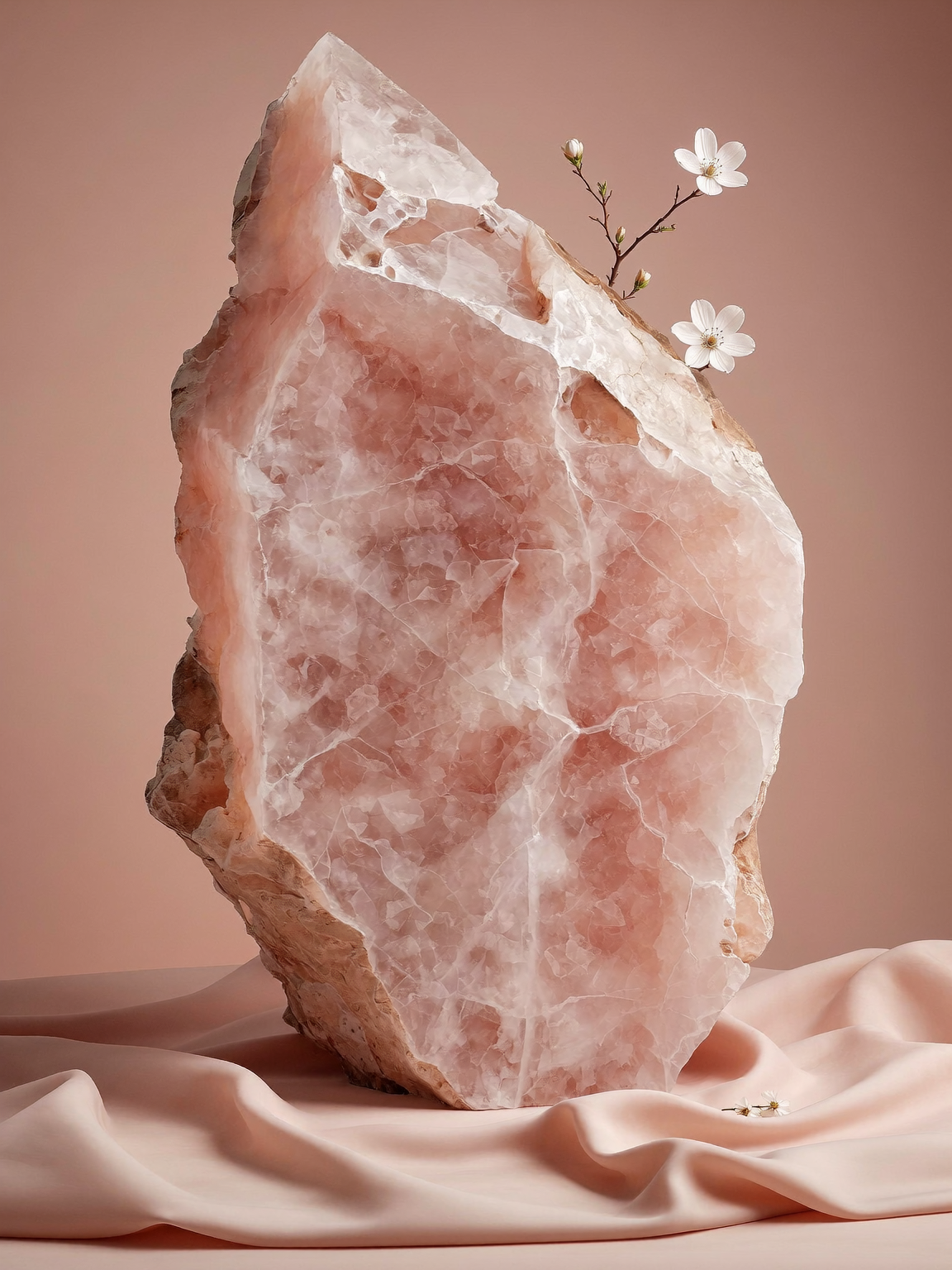
Refine the uploaded luxury jewelry photograph into an exceptionally realistic, physically accurate high-end jewelry campaign image. THIS IS A PHOTOGRAPHIC LIGHTING AND PHYSICAL INTEGRATION CORRECTION, NOT A NEW DESIGN. Preserve the exact rose quartz stone, the original necklace with its three pink gemstone floral clusters, the delicate cherry blossom branch, the blush-pink silk, the background, camera angle, and vertical 3:4 composition. The current necklace appears artificially pasted onto the stone. Completely eliminate this composited appearance by rebuilding the lighting, shadows, reflections, physical contact and material interaction as if the entire scene had been photographed together in a real professional jewelry studio. LIGHTING SETUP: Use one large rectangular diffused softbox positioned high at camera-left, approximately 45 degrees above the scene, creating a coherent soft directional key light across BOTH the necklace and rose quartz. Use a subtle white bounce card from camera-right, approximately two stops weaker than the key light, preserving dimensional shadows without making them black. Add a very restrained narrow rim highlight along selected upper-right edges of the quartz, consistent with the existing studio atmosphere. All highlights and shadows must follow the SAME lighting direction. No independent or conflicting illumination on the necklace. CONTACT SHADOWS — EXTREMELY IMPORTANT: Create realistic, subtle contact shadows directly underneath the silver chain links and all three pink gemstone flowers wherever they physically touch the irregular quartz surface. These shadows must follow the exact relief, fractures, bumps, and indentations of the natural stone. The shadows must not form continuous artificial dark outlines. Where a chain link touches a raised crystal ridge, create a small, soft but defined contact shadow. Where the chain passes above a recessed mineral area, create a slightly broader, lighter, more diffused shadow, accurately reflecting the small gap between the jewelry and the stone. Under each pink flower, introduce realistic local occlusion, with slightly deeper shadows immediately beneath the gemstone settings and softer shadow transitions farther away. The central floral cluster should cast a believable subtle shadow onto the quartz, clearly establishing that it is a real three-dimensional jewelry object resting on the stone rather than a flat graphic. PHYSICAL JEWELRY PLACEMENT: Make the necklace conform naturally to the uneven three-dimensional front surface of the rose quartz. Preserve the overall U-shaped drape and the positions of the three floral clusters. The silver chain must gently follow the raised ridges and natural surface irregularities of the stone. Introduce subtle realistic depth variations: some links touch the mineral directly while others are suspended just a few millimeters above shallow depressions. Maintain realistic gravity and the natural tension of a delicate gemstone necklace draped over a large solid mineral. Avoid perfectly uniform spacing in depth or a completely flat frontal plane. The jewelry must remain structurally intact, with no broken links, no distortion and no change to its original design. DIAMOND AND SILVER LIGHT BEHAVIOR: The clear gemstones must have realistic individual faceted reflections, not uniform white brightness. Create restrained, crisp specular highlights on selected diamond facets facing the key light. Other facets should appear slightly darker, transparent, silvery-gray or subtly reflective depending on their orientation. Introduce delicate variations in sparkle intensity along the necklace. Preserve the visibility of each individual clear gemstone and its polished silver setting. The silver metal should show authentic narrow specular reflections and small darker reflected areas, rather than looking uniformly white. Avoid excessive glitter, starburst effects, glowing outlines, overexposure or artificial brilliance. PINK GEMSTONE FLOWERS: Preserve all three original floral clusters exactly. Each flower must retain its original number of pink gemstones, arrangement, size, shape and silver settings. The pink gemstones should display natural internal facet contrast: brighter illuminated facets, deeper raspberry-pink reflected facets, and subtle darker areas that reveal real gemstone depth. Add tiny controlled specular highlights to selected facets, consistent with the main softbox. Do not make the entire flower uniformly luminous or fluorescent. Create believable micro-shadows between the adjacent gemstones and their metal settings. ROSE QUARTZ LIGHT INTERACTION: Preserve the stone's solid natural form, asymmetrical pointed silhouette, milky rose-pink translucency, cloudy mineral inclusions, white veins and irregular fractured surface. The quartz should receive the same directional key light as the necklace. Maintain soft luminous scattering within the mineral, with brighter translucent ridges on the upper-left side and gentle natural tonal falloff toward the lower-right areas. The surface must retain its natural roughness and layered crystalline texture. Introduce very subtle localized reflections of the pink gemstones and silver settings onto nearby smoother quartz facets, only where physically plausible. Do not create strong pink glowing halos or mirror-like reflections. STUDIO ENVIRONMENT: Preserve the original warm dusty-rose background and pale blush satin fabric. Maintain realistic soft folds, nuanced highlights and natural shadow gradients across the silk. The quartz must cast a coherent soft grounding shadow onto the silk beneath it. Preserve the original delicate white cherry blossom branch and its position. All elements must share a unified color temperature, exposure, photographic grain and depth of field. CAMERA AND IMAGE QUALITY: Professional medium-format fine jewelry campaign photography. Realistic macro-level gemstone detail, subtle natural lens rendering, excellent dynamic range, restrained highlight roll-off, refined tonal separation and authentic material texture. Maintain the existing camera position, framing and elegant vertical 3:4 composition. The photograph should feel tactile, expensive, naturally illuminated and physically believable. FINAL QUALITY REQUIREMENT: The final result must look like a single real photograph captured in one exposure, with the necklace genuinely draped over the rose quartz. No pasted-on jewelry appearance. No flat overlay. No artificial edge halos. No floating chain. No uniform white sparkle. No inconsistent shadows. No plastic gemstones. No CGI or 3D-render appearance. No redesign of the necklace. No changes to the stone silhouette. No additional jewelry or decorative elements. No text or logos.
Free to start · Generate videos and images with AI in seconds
More from this creator


More Fast gen images
См. все →