Image - 2026-10-06 04:08
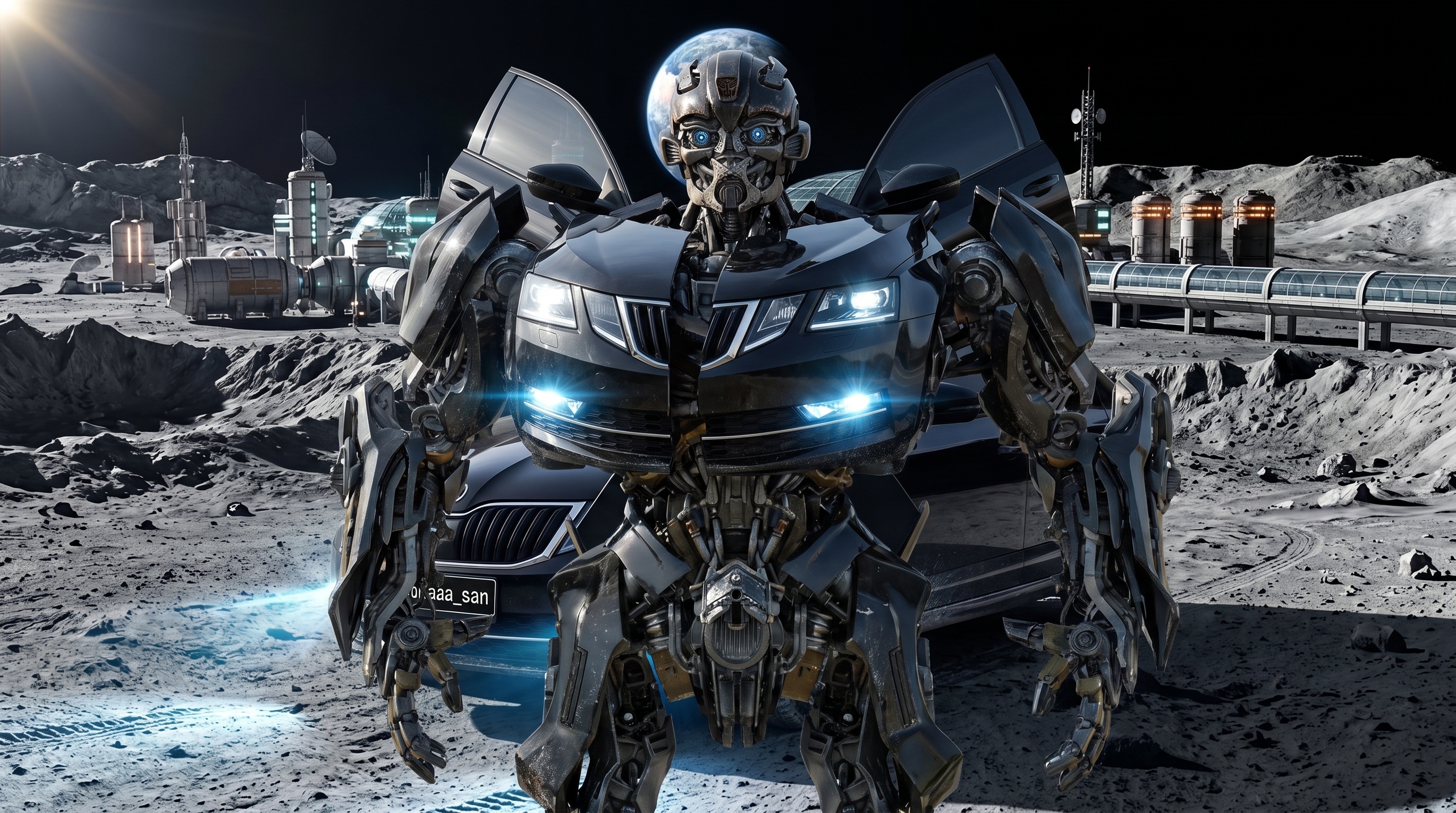
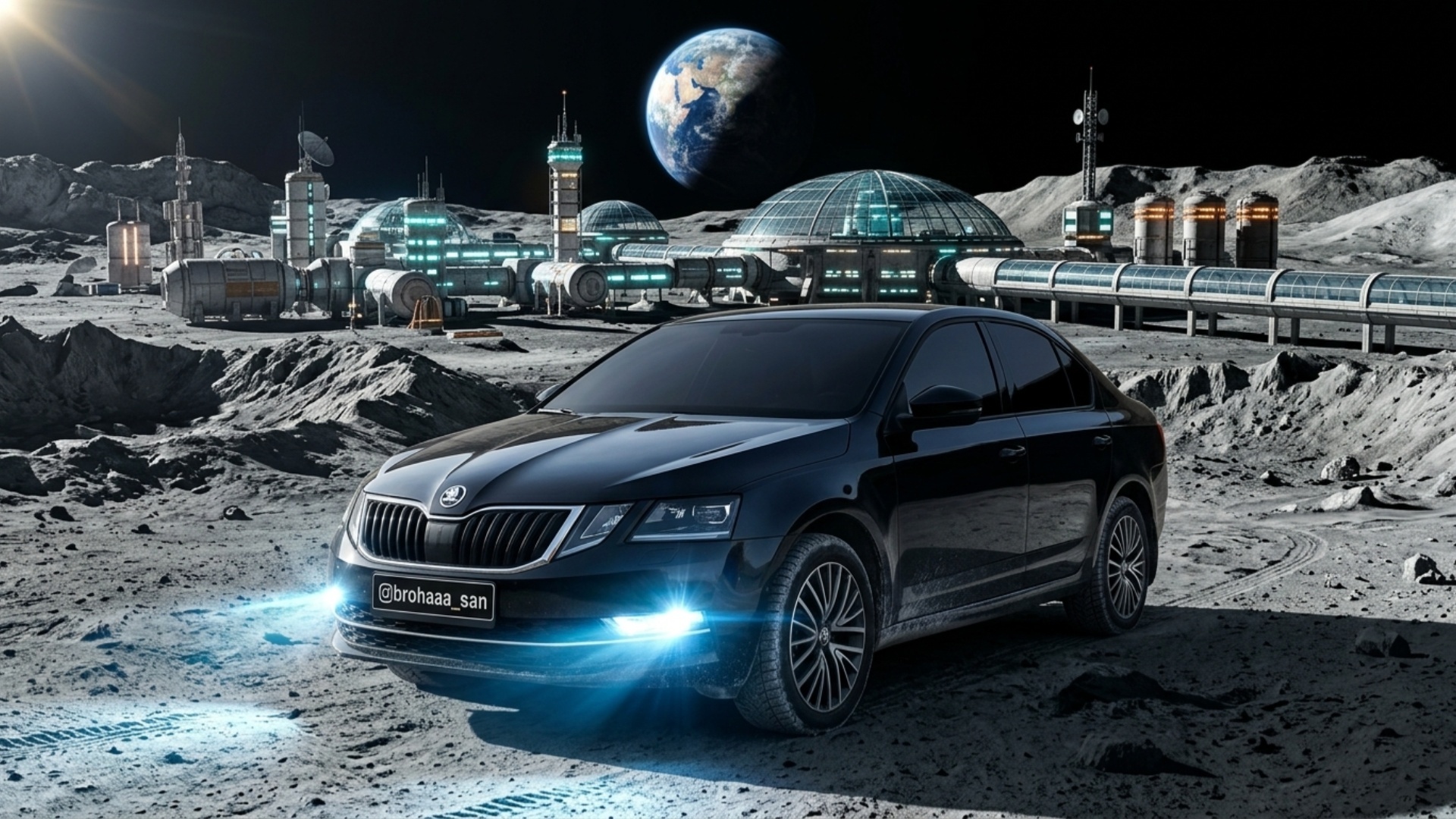
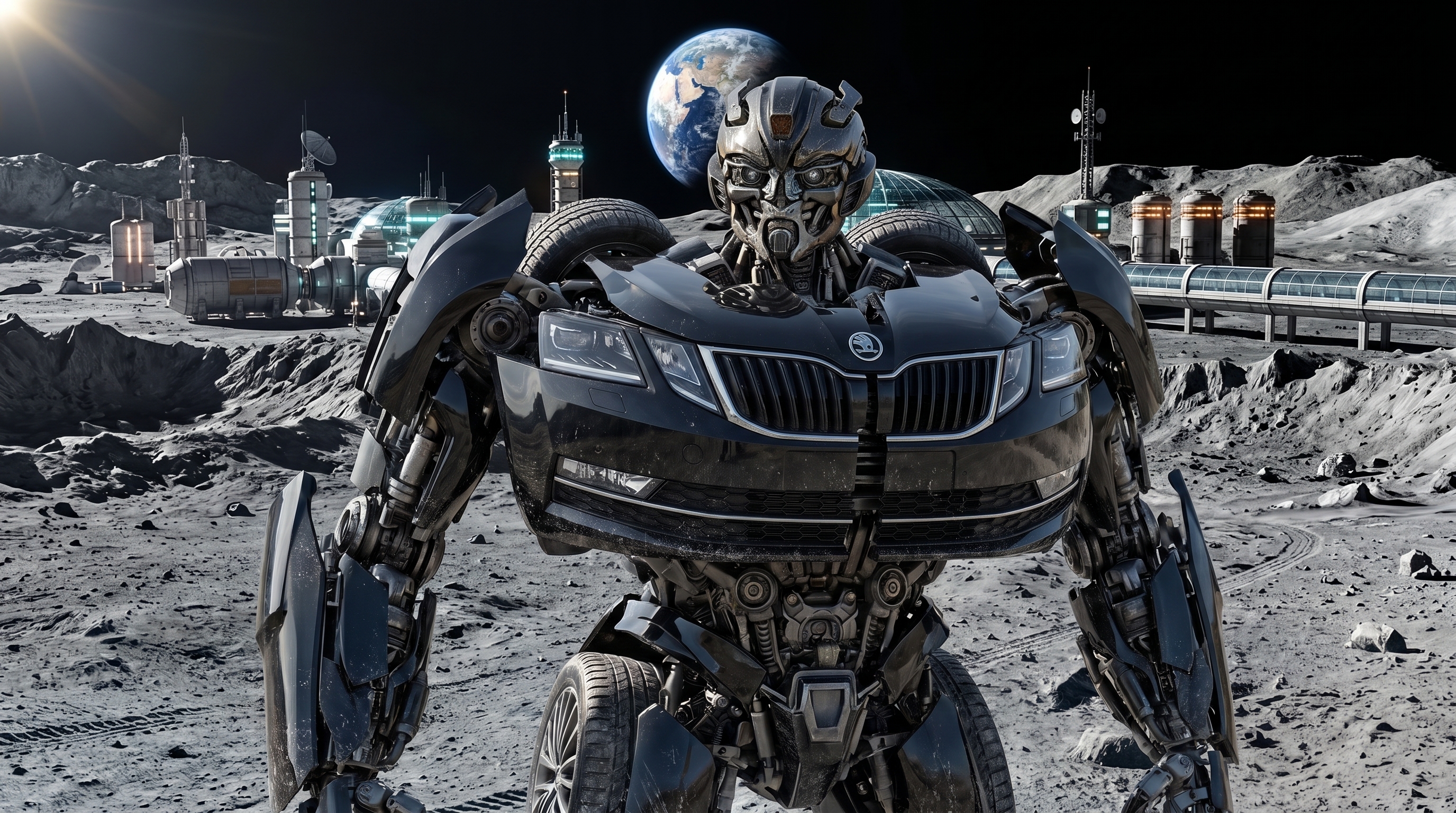
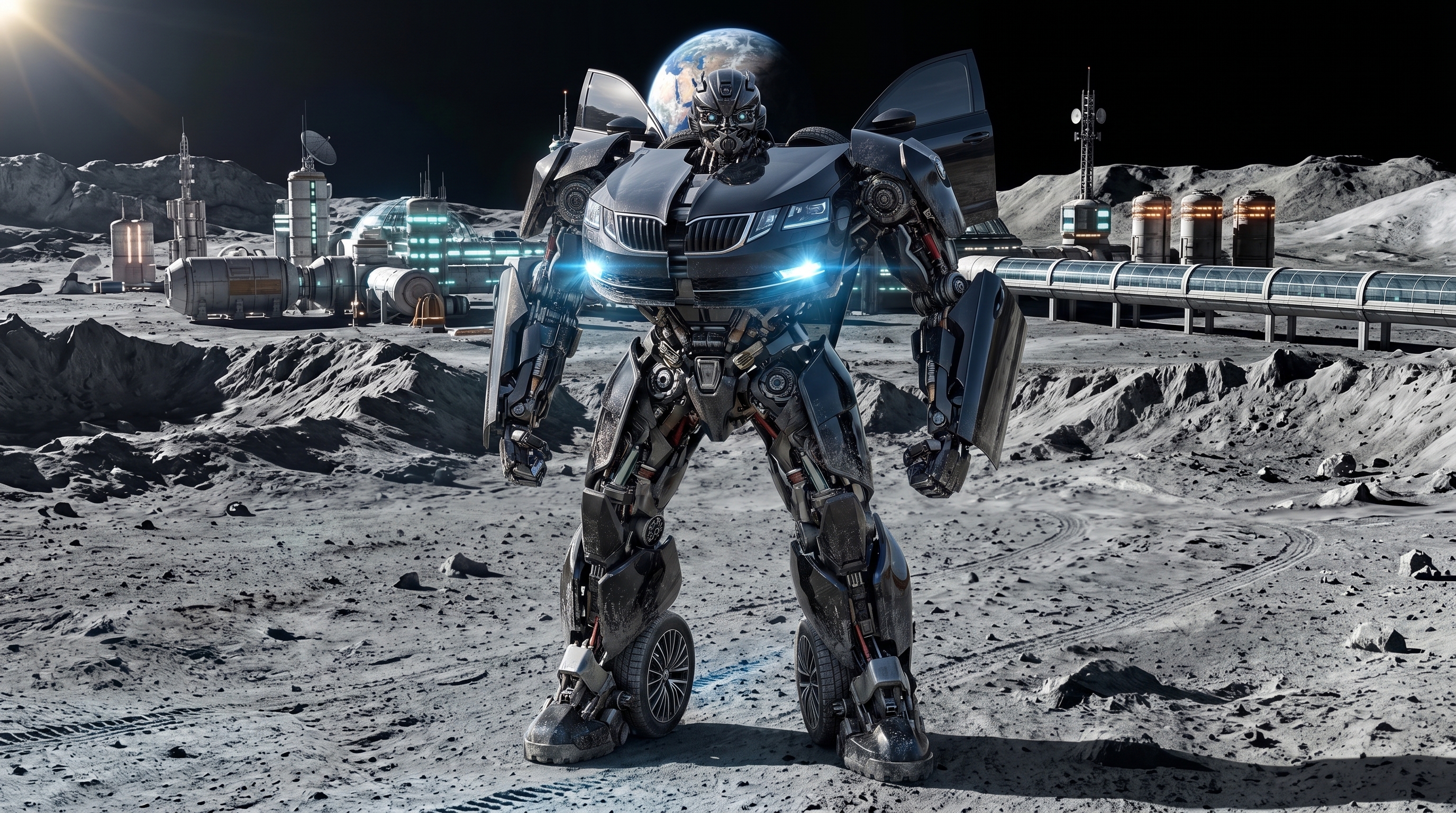
Edit the source image: transform the exact source car into a photorealistic live-action alien transforming robot with the mechanical design language, transformation complexity, and cinematic visual character associated with the first two Michael Bay Transformers films. Preserve the identity of the original vehicle so the finished robot is unmistakably built from this exact single car. Do not create a conventional humanoid robot with recognizable car panels simply attached to its arms, legs, and torso. The vehicle itself must genuinely transform: its body panels, chassis, suspension, drivetrain, structural elements, and internal components should split, rotate, fold, telescope, slide, and interlock to form the robot’s anatomy. Use the provided robot reference as a guide for the logic, density, and scale of component separation, showing how large automotive surfaces break into smaller articulated mechanical sections and become functional parts of the body, but do not copy the reference robot’s identity or design one-to-one. Preserve believable conservation of volume and mass. The robot must have realistic proportions relative to the original car and look as though exactly one vehicle supplied all of its components. Keep the silhouette athletic, agile, relatively lean and compact, with long articulated limbs, a defined mechanical torso and balanced shoulders. Do not make the robot excessively tall, wide, thick, or massive; it must not look as if it absorbed two cars or contains more automotive material than exists in the source vehicle. Preserve the source car’s original headlights and fog lights with extremely high fidelity. Their shape, size, proportions, lens geometry, internal optics, housing design, orientation, and recognizable appearance must remain exactly consistent with the source car. Integrate these original headlights and fog lights into the robot’s chest in the same intended positions without redesigning, stretching, narrowing, duplicating, or inventing new light shapes. The front bumper must NOT remain as one intact full-width car bumper across the chest. Split the original front bumper precisely into two major left and right halves along its centerline, then mechanically separate, slightly rotate, and integrate those two recognizable bumper sections into the corresponding left and right sides of the chest. Preserve the original bumper design while making the central separation clearly visible. Break the hood, grille, front fenders, doors, roof, side panels, rear bodywork, chassis, wheels, suspension and other vehicle components into logically interconnected mechanical sections following the transformation principles visible in the reference. Avoid large intact car shells simply hanging from the robot. Between the recognizable exterior panels, reveal dense but physically coherent internal engineering: articulated metal framework, compact actuators, pistons, gears, hinges, sliding rails, rotational joints, cables, hydraulic elements and layered mechanical structures. Every automotive component should appear to have a functional place in the transformation, and the number and scale of visible parts must remain consistent with a single source vehicle. Keep the original wheels at believable relative scale and integrate them naturally into the transformed anatomy. Design a completely unique robot face and head specifically for this vehicle. Do not copy the face, helmet, facial proportions, or identifying features of the reference robot. Instead create an original alien-mechanical face inspired by the intricate live-action Cybertronian design language of the first two Michael Bay Transformers films: layered interlocking metal facial plates, small articulated mechanisms, exposed mechanical structures, complex cheek and jaw assemblies, expressive mechanical eyes, and an original head silhouette subtly influenced by the source car’s design. The face should feel like a distinct individual character that could naturally exist in that cinematic universe rather than a replica of an existing Transformer. Use realistic automotive paint, glass, rubber, brushed and machined metal, dark internal mechanisms, subtle surface wear, fine scratches, panel gaps, bolts, joints and natural material reflections. Maintain authentic physical thickness for every panel and mechanical component. Use cinematic live-action lighting with a strong directional key light revealing the layered transformation mechanisms, controlled reflections across the original painted body panels, and softer shadows inside the mechanical structure. Create a full-body three-quarter view at approximately eye level, with the camera far enough away to keep the entire robot clearly visible from head to feet and make its overall proportions easy to judge. Keep the robot sharply defined with clear fine mechanical detail and realistic photographic depth. The final image must look like the exact source car has physically unfolded and transformed into a sophisticated living mechanical being, not like a generic robot wearing pieces of a car. Prioritize the exact source vehicle geometry above all else, especially the unchanged headlights and fog lights on the chest, the front bumper divided into two separate halves, realistic single-car mass and volume, and the reference-inspired logic of complex mechanical component separation. Aspect ratio 2:3, 4K.
Free to start · Generate videos and images with AI in seconds
More from this creator

More Fast gen images
См. все →