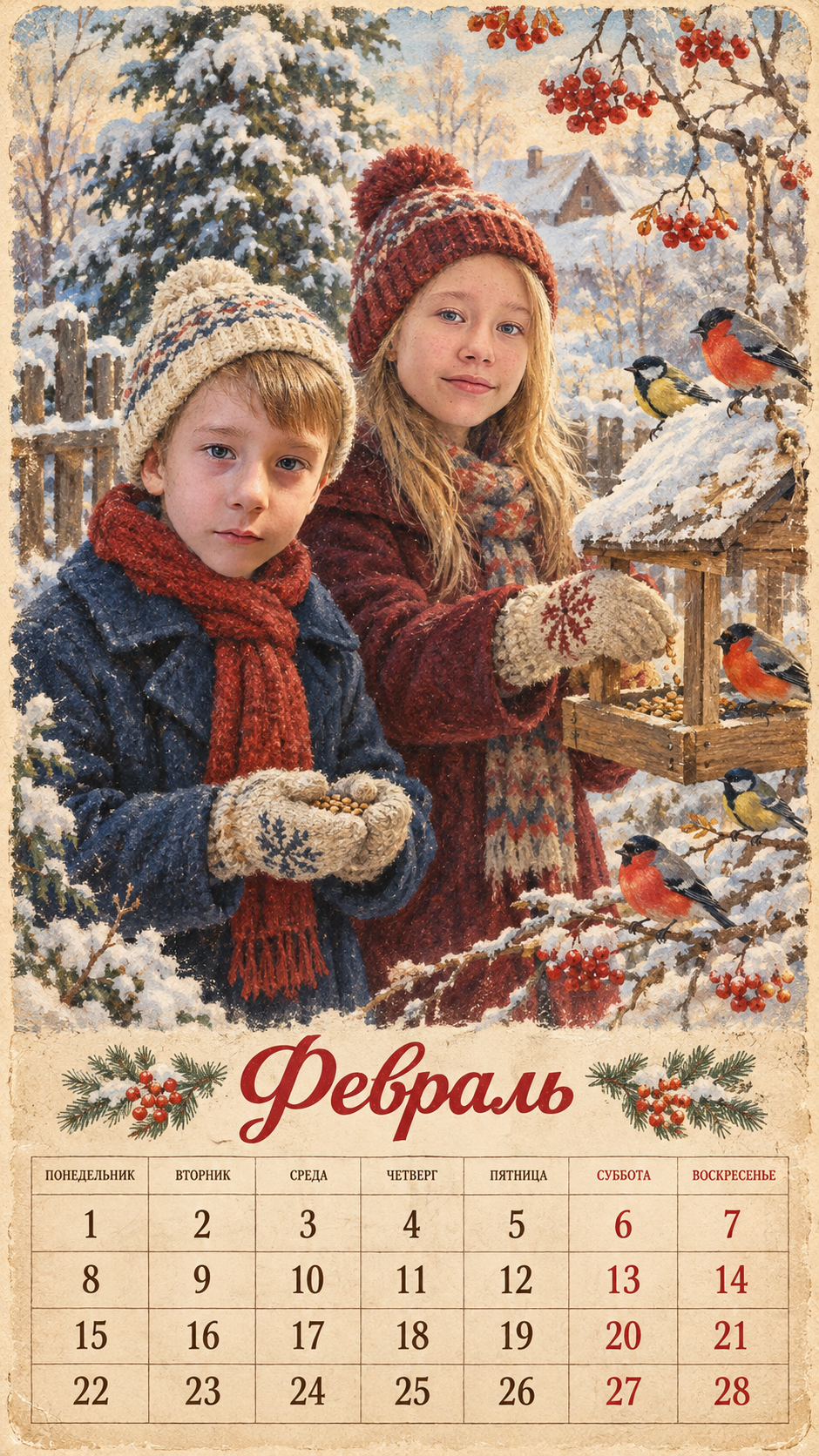
Image - 2026-10-19 12:48
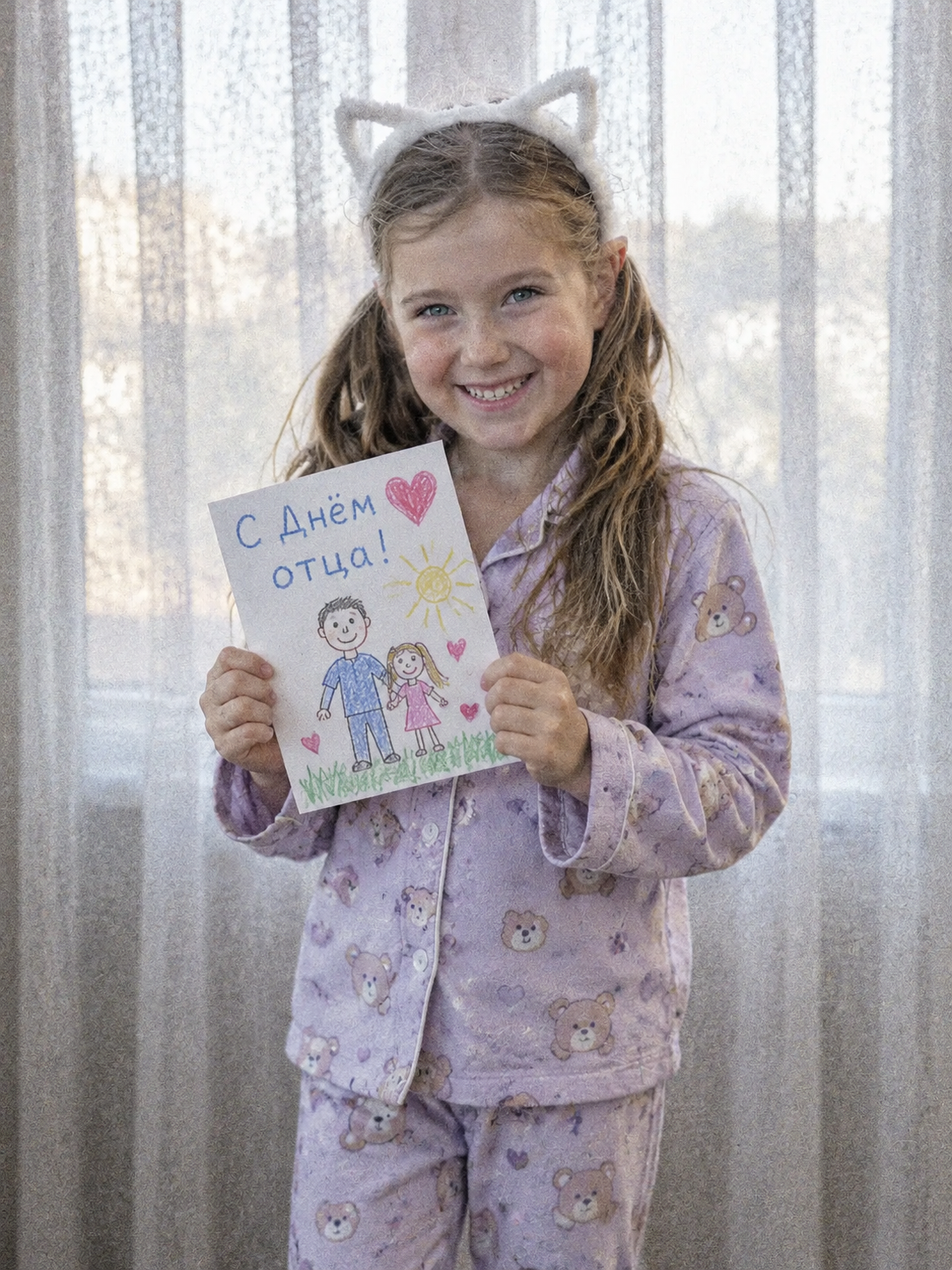
Create a beautiful vertical A4 wall calendar page for February 2027, inspired by nostalgic Soviet children's greeting cards from the 1950s–1970s. **REFERENCE PHOTOS — PRESERVE BOTH CHILDREN'S IDENTITIES** Use the two uploaded reference photographs as separate and mandatory identity references. Reference Photo 1 represents Child 1. Reference Photo 2 represents Child 2. Preserve the exact recognizable identity of each child independently, including face shape, facial proportions, eyes, eye color, nose, lips, eyebrows, skin tone, hairstyle, hair color, and actual age. Both children must remain clearly recognizable as the same real children shown in their respective reference photos. Do not mix their facial features, swap identities, duplicate either child, change their ages, or replace their faces with generic characters. Preserve natural childlike expressions and realistic skin texture. If the children differ in age or height, maintain their natural differences. Their faces must remain realistic and faithful to the references, while the clothing, environment, and background have the painterly appearance of a vintage Soviet postcard. **SCENE — FEBRUARY, THE LAST SNOW** Create a heartwarming late-winter scene featuring both children together in a snowy garden, feeding small bullfinches and tits at a traditional wooden bird feeder. Child 1 gently holds a small handful of birdseed while Child 2 carefully places seeds into the feeder. They stand close together, sharing a quiet, happy winter moment. Their expressions are natural, warm, and age-appropriate. Both children must be clearly visible, with unobstructed faces and distinct individual features. Neither child should hide behind the other or behind the bird feeder. Dress the children in coordinated vintage winter clothing inspired by the 1950s–1970s. One child wears a deep-blue wool coat, a cream knitted hat, a red scarf, and warm mittens. The other wears a burgundy or forest-green winter coat, a knitted hat with a pom-pom, a cozy scarf, and woolen mittens. The outfits should complement each other without being identical and must be appropriate for each child's age and proportions. The setting features snow-covered evergreen trees, delicate frost on bare branches, clusters of bright red rowan berries, a rustic wooden fence, and a soft blanket of snow. A few bullfinches with vivid red breasts and small tits sit on the feeder and nearby branches. Subtle patches of melting snow and pale sunlight hint that spring is approaching. **ART STYLE** Authentic Soviet children's greeting card illustration from the 1950s–1970s. Traditional gouache and watercolor painting, soft hand-painted brushstrokes, charming storybook atmosphere, muted icy blue, snowy white, warm cream, burgundy, forest green, and vivid red accents. Use delicate vintage paper grain, slightly weathered printed edges, subtle aged-paper texture, and soft diffused winter light. The background, clothing, birds, trees, and snow should have a painterly appearance. Both children's faces must remain realistic, natural, detailed, and faithful to their individual reference photos. No anime, no exaggerated cartoon faces, no glossy CGI, no plastic skin, no modern clothing, no excessive beauty retouching. **CALENDAR PAGE LAYOUT** Vertical A4 portrait composition for printing. Upper 65–68%: the main winter postcard illustration featuring both children and the bird feeder. Lower 32–35%: a clean vintage calendar panel on warm ivory aged paper. Keep both children's faces large enough to recognize. Use balanced composition, natural body proportions, and clear separation between their faces. Add a subtle vintage border and small decorative evergreen sprigs with red berries around the month title. **MONTH TITLE** Display the Russian word “Февраль” in elegant dark-red vintage cursive lettering, inspired by Soviet greeting cards. **CALENDAR GRID — FEBRUARY 2027** Use seven columns, with Monday as the first day of the week. Use the following exact layout: ПОНЕДЕЛЬНИК | ВТОРНИК | СРЕДА | ЧЕТВЕРГ | ПЯТНИЦА | СУББОТА | ВОСКРЕСЕНЬЕ Row 1: 1 | 2 | 3 | 4 | 5 | 6 | 7 Row 2: 8 | 9 | 10 | 11 | 12 | 13 | 14 Row 3: 15 | 16 | 17 | 18 | 19 | 20 | 21 Row 4: 22 | 23 | 24 | 25 | 26 | 27 | 28 Every date must appear exactly once in the correct cell. No missing dates, duplicated numbers, or extra rows. Use a classic serif typeface in dark brown for regular dates and muted dark red for Saturdays and Sundays. Ensure that all Russian labels are correctly spelled and readable. **PRINT QUALITY AND SERIES CONSISTENCY** High-resolution vertical A4 composition, 2480 × 3508 pixels target at 300 DPI, elegant vintage print aesthetic, balanced margins, realistic facial detail, and professional calendar design. Maintain the same layout proportions, border, typography hierarchy, aged-paper texture, and calendar grid design as the January 2027 template. Only the seasonal scene, clothing details, decorative elements, and month title should change. **NEGATIVE PROMPT** Different faces, altered identities, mixed facial features, duplicated children, hidden faces, cropped heads, incorrect ages, unnatural body proportions, deformed hands, plastic skin, exaggerated cartoon features, modern objects, misspelled Russian text, incorrect dates, duplicated numbers, missing dates, low resolution. **UNIVERSAL VINTAGE CLOTHING FOR BOTH CHILDREN — ALL GENDERS AND FAMILY COMBINATIONS** Dress both children in coordinated, timeless children's clothing inspired by everyday Soviet fashion from the 1950s–1970s. The clothing must be suitable for any combination of children: two boys, two girls, or a boy and a girl. Do not assume the children's genders based on their reference photographs, names, hairstyles, or facial features. Do not automatically assign dresses, skirts, bows, or traditionally feminine outfits to one child, or exclusively masculine outfits to the other. Choose practical, age-appropriate vintage clothing that looks natural on both children. Suitable garments include classic wool coats, simple jackets, knitted sweaters, cardigans, button-up shirts, comfortable trousers, simple skirts or dresses where appropriate, knitted hats, scarves, mittens, and traditional children's boots. Use a harmonious, coordinated color palette rather than identical outfits. Suitable vintage colors include navy blue, burgundy, muted red, forest green, mustard yellow, warm beige, cream, dusty blue, and soft brown. The children may wear different colors and garment combinations, but their outfits must look like part of the same vintage postcard illustration. Avoid overly modern cuts, visible contemporary logos, modern sportswear, and fashionable designer clothing. Adapt the garments to the season, weather, age, and natural body proportions of each child. Keep both outfits equally detailed and visually balanced. Neither child should look more formally dressed, more decorative, or more important than the other. If the reference photos provide clear information about the children's ages and appearance, use that information to select appropriate clothing without altering their identities. **IMPORTANT:** The clothing should complement the children rather than define their gender. The overall look must remain cohesive, authentic to the 1950s–1970s Soviet children's postcard aesthetic, practical, charming, and suitable for any family.

Free to start · Generate videos and images with AI in seconds
More from this creator


More GPT Image 2 images
См. все →