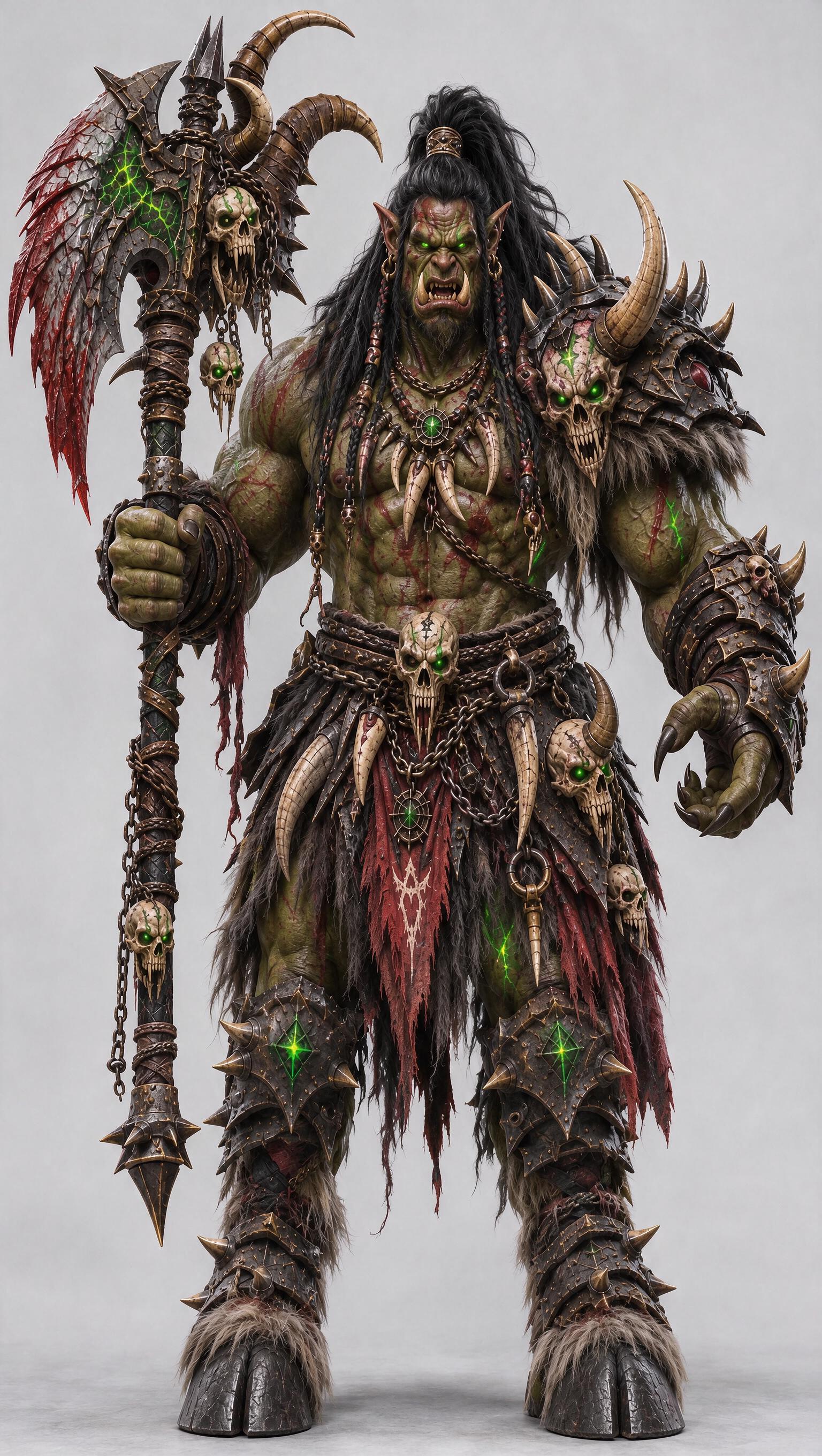
Image - 2026-11-27 08:19
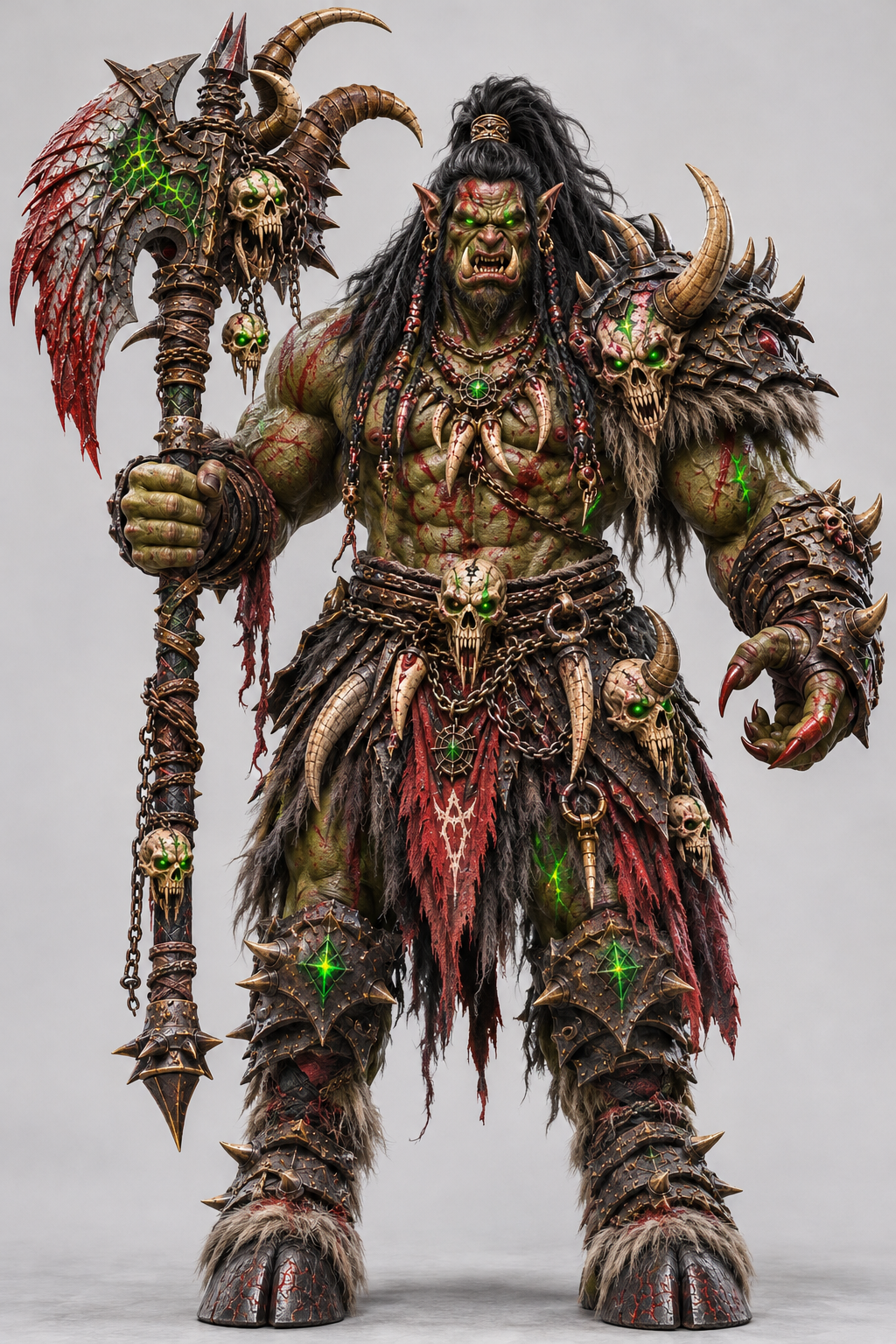
# ROAD OF WORLDS — ACT I ## PORTAL ORC — CINEMATIC PHOTOREALISM ENHANCEMENT ### HIGH-END HOLLYWOOD LIVE-ACTION CREATURE PHOTOGRAPHY ### STRICT IMAGE-TO-IMAGE QUALITY REFINEMENT EDIT AND ENHANCE THE SINGLE UPLOADED IMAGE. The uploaded image shows the ALREADY APPROVED design of a gigantic green-skinned orc warrior for the live-action fantasy film ROAD OF WORLDS — ACT I. **THIS IS A TECHNICAL PHOTOREALISM AND IMAGE-QUALITY IMPROVEMENT TASK, NOT A CHARACTER REDESIGN.** Your objective is to transform the existing image from a polished fantasy CGI render into an extraordinarily convincing live-action cinematic photograph of a physically real creature. The final result should resemble an actual creature photographed on a professional Hollywood film set using world-class creature prosthetics, animatronics, realistic physical materials and seamlessly integrated high-budget visual effects. **ABSOLUTE PRIORITIES:** 1. Preserve the exact original character. 2. Preserve the exact face and expression. 3. Preserve the existing anatomy and body proportions. 4. Preserve the complete armor and decorative details. 5. Preserve the enormous ornate battle axe. 6. Preserve the original hairstyle and green skin. 7. Preserve the existing frontal pose and framing. 8. Dramatically improve photographic realism. 9. Eliminate artificial digital textures and excessive sharpening. 10. Produce exceptionally clean, detailed, natural-looking image quality. Do not introduce a new artistic interpretation. Do not simplify the character. Do not modify the approved design. --- ## 1. ABSOLUTE CHARACTER IDENTITY PRESERVATION Use the uploaded image as the immutable master reference. Preserve the existing appearance as closely as possible. ### FACE Maintain exactly: - The original broad and brutal facial proportions. - Heavy brow ridge. - Glowing green eyes. - Wide nose. - Huge lower tusks. - Sharp teeth. - Pointed ears. - Facial scars. - Red markings. - Dark facial hair. - Aggressive expression. Do not change the character's identity. Do not reshape his face into that of a generic orc. Do not change his jaw or tusk proportions. Do not change his eye spacing. Do not alter his facial expression. ### BODY Preserve: - Original muscular proportions. - Extremely broad shoulders. - Thick arms and forearms. - Massive chest. - Strong abdomen. - Heavy legs. - Large hands. - Armored hoof-like feet. Do not increase or decrease his body size. Do not make his anatomy more exaggerated. Do not turn his skin into human skin painted green. ### HAIR Preserve the same thick black hair, high ponytail, hair ornaments and loose strands. ### EQUIPMENT Maintain all visible: - Dark metal armor. - Shoulder plates. - Large curved horns. - Spikes. - Chains. - Bone ornaments. - Glowing-eyed skulls. - Fur elements. - Red cloth panels. - Belt details. - Leg armor. - Gauntlets. - Green magical engravings. Do not remove, relocate or invent major accessories. ### WEAPON Maintain the exact existing battle axe, including the complete ornate head, skull, curved horns, red blade sections, green glowing cracks, long shaft, hanging trophies and lower metal point. **THE ORIGINAL APPROVED DESIGN MUST REMAIN UNCHANGED.** --- ## 2. PRIMARY GOAL — TRUE LIVE-ACTION PHOTOGRAPHIC REALISM Transform the image's entire visual rendering quality. The existing image looks somewhat like a high-end digital fantasy character. The new version must look like a real physical creature photographed with professional cinema equipment. Visual target: **Hollywood Cinematic Hyperrealism.** **Ultra-Realistic Live-Action Feature Film.** **ARRI Alexa 35 Cinematic Photography.** **Cooke S4/i Cinema Lens Aesthetic.** **Premium Practical Creature Effects.** **High-Budget Feature-Film VFX Integration.** **Photographically Accurate Materials and Lighting.** Make every surface respond to light according to its actual material properties. Stone, bone, metal, skin, fur, leather, cloth and hair must all have DIFFERENT believable light interactions. Avoid uniform digital sharpness across every tiny surface. The image must look photographed, not digitally illustrated. --- ## 3. GREEN SKIN — REAL BIOLOGICAL MATERIAL Significantly improve the realism of the orc's green skin. The skin must look thick, living, organic and physically convincing. ### SKIN TEXTURE Introduce realistic, varied skin microstructure: - Natural pores of different sizes. - Irregular skin roughness. - Fine creases. - Realistic wrinkles around joints. - Subtle natural scars. - Slightly thickened skin around knuckles. - Fine healed cuts. - Physically plausible stretched skin over muscles. - Natural variations in pigmentation. - Organic transitions between rougher and smoother regions. Skin texture must NOT look like digital noise or uniform procedural bump mapping. Larger areas of skin should have natural, relatively smooth transitions. Fine detail should be visible only where physically appropriate. Avoid placing the same density of pores across the entire body. ### SKIN LIGHTING Use realistic subsurface scattering. Natural light must penetrate the outer skin layers very subtly. Create believable depth in facial folds, ears, hands and muscle transitions. Add restrained realistic skin highlights. The skin must not look wet everywhere. Avoid exaggerated oily shine. Avoid dry plastic-looking shading. ### SKIN COLOR Preserve the existing dark olive-green and natural green variations. Keep the original crimson-red scars and magical green markings. Do not oversaturate the skin. Do not turn it into bright neon-green plastic. The result should feel like authentic fantasy-creature biology. --- ## 4. FACE — EXTREME CINEMATIC REALISM The face is the most important element of this enhancement. Preserve every recognizable facial feature. Improve the realism of: - Brow wrinkles. - Eyelids. - Eye sockets. - Nose and nostrils. - Cheeks. - Lips. - Gums. - Teeth. - Tusks. - Beard. - Ears. - Scars. ### REALISTIC DETAILS Add believable fine skin texture around the eyes and mouth. The lips must have realistic thickness and tissue transitions. The gums should have natural biological texture. The tusks should look like genuine aged ivory, not polished white plastic. Show extremely subtle cracks, irregular coloring and natural surface wear on the tusks. The eyes must be anatomically convincing. ### EMERALD EYES Maintain the intense green glowing eyes from the original. However, reduce artificial overexposure. The pupils and internal structure should remain partially readable. The green light must appear to originate from within the eyes. Use only restrained reflected light around the eye sockets. No giant glowing halos. No laser beams. No featureless bright-green eye shapes. The final face must be realistic, threatening and clearly readable. --- ## 5. BLACK HAIR — GENUINE NATURAL FIBERS Improve the realism of the enormous black ponytail and all loose hair. The hair must be composed of natural-looking strands and clumps. Include: - Different strand thicknesses. - Natural irregularity. - Subtle dark-brown and charcoal variations. - Realistic highlights. - Soft shadows between overlapping hair. - Correct strand separation. - Natural gravity. - Physically plausible hair density. The ponytail must remain the same size, shape and position. The hairstyle must not change. **IMPORTANT:** Do not create millions of individually oversharpened lines. Do not make the hair look like artificial black wires. Do not create synthetic glossy plastic strands. Do not blend the hair into surrounding armor or fur. Maintain clear, natural material separation. --- ## 6. HEAVY METAL ARMOR — REAL FORGED IRON Significantly improve all metallic surfaces. The armor must look like real heavy blackened steel and aged bronze. ### PHYSICAL MATERIALS Use accurate metal reflectance and roughness. The armor must show: - Natural forged metal texture. - Slightly uneven hammered surfaces. - Subtle scratches. - Small dents. - Realistic oxidation. - Weathered metallic edges. - Physically correct specular highlights. - Dark recessed areas. - Real thickness of metal plates. - Authentic joints and overlaps. ### LIGHT REFLECTIONS Reflections must respond to the actual studio lights. Avoid bright decorative outlines around every plate. Do not make all edges glow. Do not apply uniform metallic shine. Some surfaces should be rough and matte. Worn edges may show slightly brighter exposed metal. Metal must feel heavy and physically real. ### DETAIL CLEANUP Improve the visual readability of existing plates, spikes and ornament attachments. Remove muddy digital details and ambiguous overlapping shapes. Preserve the underlying design. Do not remove elaborate decorations simply to make the armor cleaner. Do not invent extra spikes or skulls. **The result must resemble a physical costume built by a world-class creature-effects workshop.** --- ## 7. SKULLS, HORNS, TEETH AND BONE ORNAMENTS All skeletal ornaments must look like genuine aged bone. Preserve their positions and silhouettes. ### BONE REALISM Use: - Natural ivory coloration. - Small surface cracks. - Subtle discoloration. - Uneven aged surfaces. - Realistic cavities. - Physically convincing bone thickness. - Correct shadows beneath protruding structures. Do not make the skulls resemble polished resin toys. Do not make every bone uniformly yellow. Allow restrained variation between old bone, dirty ivory and weathered surfaces. ### SKULL EYES Preserve the existing green glowing skull eyes. Keep the glow controlled and localized. The skulls must remain ornaments attached to armor or weapons. They must not resemble living extra heads. ### HORNS Preserve the original curved horn geometry. Improve natural horn material, surface ridges and keratin-like texture where appropriate. No additional horns. No missing horns. No changed silhouettes. --- ## 8. BATTLE AXE — PREMIUM FEATURE-FILM PROP QUALITY The enormous axe must look like a genuine extremely heavy weapon constructed from forged iron, weathered bone, dark leather and supernatural materials. **DO NOT CHANGE THE AXE DESIGN.** Preserve every major feature: - Original massive blade silhouette. - Crimson-red cutting-edge areas. - Dark forged-metal panels. - Green magical fissures. - Horned skull decoration. - Large curved horns. - Numerous spikes. - Long heavy shaft. - Hanging skull ornaments. - Chains. - Lower pointed metal section. ### METAL ENHANCEMENT Correct the digital appearance of the blade. Replace artificial painted-looking gradients with physically plausible metal reflections. Enhance real-looking surface thickness. Improve the transition between sharpened edges and heavier structural metal. Preserve existing red accents. The red sections should look like weathered physical material, not glowing digital paint. ### WEAPON STRUCTURE Ensure every major piece of the axe is convincingly attached to the main structure. Preserve the original silhouette and proportions. The shaft must appear capable of supporting the enormous weapon head. The hand must grip it naturally. No floating parts. No disconnected chains. No malformed blade edges. No duplicated elements. --- ## 9. FUR AND TORN CRIMSON FABRIC ### FUR Improve the realism of the dark fur around the shoulders, hips and lower legs. Create genuine animal-fur texture with natural clumping. Use believable individual strands with soft layered shadows. Keep the fur dark and coarse. Preserve the original length and volume. Avoid artificial fuzzy outlines. Avoid digitally painted hair strokes. ### RED FABRIC Preserve all original dark crimson cloth strips. Improve: - Physical cloth thickness. - Natural fabric fibers. - Frayed edges. - Gravity. - Subtle folds. - Darker shadowed sections. - Natural highlights. The cloth should look aged and worn. Do not make the fabric look like plastic ribbons. Do not create new cloth pieces. Do not change the original costume design. --- ## 10. CHAINS, JEWELRY AND SMALL DETAILS Improve the clarity of the existing chains and metal ornaments. Every visible chain should have logically connected links. Metal rings must have convincing thickness. The ornaments must hang naturally. Correct ambiguous digital intersections wherever possible WITHOUT changing the character's approved appearance. Make the connections between: - Chains and armor. - Bones and belts. - Fur and armor. - Cloth and waist plates. - Weapon shaft and ornaments. more physically plausible. Do not increase the number of decorations. Do not invent new magical symbols. Do not remove recognizable ornaments. --- ## 11. CONTROLLED GREEN MAGICAL GLOW Preserve every established green magical highlight. The green runes, skull eyes and body markings must remain recognizable. However, improve their physical integration into the scene. Use restrained and realistic light scattering. Retain visible detail within luminous regions. Avoid excessively bright neon-green highlights. Avoid green bloom covering nearby materials. Green magical effects should provide limited reflected illumination on neighboring surfaces. Do not increase the amount of magical energy. Do not create a portal behind the orc. No floating sparks. No energy explosions. No large magical aura. This is a physical character reference, not an action scene. --- ## 12. PROFESSIONAL STUDIO LIGHTING Maintain the existing studio presentation and frontal composition. Use realistic cinematic studio lighting. ### LIGHT SETUP Large soft key light positioned slightly above and to one side of the camera. Balanced gentle fill light. Soft restrained rim illumination to separate the dark hair and armor from the background. Natural contact shadows beneath the feet. Subtle material-specific reflections. The lighting should reveal volume without flattening the creature. ### EXPOSURE Protect highlights. Preserve detail in dark armor. Avoid crushed blacks. Avoid overexposed bone and metal surfaces. Use realistic tonal gradients. Do not turn the scene into an artificially dramatic, high-contrast digital illustration. ### COLOR GRADING Natural, cinematic color science. Organic color transitions. Balanced neutral whites. Muted blackened steel. Realistic olive-green skin. Controlled crimson accents. Emerald glow remains vivid but not exaggerated. No heavy orange-and-teal grading. No artificial HDR appearance. --- ## 13. OPTICAL IMAGE QUALITY — HIGHEST PRIORITY The entire result must look like a professional photograph, not an AI-generated fantasy render. **VISUAL STANDARD:** ARRI Alexa 35. Cooke S4/i Cinema Optics. Clean high-resolution studio photography. Physically accurate materials. Natural optical detail. Controlled cinematic contrast. Excellent dynamic range. ### ABSOLUTELY CRITICAL Eliminate excessive artificial sharpness and uniform high-frequency texture. The original image contains many intricate armor details, hair strands and ornaments. These must become clearer and more natural, NOT more aggressively sharpened. **DO NOT JUST APPLY A SHARPENING FILTER.** Do not increase artificial edge contrast. Do not create unnecessary new microdetails. Instead, improve the underlying material representation and true structural readability. ### REQUIRED QUALITY - Extremely clean image. - Fine realistic detail. - Clear facial features. - Natural skin texture. - Genuine metallic highlights. - Accurate armor separation. - Realistic hair and fur. - Smooth natural tonal transitions. - Controlled luminous effects. - Realistic contact shadows. - Minimal visible grain. - No compression artifacts. - No artificial edge halos. - No texture crawling. - No muddy details. - No waxy skin. - No synthetic procedural textures. - No painterly effects. ### OUTPUT RESOLUTION Generate at the highest available NATIVE resolution. Prefer genuine 4K-level detail if the system supports it. Preserve the original vertical 2:3 aspect ratio. Do not distort the character. Do not use aggressive post-processing or artificial sharpening to simulate higher resolution. The image must remain natural and photographic even when enlarged. --- ## 14. PRESERVE EXACT CAMERA AND COMPOSITION Use exactly the original frontal camera angle. **ONE CHARACTER — STRAIGHT FRONT VIEW.** Preserve: - Head position. - Facial expression. - Hair silhouette. - Body proportions. - Arm positions. - Hand gestures. - Weapon position. - Leg stance. - Foot positions. - Relative size of every major accessory. Do not rotate the character. Do not change the pose. Do not change the camera lens perspective. Do not zoom in. Do not crop the weapon. Do not crop the feet. Do not remove portions of the ponytail. Keep the entire figure and complete axe clearly visible. Maintain the clean seamless neutral light-gray studio background. Background color approximately #E5E5E5. Do not add any scenic environment. --- ## 15. STRICT NEGATIVE REQUIREMENTS NO CHARACTER REDESIGN. NO FACE CHANGES. NO NEW HAIRSTYLE. NO DIFFERENT BODY PROPORTIONS. NO NEW ARMOR. NO REMOVED DECORATIONS. NO NEW SKULLS. NO DIFFERENT AXE. NO WEAPON REPLACEMENT. NO ADDITIONAL CHARACTERS. NO CHANGED POSE. NO CHANGED CAMERA ANGLE. NO LANDSCAPE. NO PORTAL. NO ENVIRONMENTAL OBJECTS. NO ANIME. NO MANGA. NO COMIC STYLE. NO DIGITAL PAINTING. NO CONCEPT ART. NO VIDEO-GAME CHARACTER RENDER. NO PLASTIC SKIN. NO WAXY MATERIALS. NO SYNTHETIC FUR. NO PAINTED METAL. NO FAKE GLOWING EDGE OUTLINES. NO OVERSHARPENING. NO EXCESSIVE MICRO-CONTRAST. NO EXCESSIVE HDR. NO HEAVY FILM GRAIN. NO DIGITAL NOISE. NO ARTIFICIAL TEXTURE REPETITION. NO MUDDY DETAILS. NO BLURRED FACIAL FEATURES. NO COMPRESSION ARTIFACTS. NO WATERMARKS. NO TEXT. NO COLLAGES. --- ## 16. FINAL QUALITY VERIFICATION Before finalizing the result, verify: 1. The orc is immediately recognizable as the exact same character. 2. The original face and expression remain unchanged. 3. The original black ponytail remains unchanged. 4. His green skin looks organic and alive. 5. Skin texture appears natural rather than digitally noisy. 6. Eyes and tusks are realistically integrated with the face. 7. Dark armor looks like genuine heavy forged metal. 8. Original armor design and decorations are preserved. 9. Bone skulls and horns have realistic aged-bone materials. 10. Hair and fur look like actual fibers. 11. Red cloth has realistic textile texture. 12. Chains and ornaments have convincing physical structure. 13. The original enormous axe is completely preserved. 14. The axe has genuine metal thickness and physically realistic reflections. 15. Green magical effects are detailed but not overexposed. 16. Lighting appears to come from real photographic light sources. 17. The original frontal pose is unchanged. 18. The entire figure and weapon remain visible. 19. The background remains neutral light gray. 20. The image is clean, detailed and free from artificial digital sharpening. 21. No game-like or painterly rendering is visible. 22. The finished image looks like a real photographed Hollywood creature. --- # FINAL MASTER INSTRUCTION Perform a precise, high-fidelity photographic realism enhancement of the uploaded orc image. Preserve the EXISTING character and composition exactly. Improve the realism of his skin, face, eyes, tusks, muscles, hair, fur, blackened steel armor, skull decorations, ivory horns, chains, red fabric, magical markings and enormous ceremonial battle axe. Replace the artificial CGI appearance with genuine live-action cinematic material realism. Remove digital noise, artificial texture sharpness, excessive micro-contrast, waxy surfaces and unrealistic material reflections. Use clean natural cinematic lighting, photographic optical detail and physically believable material shading. Preserve the light-gray studio background and strictly frontal full-body composition. **THIS IS AN IMAGE-QUALITY IMPROVEMENT, NOT A NEW GENERATION OR REDESIGN.** THE SAME ORC. THE SAME FACE. THE SAME ARMOR. THE SAME AXE. THE SAME POSE. SIGNIFICANTLY BETTER PHOTOGRAPHIC REALISM. **FINAL TARGET: A REALISTIC LIVING GIANT ORC PHOTOGRAPHED ON AN EXPENSIVE HOLLYWOOD FEATURE-FILM SET — NOT A VIDEO-GAME CHARACTER RENDER.**

Free to start · Generate videos and images with AI in seconds
More from this creator
More Seedream 5.5 images
См. все →